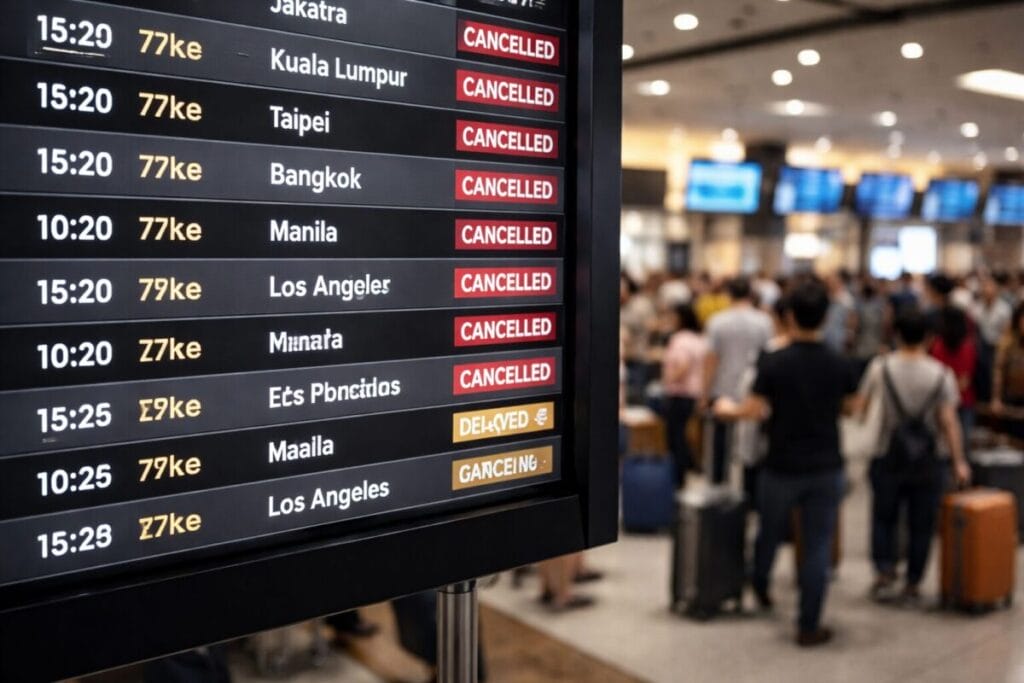
Air travel across Asia faced significant disruption after more than 50 flights were cancelled within a short period. The affected countries include Indonesia, Malaysia, Hong Kong, Taiwan, and Laos. These cancellations impacted both domestic and international routes, creating uncertainty for passengers and increasing pressure on regional aviation networks.
Travelers flying between key cities such as Jakarta, Bali, Kuala Lumpur, Taipei, Manila, Bangkok, Honolulu, and Los Angeles experienced schedule changes and last-minute adjustments. The disruptions highlight how closely connected Asian aviation systems have become. A problem at one hub can quickly affect multiple routes across continents.
Airlines adjusted schedules to manage operational constraints, fleet availability, and crew logistics. As a result, several routes saw repeated cancellations rather than isolated incidents.
Indonesia Faces the Largest Share of Disruptions
Indonesia recorded the highest number of cancelled flights. Jakarta’s main international airport experienced the most significant impact. Many domestic routes connecting major islands were withdrawn repeatedly over several days.
Inter-island connectivity suffered the most. Indonesia relies heavily on domestic aviation because of its geography. When flights are cancelled, travelers often have limited alternatives.
Airports in Bali, Surabaya, Makassar, and Medan also reported cancellations. Routes linking Jakarta to regional destinations such as Lombok, Yogyakarta, Batam, Manado, and other secondary cities saw reduced capacity. Narrowbody aircraft operations appeared particularly affected, which increased pressure on short-haul services.
The disruptions created challenges for both leisure travelers and business passengers. Domestic tourism flows may slow temporarily as airlines reshape schedules.
Kuala Lumpur Airport Sees Regional Route Adjustments
Malaysia experienced several cancellations at Kuala Lumpur International Airport. These disruptions primarily affected short-haul routes within Southeast Asia. Flights to Bangkok, Singapore, and Penang were among those removed from schedules.
Kuala Lumpur serves as a key transit hub for regional travelers. When short-haul flights are cancelled, passengers often miss onward connections. This leads to longer travel times and higher demand for alternative flights.
Airlines operating in the region rely on tight turnaround schedules. Any delay in aircraft rotation can quickly disrupt multiple routes. Travelers using Kuala Lumpur as a transfer point should expect possible adjustments during peak travel periods.
Laos Experiences Limited but Significant Impact
Laos reported a smaller number of cancellations compared to larger aviation markets. However, even a single cancelled domestic flight can create challenges in countries with fewer daily services.
At Vientiane’s main airport, a turboprop service to a regional destination was cancelled. In smaller markets, passengers often have fewer rebooking options. This increases travel delays and creates logistical difficulties for local tourism.
Taiwan’s Repeated International Cancellation Raises Concerns
Taiwan also faced recurring disruptions. A late-night international service connecting Taipei and Manila was cancelled on multiple days. Repeated cancellations on the same route suggest operational adjustments rather than isolated weather or technical issues.
Overnight flights play a critical role in maximizing aircraft usage and connecting passengers to early morning departures. When such services are withdrawn, passengers may face limited alternatives.
Travelers relying on red-eye flights should monitor schedules carefully and remain flexible with travel plans.
Hong Kong Disruptions Extend to Long-Haul Routes
Hong Kong’s aviation network experienced cancellations that reached beyond Asia. Flights to major international destinations, including long-haul routes, were affected.
Hong Kong operates as one of Asia’s leading global transit hubs. Any disruption at the airport can quickly impact travelers flying between Asia, North America, and other regions.
Long-haul cancellations often cause greater challenges because replacement flights may not be available daily. Passengers may need to reroute through alternative hubs, which increases travel time and costs.
How Passengers and Tourism Are Being Affected
The recent wave of Asia flight cancellations has created several travel challenges:
- Increased risk of missed connections
- Longer layovers and rebooking delays
- Reduced availability on popular routes
- Higher demand for alternative flights
Tourism sectors may also feel short-term effects. Destinations that depend on connecting traffic could see slower arrivals until schedules stabilize.
Travel experts recommend checking flight status regularly. Travelers should also allow extra time between connections and review airline policies for changes or compensation.
Why Asia’s Aviation Network Remains Vulnerable
The current disruptions highlight structural challenges within modern aviation. Airlines operate complex networks that rely on precise timing and efficient aircraft use. When operational pressure increases, carriers often reduce flight frequency to maintain reliability.
Asia’s rapidly growing travel demand adds further strain. High passenger volumes, busy hub airports, and tight schedules leave little room for delays.
Airlines continue to balance expansion with operational stability. In the short term, schedule adjustments may remain common as carriers prioritize safety and reliability.
Outlook for Regional Travel
While cancellations create inconvenience, they also reflect ongoing adjustments as airlines optimize operations. Industry analysts expect gradual stabilization as airlines refine schedules and manage fleet availability.
For travelers planning trips across Southeast Asia and beyond, flexibility remains essential. Monitoring updates and preparing alternative options can help minimize disruption.
Asia remains one of the world’s fastest-growing tourism regions. Despite temporary challenges, demand for regional and long-haul travel continues to recover, suggesting that airlines will work to restore stability in the coming months.
For more travel news like this, keep reading Global Travel Wire