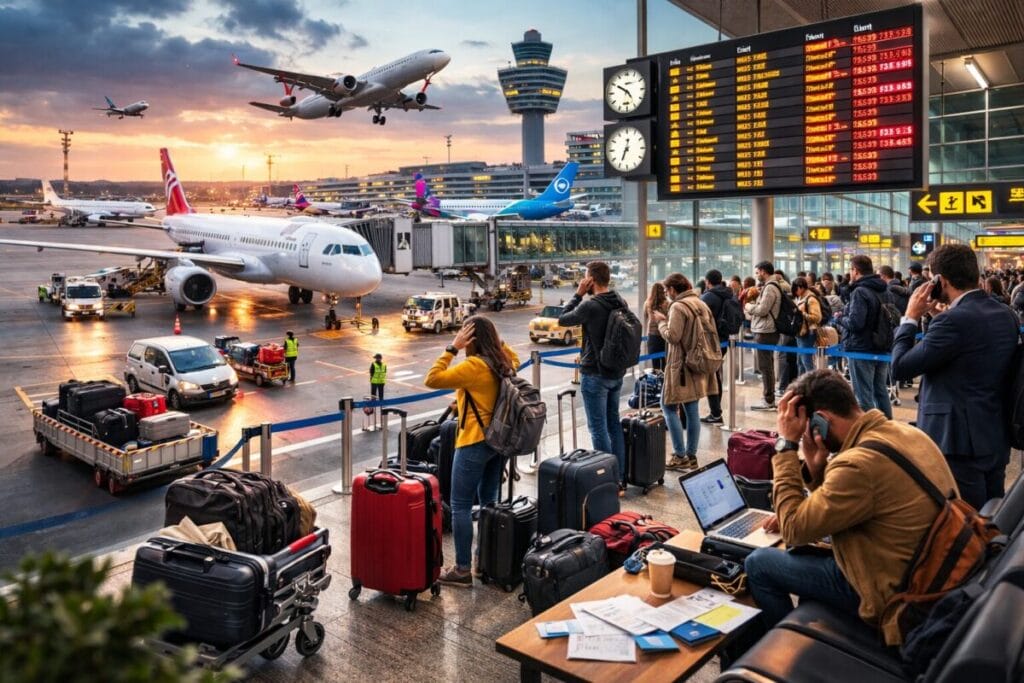
Air travel across Europe is experiencing significant disruption as multiple countries report widespread delays and cancellations. Switzerland, Denmark, Germany, Norway, and France are among the regions affected. More than 214 flights have been delayed, while at least 12 services were cancelled. These disruptions are impacting major airlines and causing uncertainty for thousands of passengers.
Busy aviation hubs such as Geneva, Copenhagen, Hamburg, Oslo, and Paris Charles de Gaulle are seeing the highest levels of operational challenges. Travelers are facing extended waiting times, missed connections, and unexpected changes to travel plans.
Peak travel demand combined with operational pressures has intensified the situation. Many passengers now need to monitor flight updates closely to avoid further inconvenience.
Geneva Airport Sees Significant Delays Despite Limited Cancellations
Geneva Cointrin International Airport has experienced notable disruption. Around 46 flights faced delays, while two were cancelled. Even though cancellation numbers remain relatively low, delays have created congestion across departure and arrival schedules.
Passengers moving through Geneva reported longer queues and tighter connection windows. Operational challenges and heavy traffic flow appear to be major contributing factors.
Copenhagen Airport Reports High Delay Numbers
Copenhagen Airport has recorded one of the highest volumes of delays among affected hubs. Approximately 54 flights were delayed, and three were cancelled.
The delays have had a ripple effect, especially for travelers relying on connecting flights. Business travelers and tourists heading toward Nordic destinations faced schedule disruptions. Airport authorities continue working to stabilize operations, but delays remain a concern.
Hamburg Airport Experiences Moderate Impact
Hamburg Airport reported fewer disruptions compared to other major hubs. One flight cancellation occurred alongside 21 delays. While the numbers are lower, even moderate delays can create challenges for travelers with tight itineraries.
Passengers connecting to other European destinations experienced scheduling stress. Airlines continue adjusting operations to maintain overall service stability.
Oslo Gardermoen Airport Faces Combined Delays and Cancellations
Oslo Gardermoen Airport has encountered both delays and cancellations. Five flights were cancelled, and 30 experienced delays. Such mixed disruptions increase pressure on airport resources and airline operations.
Passengers travelling through Oslo may face longer transfer times or rescheduled departures. Travelers are encouraged to allow extra time for security and boarding procedures.
Paris Charles de Gaulle Leads in Delay Volume
Paris Charles de Gaulle Airport reported the highest number of delayed flights among the affected airports. Around 63 flights experienced delays, while one cancellation was recorded.
As one of Europe’s busiest aviation hubs, disruptions at Charles de Gaulle can quickly affect international and long-haul travel routes. Transit passengers are particularly vulnerable to schedule changes, making real-time updates essential.
Airlines Impacted by European Flight Disruptions
Several airlines have experienced operational delays, although most have avoided large-scale cancellations.
easyJet Faces Highest Delay Numbers
easyJet reported 21 delayed flights but no cancellations. Despite maintaining most scheduled services, delays may affect connections and arrival times.
KLM Maintains Strong Schedule Stability
KLM recorded only one delayed flight and avoided cancellations. This indicates relatively stable operations compared to other carriers.
Wizz Air Sees Minimal Operational Impact
Wizz Air reported two delayed flights with no cancellations. The airline has largely maintained its planned schedule.
Eurowings Experiences Limited Delays
Eurowings registered five delayed flights. While minor, these delays still require travelers to stay alert for updates.
Norwegian Air Sweden Reports Small Disruptions
Norwegian Air Sweden recorded six delays but avoided cancellations. The airline continues to operate most routes without major interruptions.
Why Europe Is Seeing Increased Travel Disruptions
Several factors can contribute to widespread flight delays across Europe. High passenger demand, air traffic congestion, weather changes, and operational adjustments often combine to create scheduling challenges.
Busy airspace in major European corridors can amplify delays quickly. Even small disruptions at one hub can spread across the network, affecting multiple airlines and destinations.
Airports also face staffing and logistical pressures during peak seasons, which can slow turnaround times for aircraft.
Practical Tips for Travelers Facing Flight Delays
Passengers can reduce stress by taking proactive steps during travel disruptions:
- Check flight status frequently through airline apps or airport displays.
- Arrive earlier than usual to manage unexpected schedule changes.
- Keep essential items such as chargers, medications, and snacks in carry-on luggage.
- Review airline policies regarding rebooking and passenger assistance.
- Consider alternate routes if delays become extensive.
- Stay calm and flexible when schedules change.
Preparation helps travelers adapt quickly to evolving situations.
Outlook for European Air Travel
Despite ongoing disruptions, many airlines continue operating most scheduled flights. The relatively low number of cancellations suggests airlines are managing challenges while prioritizing continuity.
However, the high volume of delays shows that European aviation networks remain under pressure. Travelers should plan with flexibility, monitor updates closely, and allow extra time for connections.
As operational conditions stabilize, passengers can expect gradual improvements. Until then, staying informed remains the best strategy for navigating Europe’s current travel disruptions.
For more travel news like this, keep reading Global Travel Wire