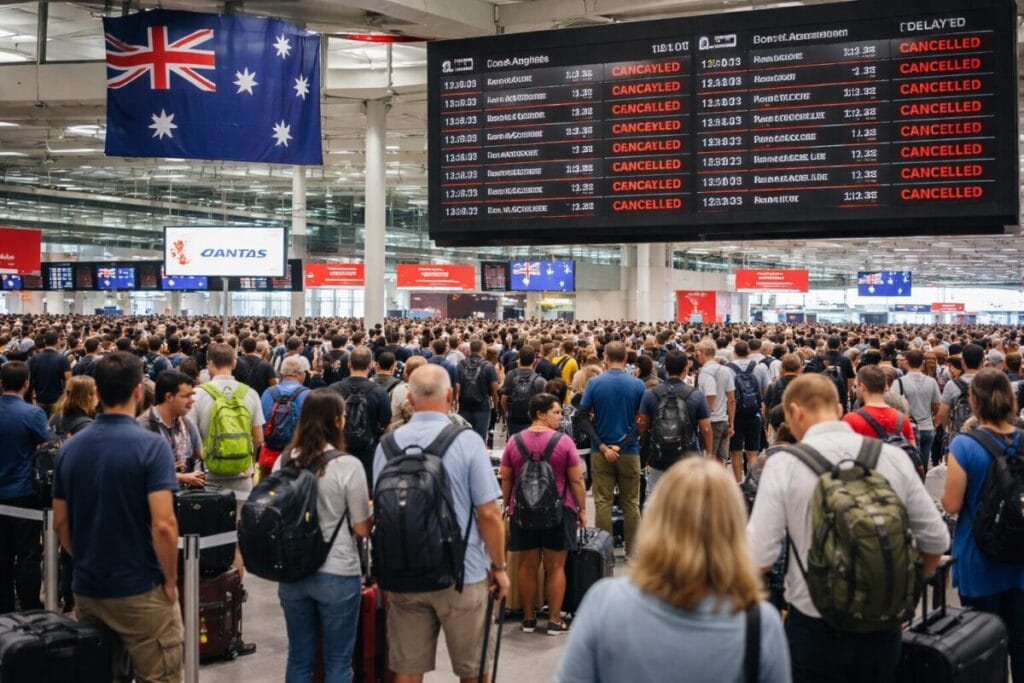
Thousands of travellers experienced major disruption across Australia after extensive flight delays and cancellations struck key airports in Sydney, Melbourne, and Brisbane. Airlines including Qantas, Air New Zealand, Emirates, and several international carriers struggled to maintain schedules as operational challenges combined with severe weather conditions.
More than 500 flights faced delays while dozens were cancelled within a short period. The disruptions triggered congestion at terminals and caused long queues at check-in counters and boarding gates. Passengers reported extended waiting times, missed connections, and overnight stays at airports.
The situation quickly affected international routes, turning what began as localized disruptions into a broader global aviation challenge.
Severe Weather Creates Domino Effect Across International Routes
Weather played a central role in the disruptions. Thunderstorms, heavy rain, and snow conditions in several regions forced airlines to adjust flight schedules for safety reasons.
Flight crews and air traffic controllers must follow strict safety regulations. Even minor weather changes can delay departures or restrict landing windows. When multiple airports face adverse conditions simultaneously, delays cascade through airline networks.
Flights connecting Australia with major hubs such as Los Angeles, Tokyo, Auckland, and Bangkok saw significant delays. Aircraft arriving late created scheduling conflicts for subsequent departures, amplifying disruptions throughout the day.
Weather-related disruptions remain one of the biggest challenges in modern aviation. Climate variability and extreme weather patterns increasingly affect flight reliability worldwide.
Operational Challenges Add Pressure on Airlines
Weather alone did not cause the chaos. Airlines also faced operational difficulties that worsened delays. Staffing shortages, aircraft rotation issues, and tight turnaround schedules placed additional strain on airline operations.
Many airlines continue to rebuild capacity after pandemic-era reductions. Training new crew members and maintaining operational readiness require time and resources. Ground handling delays, maintenance checks, and airport congestion further slowed recovery efforts.
Airport infrastructure also felt pressure from rising passenger numbers. Global travel demand has surged in recent years, especially across Asia-Pacific routes. Increased traffic means even small disruptions can escalate quickly.
Airlines and Airports Most Affected
Sydney Airport experienced the highest number of delays. Melbourne and Brisbane followed closely behind, with significant schedule disruptions during peak travel periods.
Regional airports also reported delays, though at smaller scale. International hubs in Asia and Oceania felt ripple effects as aircraft arrived late from Australia. Airports like Hong Kong and Singapore recorded increased delay rates linked to incoming flights.
Several airlines faced minor cancellation rates but reported widespread delays across routes. Low-cost carriers and regional airlines struggled with tighter operational margins, making recovery more challenging.
Key International Routes Experience Major Delays
Global travel corridors connecting Australia to major destinations experienced notable disruption.
Flights between Sydney and Los Angeles encountered delays of several hours due to operational constraints and aircraft positioning issues. Routes to Tokyo faced additional challenges linked to weather conditions at arrival airports.
Services between Sydney and Auckland also slowed as airline operations adjusted to schedule changes. Flights to Bangkok experienced delays linked to storm activity and reduced runway availability.
These routes serve as critical links for tourism, business travel, and international connections. Disruptions therefore affected passengers far beyond Australia’s borders.
Tourism Industry Faces Short-Term Impact
The disruptions highlight how vulnerable tourism can be to aviation challenges. Australia relies heavily on air connectivity for both inbound and outbound tourism. Delays and cancellations affect hotel bookings, tour schedules, and cruise departures.
Travel agencies reported increased customer inquiries as travellers sought alternative routes or rebooked flights. Some tourists postponed plans due to uncertainty.
Despite short-term disruption, demand for international travel remains strong. Airlines continue to expand routes and increase frequency as passenger numbers grow.
Broader Challenges for the Global Aviation Sector
The recent chaos reflects deeper structural pressures facing airlines worldwide. Increasing demand, limited airport capacity, and climate-related weather events continue to test operational resilience.
Industry experts emphasize the need for improved contingency planning. Advanced weather forecasting tools, better coordination between airlines and airports, and enhanced staffing strategies could reduce future disruptions.
Governments and aviation authorities are also investing in modern air traffic management systems. These improvements aim to increase efficiency while maintaining safety standards.
Tips for Travellers Navigating Flight Disruptions
Passengers can take steps to reduce stress during travel disruptions. Checking flight status regularly helps travellers stay informed. Arriving early at airports allows extra time to handle unexpected delays.
Flexible travel plans provide additional options when schedules change. Travel insurance may also help cover costs linked to cancellations or missed connections.
Airlines typically provide assistance such as rebooking or accommodation depending on circumstances. Travellers should communicate with airline staff early to secure alternative arrangements.
Outlook for Australian Aviation
While the recent disruptions caused frustration, they also highlight the resilience of Australia’s aviation sector. Airlines continue to refine operations and expand services as global travel rebounds.
Improved planning, technology upgrades, and infrastructure investments could reduce future disruptions. As passenger numbers increase, airlines and airports must adapt quickly to maintain reliability.
For now, travellers should expect occasional delays during peak periods and remain flexible when planning journeys. The aviation industry continues to evolve, balancing safety, efficiency, and rising demand in an increasingly complex travel environment.
For more travel news like this, keep reading Global Travel Wire