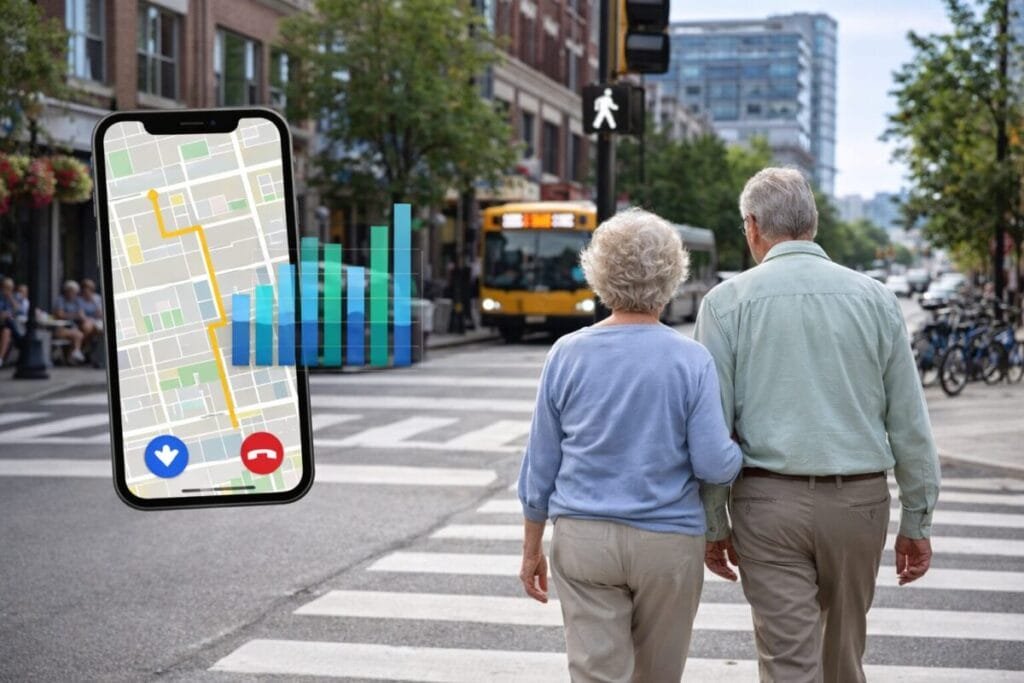
A groundbreaking study published in 2026 explores how the built environment shapes long and short-distance travel among older adults. Researchers used anonymised mobile phone data to track real movement patterns rather than relying on surveys. This approach provides deeper insight into how infrastructure influences elderly mobility.
As populations age worldwide, governments face growing pressure to design cities that support independence and accessibility. Understanding how seniors travel helps planners create safer, more inclusive communities. The study highlights the direct link between urban design and daily mobility choices among older residents.
Mobile Phone Data Brings Precision to Mobility Research
Traditional transport studies often rely on interviews or self-reported travel diaries. While useful, those methods can miss details or introduce recall bias. Mobile phone data captures actual movement in real time, offering a more accurate picture of mobility behavior.
Researchers analysed location signals to examine patterns across neighbourhoods and regions. They assessed how access to transport, land use design, and population density influenced movement. The findings reveal clear differences between short-distance and long-distance travel decisions.
This method allows policymakers to observe real trends instead of theoretical assumptions. It also helps identify gaps in accessibility that traditional surveys may overlook.
Short-Distance Travel Depends on Walkable Environments
Short-distance trips form the foundation of daily life for many elderly adults. These journeys often include grocery shopping, healthcare visits, social gatherings, and leisure walks. The study found that neighbourhood design strongly influences these routine movements.
Older adults living in pedestrian-friendly districts show higher rates of walking and cycling. Areas with connected sidewalks, nearby amenities, and safe crossings encourage active travel. Accessible public transport hubs also support local mobility.
In contrast, neighbourhoods lacking proper infrastructure limit short-distance travel. Poor sidewalks, heavy traffic, and limited transit options discourage seniors from leaving home. Reduced mobility can increase social isolation and negatively affect health.
Urban planners often promote compact, mixed-use communities to support sustainable travel. This research reinforces that such designs benefit elderly residents significantly. Accessible neighbourhoods promote independence while reducing reliance on private vehicles.
Long-Distance Travel Relies on Transport Connectivity
While local mobility remains essential, long-distance travel plays an equally important role. Seniors often travel across districts to access specialised healthcare, visit relatives, or participate in cultural activities.
The study shows that well-connected urban transport systems encourage regional mobility. Cities with integrated bus and rail networks see higher long-distance travel among elderly residents. Subsidised public transport also increases mobility rates.
In metropolitan areas with affordable transit options, older adults travel further and more frequently. However, suburban and rural regions often lack comprehensive transport systems. Limited services reduce travel opportunities and restrict access to essential services.
Transport connectivity directly influences quality of life. Seniors who can travel easily maintain stronger social ties and broader access to healthcare. Reliable infrastructure reduces dependency and supports healthy ageing.
Travel Intensity Offers New Insight Into Mobility Needs
The research introduces travel intensity as a new analytical concept. Instead of counting total trips, this measure compares mobility demand relative to local population density.
Urban centres may record high travel volumes due to population concentration. However, suburban areas can show higher per capita travel needs despite lower overall numbers. Travel intensity highlights these hidden patterns.
This metric helps policymakers allocate resources more effectively. Regions with high travel intensity may require improved services even if raw trip counts appear modest. The approach supports targeted infrastructure investment.
Understanding travel intensity allows governments to avoid overlooking sparsely populated areas. Elderly residents in these zones often face greater transport challenges. Tailored solutions can address those disparities.
Implications for Urban Planning and Policy
Governments worldwide prioritise age-friendly city initiatives. This study strengthens the case for inclusive design that supports mobility at every stage of life.
Urban planners can use these insights to improve walkability, expand public transport, and enhance connectivity. Investment in accessible infrastructure benefits not only seniors but entire communities.
Mixed-use development, safe pedestrian networks, and integrated transit systems encourage sustainable travel. Such strategies reduce car dependency and support environmental goals while improving elderly mobility.
Policymakers must also consider rural and peri-urban regions. These areas often require flexible transport services, community shuttles, or subsidised travel programs. Without intervention, seniors in these zones may face increasing isolation.
A Growing Global Priority
The global elderly population continues to rise rapidly. Many countries expect significant demographic shifts within the next decade. As ageing accelerates, mobility becomes a central factor in public health and economic participation.
Research that uses real-time data provides valuable evidence for future planning. By analysing how infrastructure shapes behavior, governments can design smarter and more responsive transport systems.
Accessible environments promote independence, social participation, and physical activity. They also reduce healthcare costs linked to inactivity and isolation.
Building Inclusive Cities for the Future
This study underscores the powerful role of the built environment in shaping elderly travel patterns. Walkable neighbourhoods support daily activity, while connected transit networks enable regional mobility. Travel intensity analysis ensures that no community remains overlooked.
As cities evolve, planners must prioritise accessibility and inclusive design. Data-driven research offers clear guidance on where to invest and how to improve mobility systems.
By aligning urban development with the needs of older adults, societies can foster independence and strengthen community ties. In doing so, cities create environments that support ageing populations while advancing sustainable transport goals.
For more travel news like this, keep reading Global Travel Wire