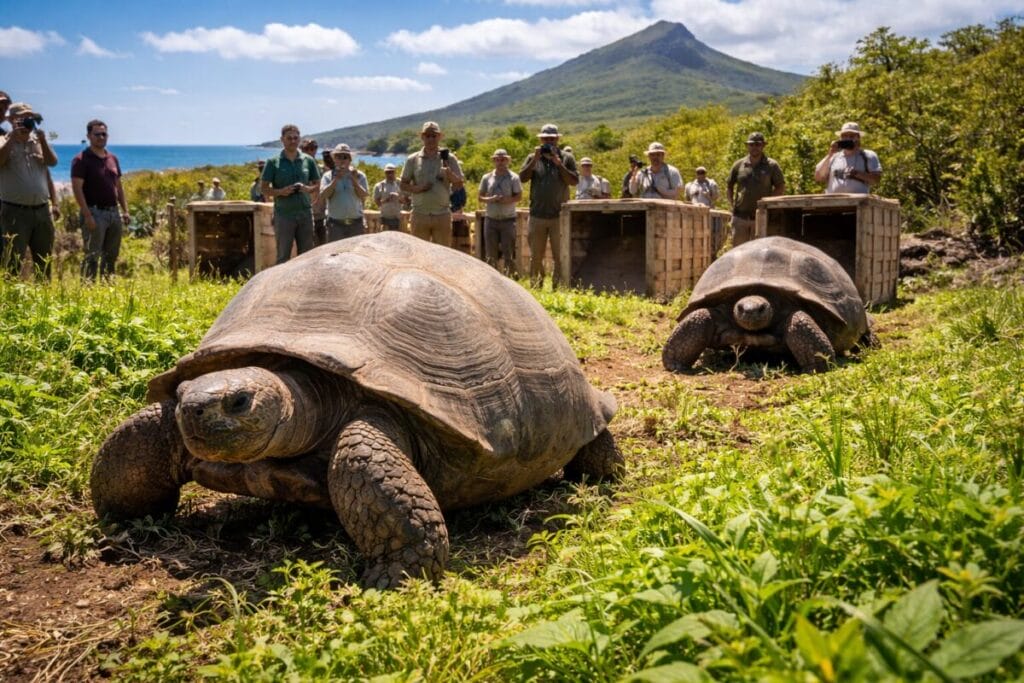
Ecuador has achieved a major conservation milestone with the successful reintroduction of giant tortoises to Floreana Island, marking a turning point in both environmental restoration and sustainable tourism development across the Galápagos archipelago. After more than a century of absence, the return of these iconic animals represents an ambitious effort to restore ecological balance while demonstrating how responsible tourism can contribute to long-term conservation outcomes.
The release of 158 giant tortoises forms part of a larger ecological recovery program that combines scientific research, community participation, and international support. Conservation leaders and tourism stakeholders view the initiative as a powerful example of how environmental protection and expedition travel can work together to safeguard fragile ecosystems.
Restoring a Species After a Century of Absence
Giant tortoises once played a central role in shaping the ecosystems of Floreana Island. Their disappearance more than 100 years ago altered vegetation patterns and disrupted natural ecological processes that had evolved over thousands of years. Without these large herbivores, certain plant species struggled to regenerate, and the island’s ecological dynamics shifted significantly.
The recent reintroduction aims to reestablish these natural processes. Scientists expect that as tortoises move across the island, their feeding habits will help disperse seeds and promote the growth of native vegetation. Over time, this activity is anticipated to restore habitat complexity and encourage biodiversity recovery.
The release represents more than the return of a single species; it signals the revival of an entire ecological function that is essential to the health of the Galápagos environment.
International Collaboration Supports Conservation Goals
The restoration project has benefited from collaboration between Ecuadorian authorities, conservation scientists, and international partners connected to expedition travel initiatives. Funding and logistical support have played a crucial role in enabling habitat studies, breeding programs, and long-term monitoring strategies.
Traveler contributions linked to expedition tourism have provided significant resources for conservation efforts. This model highlights how visitor experiences can generate meaningful environmental impact when tourism is structured around sustainability principles.
By integrating conservation funding with travel experiences, the initiative demonstrates a shift toward responsible tourism practices where visitors actively support the protection of the destinations they explore.
Why Giant Tortoises Matter to the Galápagos Ecosystem
Giant tortoises are often referred to as ecosystem engineers because their behavior influences the environment on a large scale. As they graze on vegetation and move through diverse habitats, they naturally disperse seeds, helping plants regenerate and maintain ecological diversity.
Their movement also creates pathways that influence soil composition and plant growth patterns. Additionally, depressions formed by their activity can create microhabitats that benefit insects, reptiles, and small mammals.
The absence of tortoises from Floreana Island disrupted these interconnected systems. Reintroducing them is expected to gradually restore ecological rhythms, supporting healthier landscapes and reinforcing the resilience of the island’s ecosystems.
A Long-Term Science-Driven Restoration Strategy
The reintroduction is part of a carefully planned program extending through the end of the decade. Conservation teams have used detailed habitat assessments to determine suitable release areas, ensuring that environmental conditions support the survival and growth of the tortoise population.
Adaptive management strategies are being applied, meaning scientists will continually evaluate outcomes and adjust conservation methods based on new data. Monitoring efforts include tracking tortoise movement, assessing vegetation changes, and measuring ecosystem recovery indicators.
Local communities have also been actively involved in the restoration process. Educational programs and collaborative planning efforts aim to build long-term stewardship and ensure that conservation success benefits both nature and residents.
Sustainable Tourism Plays a Key Role
The Galápagos Islands are among the world’s most iconic wildlife destinations, attracting travelers interested in unique ecosystems and rare species. However, tourism in such fragile environments requires careful management to prevent negative impacts.
The Floreana restoration project highlights how sustainable expedition travel can support environmental recovery. By aligning tourism revenue with conservation goals, stakeholders have created a model where visitor experiences contribute directly to ecological preservation.
Travelers visiting the Galápagos increasingly seek meaningful experiences that combine adventure with education. Initiatives like this strengthen the appeal of conservation-focused tourism, where guests gain deeper insights into biodiversity while supporting restoration efforts.
Ecuador’s Commitment to Protecting the Galápagos
The reintroduction of giant tortoises reflects Ecuador’s broader dedication to preserving the Galápagos as one of the most biologically significant regions on Earth. Strict environmental management policies, research programs, and collaborative partnerships have helped maintain the islands as a global benchmark for conservation.
Authorities continue to balance tourism growth with ecosystem protection, emphasizing low-impact travel, scientific research, and environmental education. Projects such as the Floreana restoration demonstrate how targeted initiatives can address historical ecological losses while preparing for future challenges.
A New Vision for Floreana Island’s Future
While the release of 158 tortoises represents a significant achievement, conservationists emphasize that full ecosystem recovery will take years of ongoing effort. Scientists will continue monitoring the population and environmental changes to ensure long-term success.
If restoration goals are achieved, Floreana Island may once again support a thriving ecosystem similar to its historical state. Increased vegetation diversity, improved habitat conditions, and stronger ecological resilience are among the expected outcomes.
For the tourism sector, the project showcases how conservation-driven travel experiences can shape the future of exploration. Visitors increasingly seek journeys that contribute positively to the environment, and the Galápagos continues to set an example of how tourism and conservation can coexist.
The return of giant tortoises to Floreana Island stands as a powerful symbol of renewal. Through science, international collaboration, and responsible tourism, a century-long ecological absence is being addressed, offering hope for both biodiversity restoration and sustainable travel worldwide.
For more travel news like this, keep reading Global Travel Wire