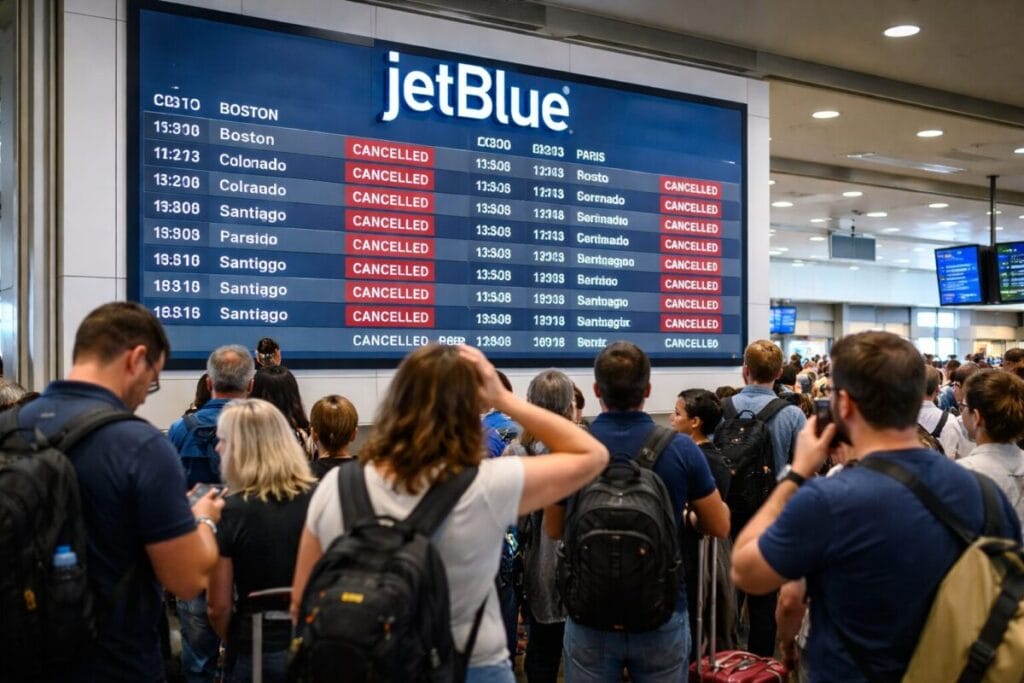
JetBlue Airways is facing major travel disruption after cancelling 778 flights and reporting 30 new delays. The sudden operational breakdown has impacted thousands of passengers across domestic and international routes.
Major airports in the United States, France, and the Dominican Republic are experiencing heavy disruption. Severe storms across parts of the US, combined with operational and staffing challenges, triggered the crisis.
Travelers at key hubs such as John F. Kennedy International Airport and Boston Logan International Airport are facing long lines, rebooking challenges, and unexpected overnight stays.
The airline is now working to stabilize operations and re-accommodate affected passengers.
Scale of the JetBlue Disruption
The disruption is significant.
JetBlue cancelled 778 flights, representing roughly 81 percent of scheduled departures during the affected period. Another 30 flights reported delays.
Such large-scale cancellations create a ripple effect. Aircraft rotations get disrupted. Crew assignments fall out of place. Airport congestion increases.
Even flights that are not cancelled face schedule adjustments.
Travelers connecting through major hubs are seeing missed connections and extended waiting times.
Major US Airports Hit Hard
New York Operations Severely Impacted
John F. Kennedy International Airport serves as JetBlue’s primary hub. The airport connects travelers to dozens of US cities and international destinations.
The cancellations at JFK affected both short-haul domestic flights and long-haul international services. Departures to Florida, California, and Caribbean destinations saw major cuts.
Storm systems moving across the northeastern United States created unsafe flying conditions. Air traffic flow restrictions added further delays.
Boston Faces Extensive Delays
Boston Logan International Airport also saw heavy disruption.
Boston is a strategic focus city for JetBlue. Flights to Orlando, Fort Lauderdale, Los Angeles, and Caribbean destinations were impacted.
Weather conditions in the Northeast often affect Boston operations. When combined with crew shortages or aircraft repositioning issues, cancellations multiply quickly.
West Coast Routes Disrupted
Operations at Los Angeles International Airport also experienced delays.
Transcontinental routes between New York and Los Angeles are among JetBlue’s most competitive services. Aircraft scheduling disruptions in the East often cascade into West Coast networks.
International Airports Also Affected
JetBlue’s global network felt the impact.
Flights to Charles de Gaulle Airport experienced cancellations and delays. Paris remains a key European destination for US travelers.
In the Caribbean, services to Cibao International Airport also faced disruption. The Dominican Republic is one of JetBlue’s strongest leisure markets.
When US hub operations collapse, international routes suffer immediately. Aircraft and crew availability becomes limited.
What Caused the Crisis?
Severe storms played a major role.
Thunderstorms, heavy rainfall, and strong winds across the northeastern US forced air traffic control restrictions. Airlines must reduce departures during unsafe weather.
However, weather alone rarely causes such a high cancellation percentage.
Operational bottlenecks likely intensified the situation. Airlines operate on tight aircraft rotations. A delay in one city can disrupt schedules nationwide.
Staffing constraints may have added pressure. Pilot and crew availability remains a challenge across parts of the US aviation sector.
Peak travel demand also increases strain. Summer and holiday travel periods often stretch airline capacity.
Passenger Rights and Immediate Steps
Passengers affected by JetBlue flight cancellations should act quickly.
Check Flight Status Frequently
Monitor flight updates through official airline communication channels. Conditions can change rapidly.
Rebooking options may appear as seats open up.
Explore Rebooking or Refund Options
Airlines typically allow free rebooking during major disruptions. Travelers may also request refunds if flights are cancelled.
Passengers flying internationally may have additional protections depending on departure or arrival country regulations.
Ask About Accommodation and Meals
If cancellations require overnight stays, airlines often provide hotel or meal vouchers when the disruption falls within their responsibility.
Weather-related events sometimes have different compensation rules. Travelers should confirm eligibility at the airport service desk.
Broader Impact on US Air Travel
Large-scale airline cancellations create congestion across the aviation system.
Airport terminals become crowded. Hotel demand rises. Rental car availability drops.
Other airlines may experience increased demand as stranded passengers search for alternative flights. Ticket prices on last-minute routes often rise during such disruptions.
Tourism destinations also feel the effects. Caribbean resorts, European city hotels, and domestic leisure markets may see delayed arrivals.
Industry Recovery Efforts
JetBlue is working to reposition aircraft and crew.
Airlines typically recover operations within 24 to 72 hours after major weather events. However, recovery speed depends on continued weather stability and crew availability.
Air traffic control systems also need time to clear backlogs.
Travelers planning upcoming trips should remain alert. Flexibility remains key during periods of volatile weather and high demand.
Key Takeaways for Travelers
JetBlue’s 778 flight cancellations mark one of its most severe recent operational disruptions.
Major hubs including JFK and Boston experienced the greatest impact. International routes to Paris and the Dominican Republic were also affected.
Severe US storms, operational strain, and staffing challenges combined to create widespread travel turmoil.
Passengers should monitor flight updates, review rebooking options, and understand their refund rights.
Air travel remains highly weather-sensitive. Proactive planning and travel insurance can help reduce risk during peak seasons.
For more travel news like this, keep reading Global Travel Wire