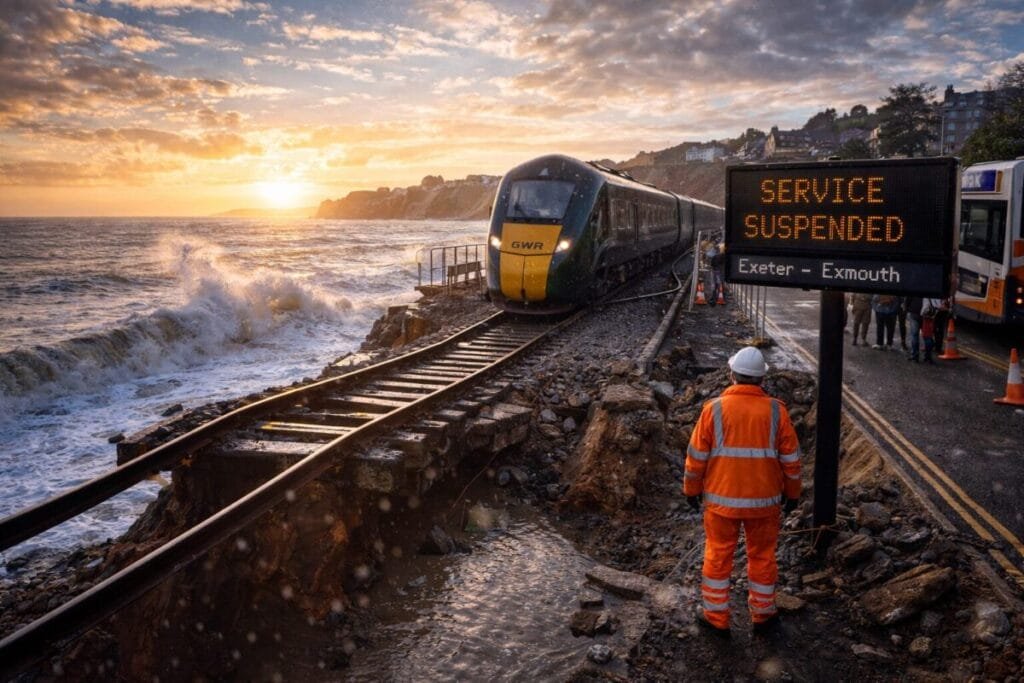
The popular Devon towns of Exmouth and Topsham are navigating a short-term rail disruption after weather-related damage affected a section of the Avocet Line near Lympstone. While train services between the two towns have been suspended as repairs take place, local tourism leaders and transport operators have acted swiftly to ensure that visitors can continue to access these key South West destinations.
The interruption, linked to concerns over the stability of a sea wall foundation along the coastal route, has temporarily halted direct rail travel on the affected stretch. For both commuters and tourists, the Avocet Line plays a vital role in connecting Exeter with the Exe Estuary towns, making it an important artery for the region’s visitor economy.
Alternative Transport Keeps Visitors Moving
Great Western Railway, which operates services on the Avocet Line, has introduced replacement bus services between Topsham and Exmouth to minimize inconvenience. In addition, rail ticket holders are being permitted to travel on selected local bus routes without additional charges, ensuring continuity of travel plans.
This coordinated approach between rail operators and regional transport providers has helped reduce potential disruption during a busy travel period. Visitors arriving in Exeter can still reach Exmouth’s seafront or Topsham’s historic quayside with only minor adjustments to their journey times.
Local authorities have emphasized that accessibility remains a priority and that temporary transport arrangements are designed to maintain the steady flow of tourists who contribute significantly to the region’s economy.
Exmouth: Gateway to the Jurassic Coast
Exmouth remains one of Devon’s most visited coastal destinations. Known for its two-mile sandy beach and position at the western gateway to the Jurassic Coast, the town attracts families, water sports enthusiasts, and walkers year-round.
The Jurassic Coast, a UNESCO World Heritage Site stretching along the Dorset and East Devon coastline, is internationally recognized for its geological significance. Visitors to Exmouth often use the town as a base for exploring dramatic cliffs, fossil-rich beaches, and scenic coastal trails.
Beachfront cafés, sailing schools, and wildlife boat tours continue to operate as usual, welcoming visitors despite the rail service interruption. Local businesses report that while some travelers have adjusted arrival times, visitor interest remains strong.
Topsham’s Maritime Heritage Continues to Draw Tourists
Just a few miles north along the River Exe, Topsham offers a contrasting yet equally appealing experience. The historic port town is known for its maritime heritage, independent boutiques, art galleries, and traditional pubs.
Topsham Museum, riverside walks, and birdwatching opportunities along the Exe Estuary attract history enthusiasts and nature lovers alike. The town’s narrow streets and Georgian architecture add to its charm, making it a popular stop for visitors exploring the wider Devon region.
Despite the rail suspension, local businesses remain optimistic. Many establishments have adapted by providing updated travel guidance to customers and encouraging the use of replacement bus services.
Tourism’s Economic Importance in the South West
Tourism is a major economic driver across Devon and the wider South West of England. According to regional tourism data, millions of visitors travel to the area annually, supporting jobs in hospitality, retail, and recreation.
Exmouth and Topsham play a significant role in this regional tourism ecosystem. Seasonal visitors boost occupancy rates in hotels and guesthouses, while restaurants and attractions benefit from increased foot traffic during peak months.
The recent disruption highlights how essential reliable transport links are to sustaining tourism growth. Rail connectivity, in particular, provides an environmentally friendly and convenient option for travelers arriving from other parts of the UK.
Infrastructure Investment and Coastal Resilience
The sea wall concerns that prompted the service suspension underscore the importance of maintaining resilient coastal infrastructure. Climate change and increasingly severe weather events have placed additional pressure on transport systems in coastal regions.
Local authorities have reiterated their commitment to strengthening infrastructure to safeguard both residents and visitors. Ongoing investment in transport resilience aims to ensure that Devon’s key destinations remain accessible even during challenging conditions.
The temporary closure also serves as a reminder of the interconnected nature of transport and tourism. Efficient repair work and transparent communication are essential to maintaining traveler confidence.
Visitor Advice and Travel Planning
Travelers planning visits to Exmouth or Topsham are encouraged to check transport updates before departure and allow extra time for journeys involving replacement bus services. Most attractions and hospitality businesses remain fully operational, and tourism officials continue to promote the region as open and welcoming.
Tour operators and accommodation providers have also updated their booking communications to include information about alternative transport options, ensuring that guests are informed well in advance of arrival.
For visitors arriving by car, road access to both towns remains unaffected. Parking facilities and park-and-ride options in nearby Exeter offer additional flexibility.
Devon Tourism Demonstrates Resilience
While the rail suspension presents temporary logistical challenges, the overall outlook for Devon tourism remains positive. The swift coordination between rail operators, local councils, and tourism organizations demonstrates the region’s adaptability.
Exmouth’s expansive beaches, coastal walking routes, and family-friendly attractions continue to draw visitors, while Topsham’s historic ambiance and riverside charm remain intact. The disruption has not dampened enthusiasm for exploring these destinations; rather, it has highlighted the community’s determination to maintain accessibility.
As repair work progresses, expectations are that normal rail services will resume once safety assessments are complete. In the meantime, the availability of replacement transport ensures that tourism activity can continue with minimal interruption.
Looking Ahead
The situation in Exmouth and Topsham illustrates both the vulnerability and resilience of coastal tourism destinations. Temporary infrastructure setbacks can pose challenges, but effective collaboration and contingency planning can significantly reduce their impact.
Devon’s tourism industry remains committed to welcoming visitors with open arms. With scenic coastlines, rich heritage, and vibrant local businesses, Exmouth and Topsham continue to stand out as key highlights of the South West.
As repairs move forward and connectivity is restored, the region’s enduring appeal and community spirit are expected to ensure that visitor numbers remain strong throughout the season and beyond.
For more travel news like this, keep reading Global Travel Wire