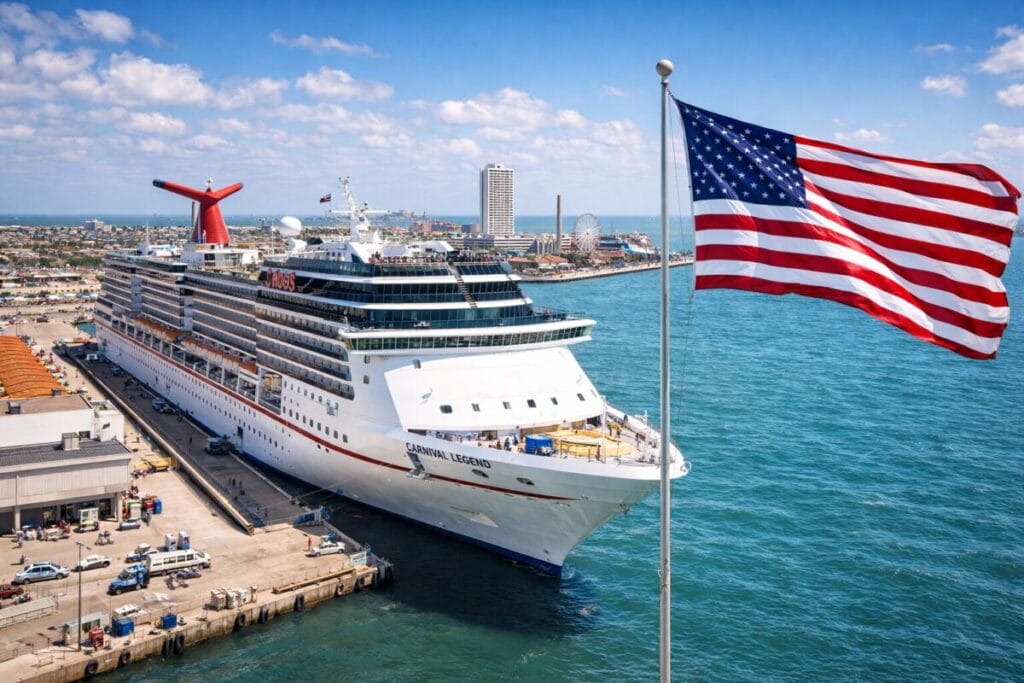
Carnival Cruise Line has introduced a notable operational adjustment aboard Carnival Legend during its current Eastern Caribbean sailing, reflecting evolving practices within the United States and Caribbean cruise market. Guests traveling on the 10-night voyage departing from Galveston, Texas have been informed that onboard expenses will be settled through a two-stage billing process rather than the traditional single payment at the end of the cruise.
While the modification does not affect the total amount passengers pay, it changes the timing and structure of billing, prompting increased interest among travelers and industry observers alike. The adjustment highlights how cruise lines continue to refine onboard operations to enhance efficiency and respond to changing industry dynamics.
Two-Stage Billing Introduced Mid-Voyage
During the ongoing Eastern Caribbean itinerary, Carnival Legend passengers were notified that their Sail & Sign accounts would be processed in two separate settlements. The first charge is scheduled mid-cruise, while the final balance will be completed on the morning of debarkation when the ship returns to Galveston.
Typically, onboard expenses are consolidated into a single final statement at the conclusion of a voyage. This new approach divides the financial processing into two stages, meaning guests may see multiple transactions reflected on their payment methods.
The change has been described as procedural rather than financial. All onboard purchases — including specialty dining, beverages, spa treatments, excursions, retail shopping, and gratuities — continue to accumulate in the same way, with no increase in total costs.
How Onboard Billing Normally Works
Carnival Cruise Line uses the Sail & Sign system to manage onboard spending. Upon embarkation, guests link a credit or debit card to their account, allowing them to make purchases without carrying cash throughout the voyage.
Transactions are tracked digitally and typically summarized in a final statement delivered to staterooms or accessible through onboard apps and kiosks. If guests find discrepancies, they can address them with guest services before leaving the ship.
Once approved, the credit card on file is charged for the entire balance. This process has long been a standard practice across cruise lines due to its simplicity and convenience.
The introduction of a mid-voyage settlement alters this flow by processing part of the balance earlier, effectively dividing the final bill into two segments.
Guest Experience and Financial Considerations
From a passenger perspective, the change primarily affects payment timing. Travelers may notice two separate charges appearing on their bank statements instead of a single consolidated transaction.
For guests managing budgets or monitoring credit limits, understanding the dual billing dates becomes important. Pre-authorization holds — commonly placed at embarkation to verify payment methods — remain part of the process and may overlap with the new settlement structure.
Once the first payment cycle is completed, earlier transactions included in that settlement are generally finalized, limiting the ability to make changes to those charges or payment methods. However, adjustments may still be possible for purchases included in the final billing phase.
Possible Reasons Behind the Adjustment
Although Carnival Cruise Line has not officially disclosed the specific reason for the revised billing procedure, several operational theories have emerged within the cruise community.
One widely discussed possibility is that the change aims to streamline the debarkation process. On many cruises, guest services desks experience heavy traffic on the final evening as passengers review accounts or resolve billing questions. Processing part of the balance earlier could reduce congestion and improve overall efficiency during disembarkation.
Another potential factor involves financial risk management. Mid-voyage billing may allow cruise operators to identify declined payments or insufficient funds before the sailing concludes, giving both guests and the cruise line time to resolve issues while still onboard.
Additionally, the cruise industry continues to invest in technological updates and digital systems, and adjustments to billing procedures may reflect ongoing experimentation with new operational models.
Galveston’s Role as a Key Cruise Gateway
The current voyage highlights Galveston’s growing importance as a major cruise hub in the United States. The Texas port has expanded significantly in recent years, attracting multiple cruise lines and serving as a convenient departure point for Caribbean itineraries.
Cruises departing from Galveston appeal to travelers from across North America due to accessible travel options and a wide variety of routes visiting tropical destinations. Efficient passenger processing — including embarkation, onboard operations, and debarkation — remains essential to maintaining smooth turnaround schedules at busy ports.
Operational adjustments such as split billing could potentially support these goals by improving financial reconciliation processes before the ship returns to its homeport.
Broader Context Within the U.S. and Caribbean Cruise Market
The introduction of a two-stage billing process reflects the broader evolution of cruise operations as companies explore new ways to enhance efficiency and customer experience. As demand for Caribbean cruises continues to grow, cruise lines are balancing passenger expectations with operational requirements.
Modern travelers increasingly expect seamless digital interactions, transparent billing, and streamlined processes throughout their journeys. Innovations in onboard systems, mobile applications, and payment technologies have enabled cruise lines to test new approaches that might eventually become standard practice.
However, industry observers note that operational experiments are often voyage-specific and may not necessarily indicate permanent policy changes.
Looking Ahead
As Carnival Legend completes its Eastern Caribbean itinerary and returns to Galveston, attention will likely turn to passenger feedback regarding the new billing structure. Guest response may influence whether similar procedures are implemented on future sailings.
For now, travelers onboard continue to enjoy the same destinations, entertainment, dining experiences, and shore excursions that define Caribbean cruising. The key difference lies in how onboard expenses are processed, illustrating how even small operational adjustments can generate significant interest in a highly structured travel environment.
Ultimately, the mid-voyage billing update underscores the cruise industry’s ongoing efforts to refine operations while maintaining the overall guest experience. As U.S. and Caribbean cruise travel remains strong, innovations aimed at improving efficiency and convenience are expected to continue shaping the future of maritime tourism.
For more travel news like this, keep reading Global Travel Wire