Singapore continues to reshape the future of travel through advanced digital innovation and strategic partnerships. The Singapore Tourism Board and Ant International have extended their long-term collaboration to enhance seamless visitor experiences. This partnership focuses on integrating digital commerce, payment solutions, and data-driven tools into the tourism ecosystem.
The initiative reflects Singapore’s ambition to remain a global leader in tourism technology. By combining advanced infrastructure with smart solutions, the city-state aims to simplify travel processes and improve visitor engagement.
Frictionless Travel Drives Global Visitor Appeal
Singapore has positioned itself as a destination where travelers can move easily from arrival to exploration without operational barriers. Digital payment integration plays a central role in this transformation. Through unified wallet systems, international travelers can pay using familiar platforms without currency exchange complications.
Authorities believe frictionless payment ecosystems encourage spending and improve visitor satisfaction. Tourists gain confidence when transactions remain simple and secure. Businesses benefit from faster payments and access to international markets.
High-impact marketing campaigns also strengthen Singapore’s global visibility. Strategic promotions target key outbound markets, especially during peak travel periods such as Chinese New Year. These campaigns highlight luxury retail, culinary experiences, and cultural attractions while reinforcing the destination’s tech-forward image.
Mobile-First Tourism Shapes the Visitor Journey
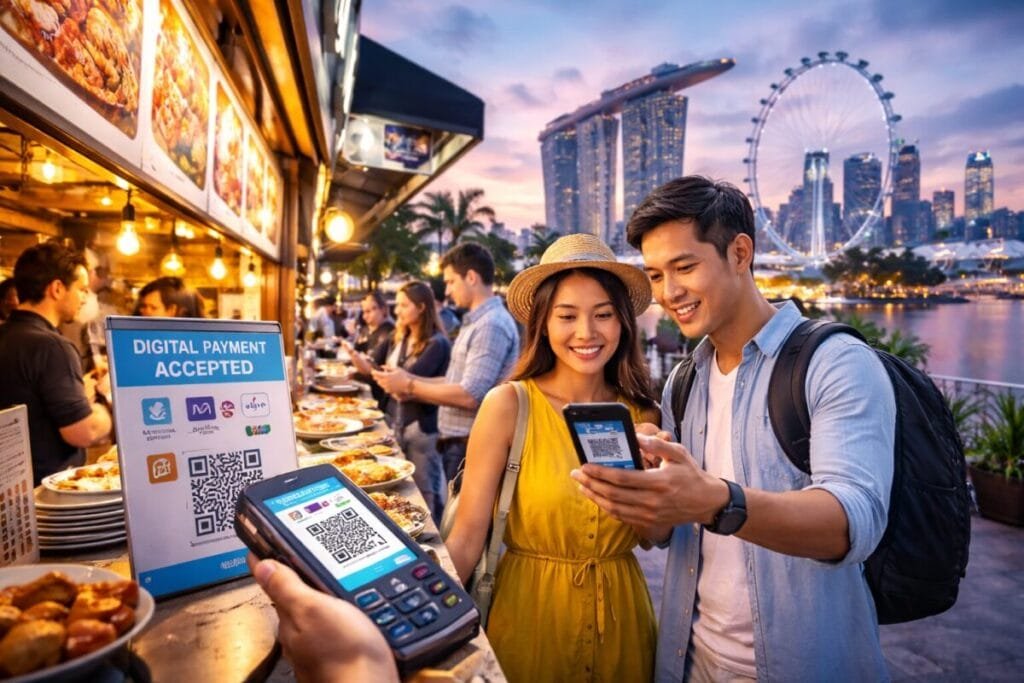
Singapore continues to lead the shift toward mobile-first travel experiences. Integration of multiple international e-wallets and banking applications allows visitors from numerous countries to transact seamlessly. Tourists can use their home payment systems across local merchants without additional setup.
The widespread adoption of SGQR codes has accelerated mobile payments across the city. Transaction volumes have increased significantly as both small and large businesses adopt digital payment options. Hawker centers and local retailers benefit from increased accessibility for international visitors.
Mobile-first solutions reduce friction across everyday interactions. Visitors can pay for meals, transportation, shopping, and attractions using a single digital interface. This convenience encourages exploration and increases engagement with local businesses.
Data and Technology Support the Tourism 2040 Vision
Singapore’s Tourism 2040 roadmap guides long-term development strategies. Data insights help authorities understand visitor behavior and adapt quickly to changing trends. Advanced analytics allow tourism planners to forecast demand patterns and optimize infrastructure.
By analyzing spending habits and movement patterns, stakeholders create targeted experiences that align with traveler preferences. Data-driven strategies strengthen resilience against economic fluctuations and global travel shifts.
Technology partnerships also support real-time monitoring of tourism performance. Authorities can track visitor flow across districts, ensuring balanced distribution of tourists throughout the city. This approach helps reduce overcrowding while promoting lesser-known neighborhoods.
AI-Powered Personalization Enhances Travel Experiences
Artificial intelligence plays a growing role in shaping modern tourism. AI-driven assistants integrated into super apps provide personalized recommendations for dining, shopping, and attractions. Travelers receive curated suggestions based on interests, location, and behavior.
These digital tools also include translation features, navigation support, and transport booking services. Personalized content reduces uncertainty for visitors exploring unfamiliar destinations. Travelers can plan activities efficiently without relying on multiple platforms.
Retailers and attractions benefit from targeted promotions delivered through mobile platforms. Digital mini-programs offer localized deals that encourage spontaneous spending. This integration creates a seamless connection between technology and everyday travel experiences.
Economic Growth Reflects Digital Strategy Success
Singapore’s digital tourism strategy has produced strong economic results. Tourism spending has reached record levels, supported by increased visitor confidence and seamless payment systems. Transaction growth has risen significantly as digital tools simplify spending.
Mainland China remains a major source market, yet emerging markets also show strong growth. Visitors from diverse regions contribute to a more balanced tourism economy. Spending patterns indicate growth across retail, food and beverage, accommodation, and transportation sectors.
These trends demonstrate how digital innovation supports broader economic benefits. Small businesses gain increased exposure, while major attractions benefit from higher engagement levels.
Public-Private Collaboration Builds a Future-Ready Ecosystem
The partnership between tourism authorities and technology providers highlights the importance of collaboration. By combining destination expertise with advanced digital solutions, Singapore creates a tourism environment that adapts quickly to global trends.
Public-private initiatives help bridge gaps between international technology platforms and local commerce. This collaboration ensures that both global brands and small enterprises benefit from tourism growth.
Singapore’s approach shows how technology can enhance cultural experiences rather than replace them. Visitors enjoy efficient digital services while still engaging with authentic local traditions.
A Model for the Future of Global Travel
Singapore continues to shape the future of tourism through innovation, data, and digital connectivity. The expansion of frictionless payment systems, AI-powered personalization, and mobile-first services sets a benchmark for other destinations.
As global travel evolves, destinations that prioritize convenience and personalization will remain competitive. Singapore demonstrates how strategic investment in digital infrastructure can transform the visitor journey while strengthening economic resilience.
The city-state’s vision extends beyond technology adoption. By focusing on seamless integration between culture and commerce, Singapore creates a travel experience that feels intuitive, efficient, and deeply connected to modern traveler expectations.
For more travel news like this, keep reading Global Travel Wire