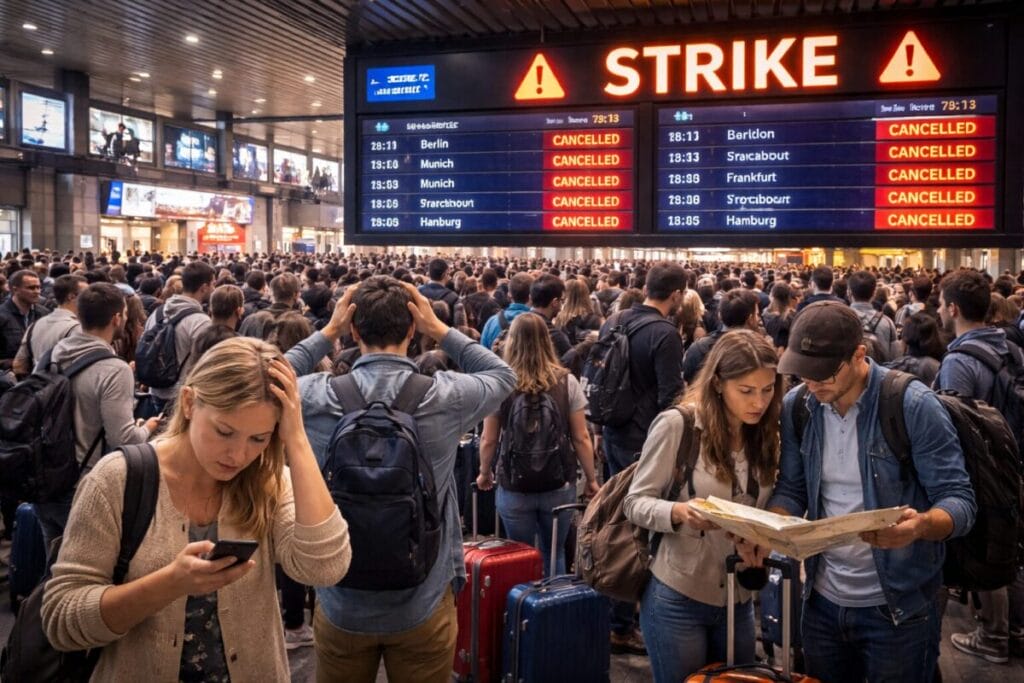
Germany’s tourism sector faces significant disruption following a 48-hour public transport strike affecting major cities including Berlin, Munich, Frankfurt, and Hamburg. The strike, organized by public sector union Verdi, targets local transit networks such as buses, trams, and metro systems. Millions of travelers and residents must now adjust plans as transportation services shut down across key tourist hubs.
The strike arrives during a busy travel period, increasing pressure on tourism infrastructure. Visitors struggle to access major attractions, while local businesses anticipate financial losses due to reduced mobility.
Strike Highlights Tensions Over Wages and Working Conditions
Public transport workers launched the industrial action after negotiations over wages and working conditions stalled. Union leaders argue that rising living costs require salary adjustments and improved employment conditions.
Local transport systems across Germany often serve as essential mobility networks for residents and tourists. When these services stop operating, cities experience immediate congestion and logistical challenges.
Authorities advise travelers to monitor updates and consider alternative transportation methods during the strike period.
Berlin Experiences Complete Public Transport Shutdown
Berlin, Germany’s capital and one of Europe’s most visited cities, faces the most severe disruption. The city’s transport authority has halted buses, trams, and U-Bahn metro services. Tourists who rely heavily on public transport now face longer journeys and higher travel costs.
Key attractions encounter reduced visitor access. The Brandenburg Gate, Reichstag building, and Museum Island normally attract thousands of visitors daily. Many travelers now rely on walking, taxis, or ride-hailing services to reach these locations.
Guided tours face schedule adjustments or cancellations due to limited mobility options. Hotels report increased requests for travel assistance as guests search for alternative routes.
Munich Tourism Slows as Transport Links Pause
Munich, famous for its Bavarian culture and historic architecture, also experiences major disruption. Public transport stoppages affect access to popular landmarks such as Marienplatz, Nymphenburg Palace, and the Englischer Garten.
Visitors who plan day trips or museum visits must reconsider schedules. Taxi demand rises sharply, leading to longer wait times and higher costs.
The city’s tourism sector depends heavily on efficient transport connections. Without buses and trams, visitor movement slows significantly, reducing foot traffic at cultural sites and retail districts.
Frankfurt Faces Challenges as Financial Hub and Tourist Gateway
Frankfurt serves as a major transport gateway for international travelers due to its large airport and business importance. The strike complicates local travel between hotels, attractions, and transport hubs.
Visitors heading to Römer Square, Museumsufer, or observation decks face longer travel times. Although regional trains continue operating, the absence of local buses and trams disrupts last-mile connections.
Airport transfers also encounter delays as travelers compete for limited taxi availability. Business travelers attending meetings and conferences must adjust itineraries quickly.
Hamburg Tourism Navigates Limited Mobility Options
Hamburg’s participation in the strike creates uncertainty for visitors exploring northern Germany’s cultural attractions. The city’s harbor area, Speicherstadt district, and Elbphilharmonie concert hall rely on local transit links for accessibility.
Tourists who planned waterfront tours or museum visits may encounter delays. Walking routes become more popular as visitors seek alternative ways to explore.
Local tourism operators expect reduced participation in scheduled tours due to transportation challenges.
Economic Impact on Germany’s Tourism Sector
Germany’s tourism industry generates billions of euros annually through cultural attractions, hospitality services, and international travel spending. Public transport disruptions can significantly affect visitor numbers and revenue.
Hotels, restaurants, and tour operators report concerns about reduced bookings during the strike period. Visitors who struggle to move around cities may limit spending or cancel activities.
Tourism boards emphasize the importance of reliable transport networks in maintaining positive visitor experiences. Repeated disruptions could influence travel perceptions among international tourists.
Strategies for Travelers Navigating the Strike
Travel experts recommend several strategies for visitors during transport disruptions. Travelers should plan routes carefully using unaffected services such as regional trains and long-distance rail connections.
Pre-booking taxis or ride-hailing services can reduce uncertainty. Walking between nearby attractions may provide practical alternatives in city centers. Travelers should also allow extra time for journeys to avoid missed reservations.
Digital navigation tools and real-time updates help travelers adapt quickly to changing conditions.
Broader Lessons for European Tourism Infrastructure
The strike underscores how closely tourism relies on urban mobility systems. Efficient public transport supports sustainable travel and helps manage visitor flow in major cities.
Industry analysts encourage investment in contingency planning and communication technology. Strong coordination between transport authorities and tourism organizations can reduce disruption impacts.
Germany’s experience highlights the need for resilient infrastructure capable of handling labor disputes and unexpected events.
Outlook for German Tourism After the Strike
As the strike progresses, authorities aim to restore normal operations quickly. Tourism businesses hope for a rapid recovery once services resume.
Germany remains one of Europe’s leading travel destinations due to its cultural heritage, modern cities, and efficient infrastructure. However, the incident serves as a reminder that labor disputes and transportation challenges can quickly influence tourism performance.
Travelers planning future visits should stay informed and remain flexible. Despite temporary disruptions, Germany’s tourism sector continues to demonstrate resilience and adaptability in an evolving travel environment.
For more travel news like this, keep reading Global Travel Wire