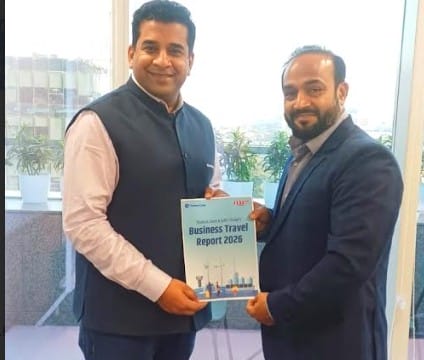
Business travel in India has entered a defining phase. Companies now view travel as a strategic investment rather than a routine expense. The Business Travel Report 2026 by Thomas Cook India and SOTC Travel outlines this transformation.
The report draws insights from more than 25 leading enterprises across sectors such as banking, manufacturing, and healthcare. It reveals strong momentum despite widespread adoption of virtual meetings.
Indian corporations now prioritize in-person engagement for high value interactions. Executives believe face-to-face meetings strengthen trust and accelerate decision making.
Travel Volumes Show Strong Growth Outlook
The Business Travel Report 2026 highlights a resilient market outlook. Sixty five percent of Indian corporates expect business travel volumes to rise in the next year.
When combined with companies projecting stability, ninety five percent foresee stable to growth trajectories. This trend confirms confidence in travel driven expansion.
Client acquisition and strategic partnerships drive much of this demand. Companies prefer physical meetings for negotiations and internal reviews.
Virtual platforms support communication. However, they cannot replace relationship building in complex deals.
Shift from Cost Cutting to Value Driven Travel
Corporate travel managers once focused on securing the lowest airfare. In 2026, that approach no longer dominates policy.
Sixty two percent of firms now follow a value driven model. This strategy balances cost control with safety, compliance, and employee well being.
Companies recognize that travel quality influences productivity. A well rested executive performs better than one fatigued from multiple stopovers.
As a result, direct flights and better accommodations now gain preference. Strategic travel partners help firms evaluate the total cost of trips, including employee effectiveness.
Bleisure Travel Redefines Corporate Policy
Bleisure travel India has emerged as a major cultural shift. Sixty eight percent of corporates report employees extending work trips for leisure.
This blending of business and personal travel requires policy updates. Companies now define cost sharing guidelines clearly.
Some firms allow employees to cover personal hotel nights. Others negotiate discounted rates for extended stays.
Forward thinking organizations view bleisure as a talent retention tool. Offering flexibility supports work life balance and employee satisfaction.
India’s expanding domestic tourism infrastructure also encourages this trend. Improved connectivity and premium hotels make short leisure extensions attractive.
Technology Powers Modern Travel Management
Digital transformation now shapes India corporate travel trends. More than seventy percent of organizations rely heavily on technology for bookings and expense tracking.
Artificial intelligence tools support real time policy checks during booking. Automated systems ensure compliance before purchases finalize.
AI powered assistants also guide travelers through itinerary changes. These solutions reduce manual oversight and improve efficiency.
Expense management platforms streamline reporting and reimbursement. As a result, finance teams gain better visibility into spending patterns.
Technology also enhances duty of care. Companies track traveler safety through digital monitoring systems.
Rising Costs Challenge Profitability
Despite strong demand, rising travel costs present challenges. Eighty percent of respondents reported increases in average ticket prices.
Nearly one third observed fare hikes exceeding fifteen percent. Hotels and ancillary services also reflect upward pricing trends.
Corporate finance teams now renegotiate supplier contracts aggressively. They seek bundled deals with airlines and hotel chains.
GST compliance adds another layer of complexity. More than half of corporates struggle to optimize input tax credit processes.
Companies now prefer suppliers with transparent invoicing systems. Clean tax documentation prevents financial leakage and improves savings.
Domestic Travel Dominates Corporate Movement
Domestic travel accounts for seventy two percent of corporate trips. Major hubs include Mumbai, Delhi NCR, and Bengaluru.
These cities anchor India’s financial and technology sectors. Frequent intercity travel supports project coordination and leadership meetings.
Government infrastructure investment also strengthens domestic aviation capacity. New airports and expanded terminals improve connectivity.
Regional business centers now attract greater corporate attention. Improved flight networks make secondary cities more accessible.
International Travel Expands Strategic Reach
International travel continues to grow steadily. Singapore, Dubai, the United Kingdom, and the United States remain key destinations.
These markets support leadership meetings, investment discussions, and global partnerships.
Emerging corridors now include China and Japan. Manufacturing and technology ties drive this expansion.
Companies deploy travel strategically to strengthen global supply chains. Cross border collaboration requires frequent engagement.
Therefore, firms allocate budgets carefully for high value international trips.
Policy Discipline Defines the Future
Nearly sixty percent of firms are revising corporate travel policies. They aim to strengthen approval workflows and cost oversight.
Companies now combine disciplined governance with flexible benefits. They want controlled growth rather than unchecked spending.
Travel managers analyze data to optimize supplier partnerships. Long term contracts ensure better pricing and service reliability.
The focus has shifted toward measurable outcomes. Firms evaluate travel impact on revenue, partnerships, and employee productivity.
Outlook for India Corporate Travel Trends
India’s corporate travel sector stands at a turning point. Strong economic growth and infrastructure expansion support rising demand.
However, disciplined management will determine sustainable profitability. Firms must integrate technology, compliance, and employee experience.
Bleisure travel India will likely continue growing. Flexible policies enhance corporate appeal among younger professionals.
Technology will further refine booking accuracy and cost visibility. AI tools will shape future decision making processes.
The Business Travel Report 2026 signals a mature and strategic travel environment. Companies no longer treat travel as a simple operational task.
Instead, they manage it as a performance driven function aligned with growth objectives.
India corporate travel trends now reflect discipline, innovation, and strategic planning. As businesses expand domestically and globally, travel will remain a key enabler of success in 2026 and beyond.
For more travel news like this, keep reading Global Travel Wire