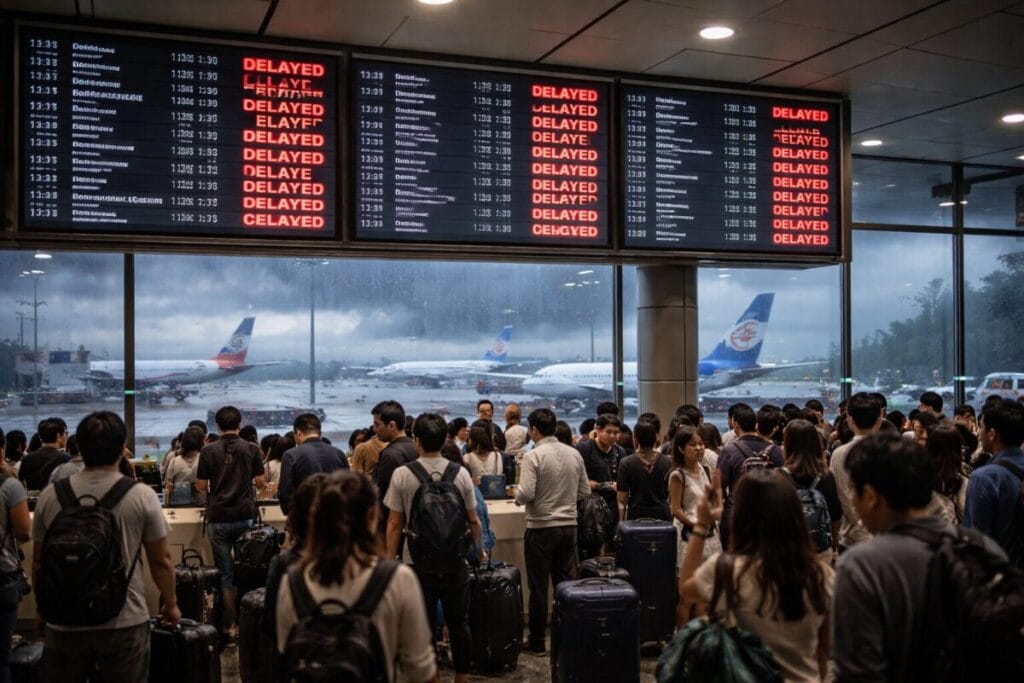
Severe weather across China, Malaysia and Indonesia has disrupted air travel, stranding thousands of passengers at major Asian airports. Fast-moving storm systems swept through key aviation corridors between February 27 and 28, 2026.
Heavy rain, thunderstorms and unstable winds forced airlines to cancel 54 flights and delay 551 more. The disruptions affected major carriers and busy regional routes, creating congestion at some of Asia’s most important hubs.
Airlines continue to adjust schedules as unstable conditions persist.
Storm Systems Disrupt East and Southeast Asia Airspace
Meteorological agencies in the region reported widespread low clouds, intense rainfall and sudden wind shifts. These conditions reduced visibility and limited runway capacity at several airports.
In China, operations slowed at major gateways including Beijing, Shanghai, and Chengdu. Air traffic controllers imposed flow restrictions to manage congestion and ensure safety.
Storm bands then moved south toward Malaysia and Indonesia. Evening and overnight flights faced the most pressure due to high traffic volume and limited recovery time between rotations.
Short-haul and medium-haul routes suffered the most. These services form the backbone of intra-Asian travel and rely on quick aircraft turnarounds.
Kuala Lumpur, Jakarta and Chengdu Under Pressure
Kuala Lumpur International Airport emerged as a key pressure point. Flights connecting Malaysia to China and Indonesia experienced repeated delays.
Arriving aircraft landed late due to weather disruptions upstream. This created a ripple effect on outbound departures. Departure boards showed continuous amber and red alerts.
Airport authorities increased ground coordination to reduce congestion, but peak-hour traffic slowed recovery efforts.
Jakarta Soekarno-Hatta and Bali See Intermittent Slowdowns
In Indonesia, Soekarno-Hatta International Airport reported intermittent operational slowdowns. Storm cells passed through in waves, forcing temporary holding patterns.
Domestic routes experienced bottlenecks as crews and aircraft arrived behind schedule. At Denpasar, weather conditions improved after earlier disturbances, yet late-night departures still faced delays.
Chengdu and Northern China Experience Visibility Issues
In western China, Chengdu Shuangliu International Airport recorded reduced visibility and gusting crosswinds. Several regional routes saw repeated departure rescheduling.
Flights linking secondary Chinese cities also faced en-route air traffic flow limits, which extended block times and reduced aircraft availability.
Low-Cost Carriers Struggle With Tight Schedules
Budget airlines felt the strain quickly. Their operating model depends on high aircraft utilization and fast turnaround times.
AirAsia experienced delays across its Kuala Lumpur network. High-frequency routes to Jakarta, Bali and major Chinese cities absorbed cascading disruptions throughout the day.
A delayed morning departure often pushed back every subsequent rotation. Crew duty time limits further restricted recovery options.
Batik Air also faced scheduling challenges. Repositioning crews and aircraft proved difficult as storms moved across multiple countries simultaneously.
Chinese carriers including Chengdu Airlines and China Eastern adjusted departure banks and consolidated select services to stabilize operations.
Passengers Stranded Across Key Asian Airports
The human impact of the severe weather became visible inside terminals. Long queues formed at service counters. Many travelers waited hours for updates.
Business travelers missed meetings. Families saw holiday plans disrupted. Migrant workers risked missing scheduled job returns.
Tight connections increased the pressure. Travelers holding separate tickets struggled to secure onward seats. Full flights limited rebooking options.
Some passengers opted for rail alternatives within China. Others stayed overnight at airports, hoping to secure confirmed seats the following morning.
Airport operators deployed additional customer service teams. Airlines provided meal vouchers and hotel accommodation where required under passenger protection rules.
Why Severe Weather Disrupts Asian Aviation So Quickly
Asia hosts some of the world’s busiest air corridors. Airports in China and Southeast Asia operate near capacity during peak periods.
When storms reduce runway use or slow air traffic flow, delays escalate quickly. A single grounded aircraft can disrupt an entire day’s schedule.
Tropical systems also develop rapidly. Thunderstorms in equatorial regions can intensify within hours, limiting predictability.
Aviation authorities prioritize safety. Pilots avoid unstable wind shear, lightning zones and heavy rainfall. These precautions often require rerouting or holding patterns, which consume fuel and time.
Travel Advisory: What Passengers Should Do Now
Weather forecasts indicate unsettled conditions may continue in parts of the region.
Travelers flying through China, Malaysia or Indonesia this weekend should:
- Arrive at the airport earlier than usual
- Monitor flight status through airline apps
- Consider flexible rebooking options
- Keep essential items in carry-on baggage
- Avoid tight self-transfer connections
Passengers with complex itineraries should consolidate bookings under a single airline when possible. This simplifies rebooking during disruptions.
Travel insurance that covers weather-related delays may also reduce financial risk.
Outlook for Regional Air Travel
Airlines continue to restore normal schedules as weather systems move eastward. Recovery may take several rotation cycles, especially on high-demand routes.
Operational resilience remains a priority for Asian carriers. Investments in forecasting systems, crew planning software and passenger communication tools aim to reduce future disruption impacts.
The recent severe weather across China, Malaysia and Indonesia highlights the vulnerability of interconnected aviation networks. Safety remains the top priority, even when schedules slip.
Passengers who stay informed and flexible can better manage unexpected flight changes in this dynamic travel environment.
For more travel news like this, keep reading Global Travel Wire