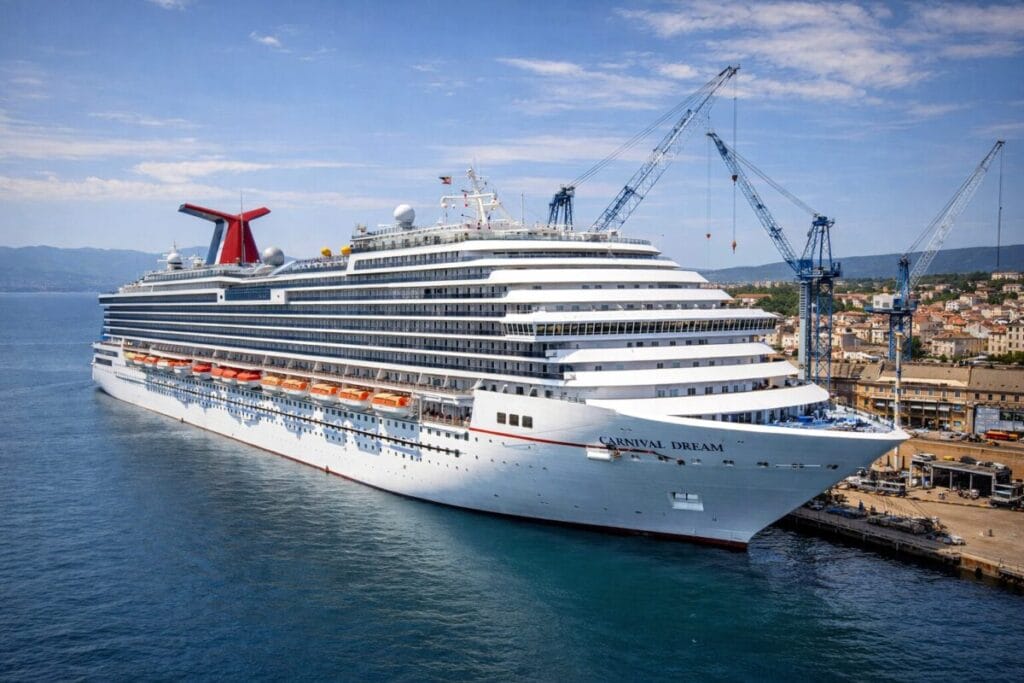
The Carnival Cruise Line ship Carnival Dream has embarked on a transatlantic voyage to Europe for a scheduled drydock, marking a significant milestone ahead of its return to Galveston in April 2026. The 15-night sailing includes stops in Bermuda, Gibraltar, and ports in Spain, blending leisure travel with operational upgrades designed to enhance guest experiences.
Built in 2009, Carnival Dream has long been a popular vessel in the cruise line’s fleet, offering large-scale entertainment venues, specialty dining, and family-friendly attractions. Its European drydock signals the company’s continued investment in modernization and sustainability, ensuring the ship remains competitive in a rapidly evolving global cruise market.
A Strategic European Voyage
The repositioning journey underscores the expanding footprint of cruise tourism in both Europe and the Caribbean. Europe’s cruise market has seen growing demand from travelers seeking culturally rich itineraries that connect multiple destinations without the need for complex travel logistics. Ports in Spain and Gibraltar remain particularly attractive due to their historic landmarks, Mediterranean scenery, and convenient access to inland excursions.
Bermuda’s inclusion on the transatlantic itinerary adds another dimension, offering passengers a blend of British colonial heritage and island leisure. Such sailings highlight how repositioning cruises have evolved into desirable vacation experiences in their own right, rather than simply logistical transfers.
Upon arrival in Europe, Carnival Dream will undergo comprehensive technical maintenance and cosmetic upgrades. Drydock periods typically include hull inspections, propulsion system checks, refreshed public spaces, cabin enhancements, and technological improvements aimed at improving onboard connectivity and energy efficiency.
Supporting Cruise Industry Growth
The global cruise industry continues to rebound strongly, with passenger numbers rising as travelers seek immersive, multi-destination vacations. Carnival Cruise Line has responded by refining itineraries, upgrading ships, and enhancing onboard programming to match shifting consumer expectations.
In Europe, cruise passengers are increasingly drawn to routes that combine heritage exploration with luxury amenities. Ports such as Barcelona and Mediterranean gateways provide access to cultural sites, culinary tours, and scenic coastlines. Gibraltar, positioned at the crossroads of Europe and Africa, offers a unique blend of British and Mediterranean influences, while Bermuda appeals to travelers seeking relaxed island charm.
Meanwhile, the Caribbean remains one of the world’s most sought-after cruise regions. Carnival Dream’s return to Galveston in April 2026 reinforces the Texas port’s growing prominence as a departure hub for Caribbean sailings. Galveston has expanded its cruise infrastructure in recent years, supporting larger ships and increased passenger capacity.
Modernization and Sustainability
Fleet modernization has become a central theme across the cruise industry. Environmental regulations are tightening globally, and travelers are increasingly mindful of sustainability. During its European drydock, Carnival Dream is expected to receive enhancements aimed at improving energy efficiency, waste management systems, and overall environmental performance.
Cruise lines worldwide are investing in cleaner fuel technologies, advanced wastewater treatment systems, and digital monitoring tools that reduce emissions and conserve resources. Upgrading existing ships plays a vital role in aligning with sustainability goals while extending vessel longevity.
Carnival Cruise Line has publicly emphasized its commitment to responsible tourism practices. By modernizing ships like Carnival Dream, the company aims to balance operational efficiency with environmental stewardship.
Economic Benefits for Port Cities
Cruise calls generate measurable economic benefits for port destinations. When Carnival Dream docks in European ports such as those in Spain or Gibraltar, passengers typically spend on local tours, dining, shopping, and cultural attractions. Local guides, transportation providers, and small businesses all benefit from cruise-related visitor spending.
Similarly, Bermuda’s tourism economy gains from cruise arrivals through shore excursions and hospitality services. In the United States, Galveston’s cruise terminal supports thousands of jobs across hospitality, retail, and logistics sectors. Increased passenger volumes contribute to broader regional economic growth.
As cruise demand expands, cities continue to upgrade port facilities to accommodate modern vessels. Improved terminals, streamlined boarding processes, and enhanced security systems help ensure smooth operations for both passengers and local authorities.
Evolving Onboard Experiences
Another trend shaping cruise tourism is the diversification of onboard programming. Carnival Dream offers a wide range of activities, from large-scale entertainment productions to dining experiences and relaxation areas. The ship’s adults-focused spaces, expanded gaming options, and specialty lounges reflect the industry’s effort to cater to different traveler segments.
Adults-only programming has gained traction as mature travelers seek tranquil environments separate from family-oriented entertainment zones. Cruise lines have responded by introducing dedicated retreats, themed nightlife events, and curated culinary experiences.
Longer repositioning sailings also appeal to seasoned cruisers who enjoy extended time at sea combined with varied port stops. These itineraries often include lectures, cultural workshops, and destination-themed programming that enrich the journey.
Looking Ahead to 2026
After completing its European drydock and select sailings, Carnival Dream will reposition to Galveston in April 2026 to resume Caribbean itineraries. The return aligns with Carnival’s broader strategy of strengthening its presence in key U.S. homeports while maintaining international reach.
The ship’s modernization, combined with refreshed itineraries, is expected to sustain strong booking interest among travelers seeking both value and variety. As cruise tourism continues its upward trajectory, Carnival Dream’s journey from Europe back to Texas highlights the interconnected nature of today’s travel landscape.
From Mediterranean gateways to Caribbean shores, Carnival Dream’s voyage represents more than a routine repositioning. It reflects a cruise industry adapting to new expectations—prioritizing sustainability, comfort, and economic contribution—while continuing to deliver memorable voyages across the Atlantic and beyond.
For more travel news like this, keep reading Global Travel Wire