Philippines–Middle East air travel has entered a period of sudden disruption after several major carriers temporarily suspended and rerouted flights linking Manila with key Gulf hubs. The short-term cancellations, triggered by regional security concerns and airspace restrictions, are now sending ripple effects across the Manila tourism industry, overseas worker mobility and hotel occupancy rates.
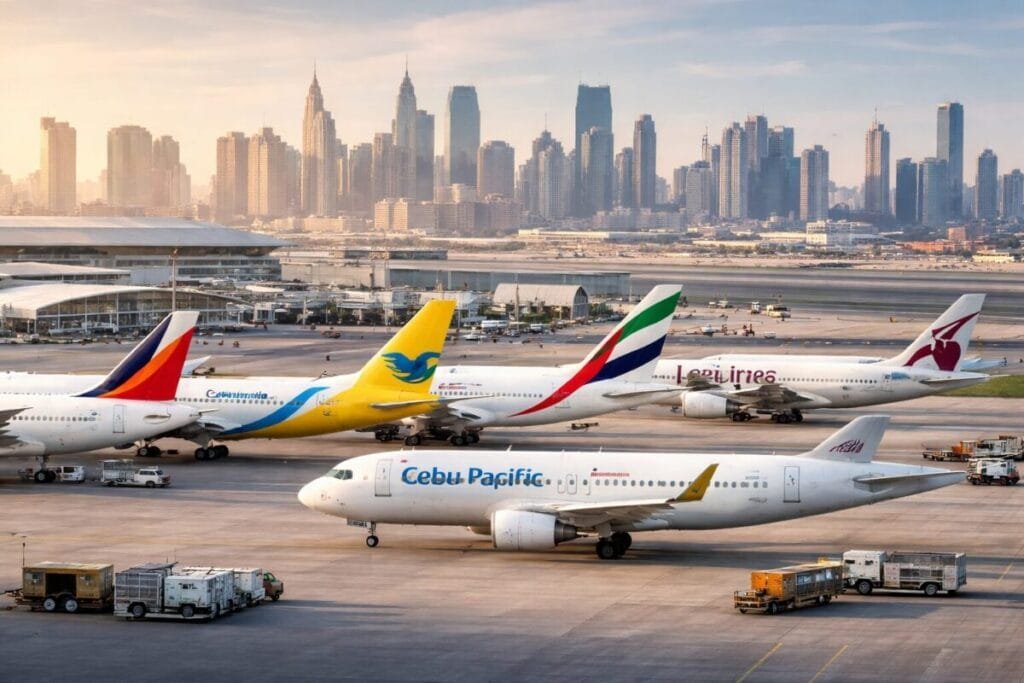
From February 28 to March 2, 2026, airlines including Philippine Airlines, Cebu Pacific and leading Gulf carriers paused selected services between Manila and major transit gateways such as Dubai, Doha, Riyadh and Abu Dhabi. While operations are gradually stabilizing, the temporary halt underscores how deeply interconnected the Philippines is with Middle Eastern aviation corridors.
Key Routes Affected Across the Gulf
Dubai, Doha, Riyadh and Abu Dhabi function as powerful global transit hubs linking Asia to Europe, North America and parts of Africa. When disruptions occur in these corridors, the impact stretches far beyond point-to-point passengers.
During the disruption window:
- Manila–Dubai services were suspended on select rotations
- Manila–Doha flights were canceled and adjusted
- Manila–Riyadh operations were paused temporarily
- Some Abu Dhabi–Manila services were halted
Aircraft were rerouted to avoid restricted airspace, extending travel times on certain long-haul routes. Several inbound flights experienced delays or diversions as airlines recalibrated operations in real time.
Although the suspension lasted only days, the concentration of cancellations across multiple carriers amplified its effects.
Why the Middle East Matters to Philippine Aviation
The Gulf region is not just another destination market for the Philippines. It is a strategic aviation bridge.
Millions of passengers traveling between Europe or North America and Southeast Asia transit through Dubai or Doha each year. For the Philippines, these hubs provide essential connectivity for:
- Overseas Filipino Workers (OFWs)
- Long-haul leisure travelers
- Business travelers
- Visiting friends and relatives traffic
- Cargo shipments
According to official Philippine tourism performance data, the country welcomed more than 6 million visitors in 2025, generating hundreds of billions of pesos in tourism receipts. Stable international air access plays a central role in sustaining that growth.
When Middle East routes pause, seat capacity tightens quickly. Even a short disruption can compress supply and affect fares.
Immediate Impact on Manila’s Hotel Sector
Metro Manila’s hospitality sector was among the first to feel the effects. Airport district hotels in Pasay and Parañaque reported short-notice cancellations alongside unexpected extended stays from stranded passengers.
Hotels near Ninoy Aquino International Airport typically depend on:
- Transit passengers
- Airline crews
- Business travelers
- Short-stay international guests
When outbound flights are canceled, some travelers postpone their trips, resulting in booking withdrawals. At the same time, delayed passengers may require overnight accommodations, creating uneven occupancy patterns.
Average occupancy levels in Metro Manila have been steadily improving post-pandemic. However, sudden aviation instability introduces forecasting uncertainty for revenue managers and hospitality operators.
Resort destinations such as Cebu, Boracay and Palawan are also monitoring inbound connections carefully. Long-haul travelers connecting through Gulf hubs often represent higher-spending segments.
Pressure on Airlines and Operating Costs
For airlines, the disruption extends beyond ticket refunds. Each canceled flight triggers operational complexity:
- Crew rescheduling
- Aircraft repositioning
- Passenger reaccommodation
- Ground handling adjustments
- Fuel recalculations
When routes are lengthened to avoid restricted airspace, fuel burn increases. Rising oil prices during periods of geopolitical tension further strain airline margins. Long-haul services are particularly sensitive to these cost fluctuations.
Carriers operating hub-and-spoke networks in the Gulf rely on smooth transit flows. A slowdown at a central hub can cascade across an entire global route map.
If instability were to continue, airlines could consider reducing frequency or consolidating services temporarily. That would reduce available seats between the Philippines and the Middle East, potentially pushing short-term fares upward.
Overseas Filipino Workers Face Travel Delays
The United Arab Emirates, Saudi Arabia and Qatar remain among the largest destinations for Filipino workers. Hundreds of thousands of land-based workers deploy annually to these countries.
When flights are suspended:
- Worker deployments may be delayed
- Vacationing workers may struggle to return on schedule
- Family visits are postponed
- Business contracts face timing adjustments
Airport congestion can increase as rebooked passengers compete for limited alternative seats. Travel agencies and manpower firms must coordinate closely with airlines to secure confirmed departures.
For many families, reliable aviation links are not simply a matter of tourism but livelihood.
Effects on Inbound Tourism Markets
While some Asian markets benefit from direct connections to Manila and Cebu, long-haul visitors from North America and Europe frequently rely on Gulf transit hubs.
Travelers from:
- The United States
- Canada
- The United Kingdom
- Germany
- Italy
often connect through Dubai or Doha when flying to the Philippines. Even if their flights are not directly canceled, schedule changes may lengthen journey times or require rebooking.
The greater concern for tourism stakeholders is booking hesitation. Travelers planning holidays months in advance may delay confirming trips if headlines suggest instability along major transit corridors.
Confidence plays a decisive role in tourism recovery.
What Travelers Should Do Now
Passengers scheduled to travel between the Philippines and the Middle East should:
- Check flight status directly with their airline daily
- Confirm transit requirements if connecting through Gulf hubs
- Arrive early at the airport during irregular operations
- Keep flexible travel dates when possible
- Review travel insurance coverage for delays or interruptions
Alternative routing through major Asian hubs such as Singapore, Hong Kong or Seoul may provide additional options if Gulf connections remain limited.
Clear communication from airlines remains critical. Travelers who receive timely updates are less likely to cancel trips outright.
Will Airfares Increase?
Short-term fare volatility is possible when seat supply tightens. If airlines temporarily reduce frequency on Philippines–Middle East routes, limited availability may drive higher prices during peak demand periods.
However, once stability returns, carriers often introduce promotional fares to stimulate bookings and restore load factors.
The duration of the disruption will ultimately determine pricing trends.
Outlook for Philippine Tourism
The Philippines has demonstrated resilience in navigating global disruptions in recent years. Domestic tourism remains stable, and alternative international gateways continue operating normally.
If Middle East airspace stabilizes quickly, the episode may remain a brief operational interruption rather than a structural shift. Airlines are already recalibrating schedules as conditions permit.
However, the situation highlights a broader reality: Philippine tourism and aviation are deeply integrated into global transit networks. Events in one region can swiftly affect hotels, airports and travelers thousands of kilometers away.
For now, travel between the Philippines and the Gulf remains possible, though flexibility is essential. Airlines are adjusting. Hotels are adapting. Passengers are staying alert.
The coming weeks will determine whether this was a temporary shock or a defining moment for Philippines–Middle East aviation connectivity.
For more travel news like this, keep reading Global Travel Wire