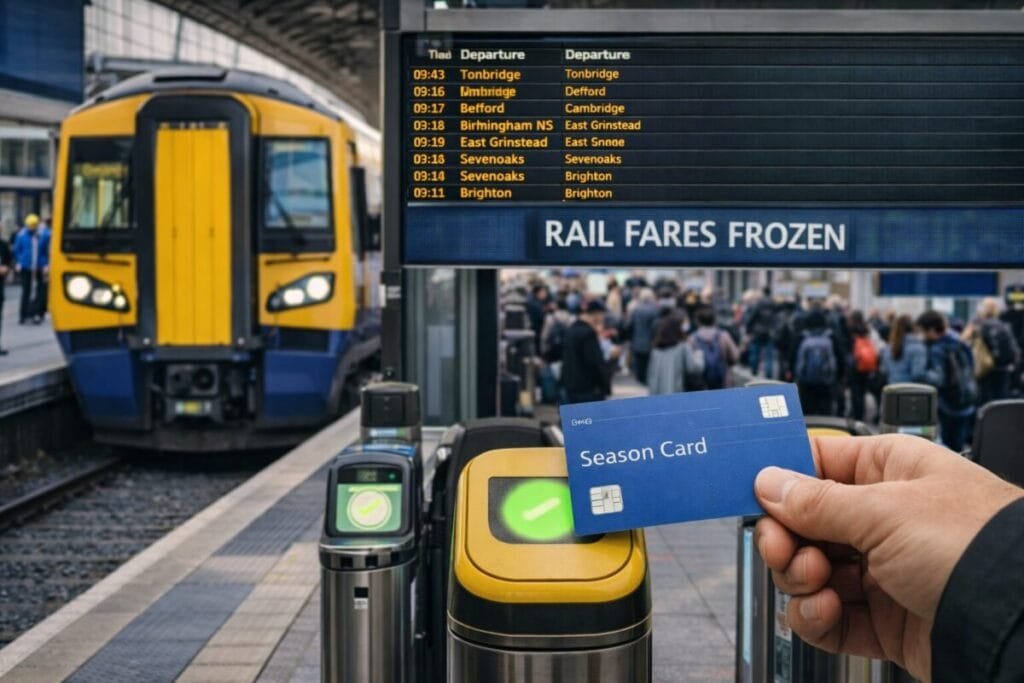
In a landmark decision set to impact millions of travelers, the government has announced that regulated rail fares across England will be frozen for the first time in three decades. The unprecedented move means passengers will not face any increase in ticket prices for the upcoming financial year, delivering an estimated £600 million in savings during 2026/27.
The freeze applies to regulated fares, which include season tickets, peak return tickets for commuters, and off-peak returns on key intercity routes. With over a billion rail journeys made annually across England, the measure represents one of the most significant interventions in rail pricing policy in modern history.
A Historic Break from Three Decades of Increases
4
For nearly 30 years, regulated rail fares have typically risen each year, often linked to inflation measures. Between 2010 and 2024, fares increased by roughly 60 percent overall, placing mounting pressure on households already facing rising living costs.
The new freeze halts what would otherwise have been a planned fare rise of 5.8 percent. Instead of higher ticket prices, commuters and leisure travelers will see no change in regulated fares, marking a dramatic shift in government policy toward affordability.
Officials estimate that the decision will return approximately £600 million directly to passengers, easing financial strain for daily commuters and families who rely on rail services for work, education and leisure.
What the Fare Freeze Covers
The freeze applies to regulated fares across England, including:
- Annual and monthly season tickets
- Flexi-season tickets
- Peak return tickets on major commuter routes
- Off-peak returns between key cities
These fare types represent a significant proportion of daily rail use, particularly in urban corridors such as London and the South East, as well as regional commuter networks in the Midlands and Northern England.
By targeting regulated fares, the policy focuses on the journeys most relied upon by working professionals and regular travelers.
Real Savings for Commuters
Commuters on some of the busiest routes are expected to benefit substantially. Estimates suggest annual savings exceeding £300 for certain season ticket holders. For example:
- Travelers between Milton Keynes and London could save over £300 per year.
- Commuters from Woking to London may save more than £170 annually.
- Passengers traveling between Bradford and Leeds could save around £50 each year.
With transport accounting for approximately 14 percent of household expenditure, these savings offer meaningful relief at a time when many families are managing higher food, energy and housing costs.
Wider Economic and Social Impact
The fare freeze is designed not only to support passengers but also to stimulate broader economic activity. Affordable transport is widely recognized as a cornerstone of workforce mobility and regional growth.
Lower commuting costs can improve access to employment opportunities, expand labor markets and encourage travel into city centers. For regional towns and smaller cities, reliable and affordable rail services play a vital role in connecting communities to economic hubs.
In addition to the rail fare freeze, the extension of the £3 bus fare cap across many parts of England reinforces a broader strategy aimed at keeping public transport affordable.
Rail Reform and the Role of Great British Railways
The fare freeze coincides with wider structural reform of the rail sector, including the planned establishment of Great British Railways (GBR). This new public body will oversee rail infrastructure and services, bringing greater coordination and accountability to the network.
Under the proposed reforms, train operating companies will transition into public ownership as existing contracts expire. The aim is to reduce fragmentation, improve reliability and create a unified approach to ticketing and customer service.
A centralised GBR website and mobile app are also planned, offering passengers a streamlined platform for journey planning and ticket purchasing without additional booking fees. This digital integration is expected to enhance transparency and make fare comparisons simpler.
Addressing Fraud and Financial Sustainability
Alongside fare stability, the government has introduced measures to protect railway revenues. Changes to ticket refund policies will require passengers to cancel unused tickets before departure in order to claim refunds.
This adjustment is intended to reduce fraudulent claims and ensure that revenue remains within the rail system. Officials argue that safeguarding income is essential for reinvesting in service improvements, infrastructure upgrades and operational efficiency.
Fare evasion has been a longstanding issue within the rail network. Strengthened enforcement and clearer refund rules are expected to support financial sustainability while maintaining fairness for paying passengers.
Balancing Affordability and Investment
While the freeze provides short-term relief, it also raises questions about long-term funding for rail infrastructure. Rail networks require continuous investment in track maintenance, rolling stock upgrades and station improvements.
Government leaders have indicated that maintaining affordability does not mean neglecting investment. Future plans include modernisation initiatives, service enhancements and improved punctuality across the network.
By combining fare restraint with structural reform, policymakers aim to rebuild trust in the rail system and encourage more passengers to choose public transport over private car travel.
Environmental and Sustainability Considerations
Rail travel remains one of the most environmentally sustainable forms of mass transport in the UK. Encouraging greater use of trains supports national carbon reduction targets and reduces congestion on road networks.
Affordable pricing can influence consumer behavior, particularly for medium-distance journeys where travelers might otherwise opt to drive. A stable fare environment may encourage more consistent rail use, supporting both environmental goals and network viability.
Looking Ahead
The rail fare freeze represents a pivotal moment for England’s transport landscape. For passengers, it offers tangible financial relief after years of steady increases. For the rail sector, it signals a broader reset focused on affordability, accountability and modernization.
As Great British Railways takes shape and further reforms unfold, the emphasis appears firmly placed on passenger experience and economic accessibility.
After three decades of near-annual fare rises, the decision to hold regulated prices steady stands as one of the most significant policy interventions in recent rail history. For millions of commuters and travelers across England, the freeze provides not only savings but also a renewed sense of stability in the cost of everyday travel.
For more travel news like this, keep reading Global Travel Wire