Rising geopolitical tensions across the Middle East are creating serious challenges for tourism, aviation, and regional economies, prompting Canada to issue urgent travel warnings for several countries in West Asia. Nations including Jordan, the United Arab Emirates, Saudi Arabia, Iraq, Bahrain, Qatar, and Oman are facing increasing economic and security pressures as conflict escalation and airspace disruptions affect travel across the region.
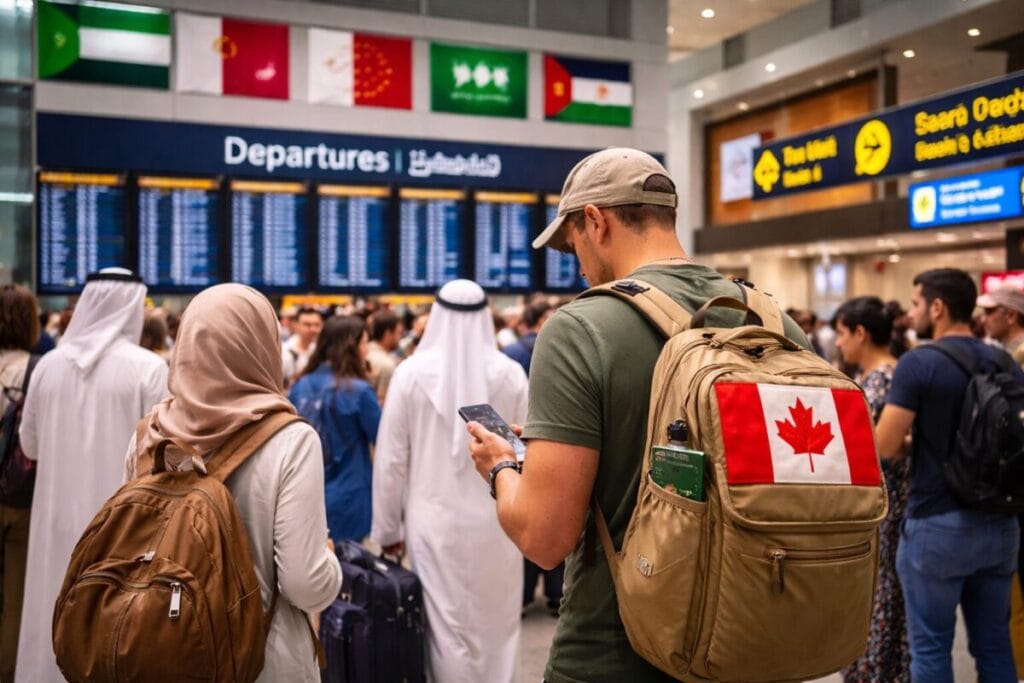
The situation has generated widespread concern among international governments, airlines, and tourism stakeholders. With airspace closures, flight cancellations, and security alerts becoming more frequent, travelers are being urged to carefully reconsider non-essential trips to parts of the Middle East.
Escalating Regional Tensions Disrupt Travel
Recent military confrontations and geopolitical rivalries have intensified instability across West Asia, creating ripple effects that extend far beyond the immediate conflict zones. The escalation involving the United States, Israel, and Iran has triggered retaliatory threats and heightened military readiness across the region.
These developments have led to significant disruptions in air travel, including temporary airspace closures, rerouted flights, and airline suspensions. Airports and aviation authorities across the Middle East have been forced to adjust flight paths to ensure passenger safety.
For travelers and tourism businesses, the impact has been immediate. Airlines operating long-haul routes between Europe, Asia, and the Middle East are modifying schedules and avoiding certain air corridors. Such disruptions are increasing travel times and operational costs, while also affecting tourist confidence in visiting the region.
Canada Issues Travel Advisory for Multiple Countries
In response to the deteriorating security situation, Canada has issued a strong travel advisory urging its citizens to avoid non-essential travel to several Middle Eastern countries. The advisory reflects growing concerns over unpredictable security conditions, potential military actions, and disruptions to essential services.
Travel warnings have been issued for destinations including Iraq, Jordan, Saudi Arabia, the United Arab Emirates, Bahrain, Qatar, and Oman. These advisories are intended to inform citizens about potential risks such as sudden airspace closures, regional conflicts, and possible travel disruptions.
Canadian officials have emphasized that travelers currently in affected areas should remain alert, monitor official guidance, and be prepared for unexpected changes to transportation and security conditions.
Iraq Faces Heightened Security and Economic Pressures
Iraq is among the countries experiencing some of the most severe consequences of the regional tensions. The nation has spent years recovering from conflict and rebuilding its infrastructure, but the latest escalation threatens to undermine fragile progress.
Security risks remain high in several areas, with ongoing concerns about armed groups, terrorist threats, and political instability. Military activity and regional confrontation have further complicated the country’s security environment.
Economically, Iraq remains heavily dependent on oil revenues. Fluctuations in global energy prices and disruptions to exports can quickly affect government budgets and public services. Damage to infrastructure and uncertainty in investment markets are also contributing to economic pressure.
Tourism, which has slowly begun to recover in recent years, now faces renewed challenges as international travelers reconsider visiting the region.
UAE Confronts Economic and Aviation Challenges
The United Arab Emirates, widely recognized as a major aviation hub and tourism destination, is also feeling the effects of rising regional tensions. Cities such as Dubai and Abu Dhabi have built global reputations as international business and tourism centers.
However, increased geopolitical uncertainty has begun to influence travel patterns. Airlines operating from the UAE are adjusting routes and monitoring potential risks in regional airspace.
The UAE economy relies heavily on global trade, tourism, and aviation connectivity. Any disruption to international travel corridors or shipping routes can affect both passenger travel and commercial logistics.
While the country remains relatively stable compared with other parts of the region, authorities are closely monitoring developments to ensure aviation safety and economic stability.
Jordan Navigates Economic and Humanitarian Pressures
Jordan has long served as a strategic partner in the Middle East and a key humanitarian hub. The country hosts a large population of refugees from neighboring conflict zones and relies significantly on international aid, tourism, and remittances.
Regional instability is adding further strain to an already fragile economy. Tourism, one of Jordan’s most important industries, could face setbacks if travelers postpone trips due to safety concerns.
Border restrictions, transportation disruptions, and economic slowdown across neighboring countries also affect Jordan’s trade and economic growth.
Despite maintaining a relatively stable political environment, the country must carefully manage the ripple effects of wider regional tensions.
Saudi Arabia and Bahrain Monitor Security Developments
Saudi Arabia, one of the region’s largest economies and a major oil exporter, remains deeply connected to the evolving geopolitical landscape. As a significant regional power, the country’s political and economic decisions influence stability across the Gulf.
Although Saudi Arabia has been investing heavily in tourism initiatives and economic diversification programs, rising geopolitical risks could temporarily affect visitor confidence and travel demand.
Bahrain, a smaller Gulf nation located near key strategic waterways, is also facing potential economic pressures. Its economy relies on financial services, tourism, and petroleum production, all of which can be influenced by regional security conditions.
Airspace restrictions and potential disruptions to shipping routes in the Gulf are key concerns for both countries.
Qatar and Oman Maintain Stability Amid Uncertainty
Qatar and Oman have historically pursued diplomatic strategies aimed at maintaining stability and neutrality in regional conflicts. Both nations are important players in global energy markets, particularly through exports of natural gas and petroleum products.
Nevertheless, rising tensions across the Middle East are placing pressure on regional transportation networks and trade routes that support these economies.
Airspace adjustments and shifting airline operations are affecting flight routes through the Gulf, potentially influencing tourism flows and business travel.
Governments in both countries are continuing to monitor developments closely while maintaining open communication with international aviation authorities.
Regional Tourism Faces Uncertain Outlook
The broader tourism industry across the Middle East is watching the situation carefully. Several countries in the region have invested heavily in tourism infrastructure, cultural attractions, and international events in recent years.
However, geopolitical instability can quickly influence global travel decisions. Even destinations not directly involved in conflict may experience reduced visitor numbers if travelers perceive heightened risks.
Travel experts say that restoring confidence will depend on improvements in regional stability, clear communication from governments, and consistent airline operations.
A Region at a Critical Moment
The current tensions highlight the complex relationship between geopolitics, travel safety, and tourism development in the Middle East. Airspace disruptions and security concerns can rapidly affect international tourism flows, airline operations, and economic stability.
Canada’s travel advisory reflects growing global awareness of these risks and underscores the importance of monitoring the rapidly changing situation.
For travelers, airlines, and tourism businesses, the coming months will be crucial in determining whether stability returns to the region or if further disruptions continue to affect travel across West Asia.
For more travel news like this, keep reading Global Travel Wire