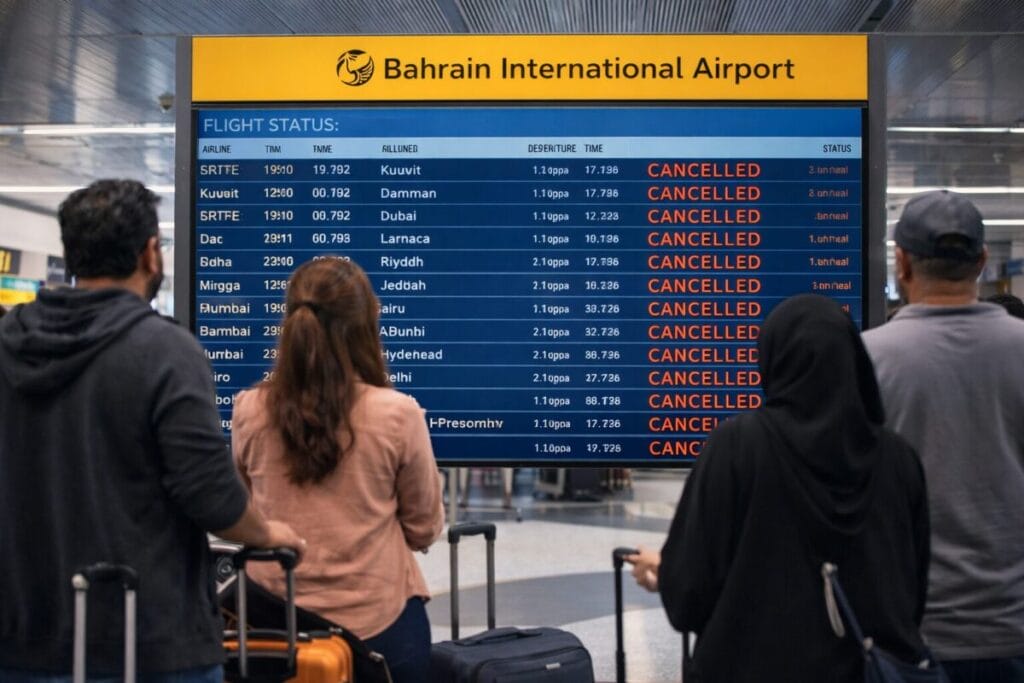
Bahrain International Airport experienced major travel disruption after dozens of flights were cancelled across regional and international routes. The sudden cancellations affected airlines operating across the Gulf and beyond.
Passengers arriving at the airport in Muharraq faced crowded terminals and uncertain travel schedules. Many travelers waited for updates while airlines assessed operational conditions.
Authorities confirmed that ninety four flights across several airlines were cancelled. These cancellations created widespread delays across major aviation corridors in the Middle East.
Airlines continue working to restore schedules while passengers seek alternative travel options.
Gulf Air Experiences Highest Number of Disruptions
Gulf Air recorded the largest number of cancelled flights during the disruption. The airline operates as Bahrain’s national carrier and runs a large share of flights from the airport.
Reports indicate that Gulf Air cancelled eighty flights during the disruption period. This number represents the majority of the total cancellations reported at the airport.
Gulf Air operates flights to dozens of destinations across Europe, Asia, and the Middle East. When disruptions occur, many connecting passengers also face delays.
The airline has begun contacting affected travelers with rebooking options.
Regional Airlines Also Cancel Flights
Several other airlines also reported flight cancellations during the disruption. Qatar Airways cancelled four flights connected to the Bahrain network.
FlyDubai also cancelled four services operating between the United Arab Emirates and Bahrain.
Oman Air cancelled two flights linking Muscat with Bahrain International Airport.
IndiGo and Egypt Air each cancelled two flights as operational adjustments spread across regional schedules.
Major Middle East Airports Feel the Impact
The disruption at Bahrain International Airport quickly affected several major aviation hubs across the region.
Dubai International Airport recorded four cancelled flights connected to Bahrain. Dubai remains one of the busiest aviation hubs in the Middle East.
Doha’s Hamad International Airport also experienced four cancelled services related to the situation.
These hubs serve as critical connection points for travelers flying between Asia, Europe, and Africa.
Cairo and Riyadh Routes Experience Interruptions
Flights connecting Bahrain with Cairo and Riyadh also experienced cancellations. Each city reported two cancelled services linked to the disruption.
These routes serve as major travel corridors for business and tourism between Gulf countries and North Africa.
Airlines often operate several daily services on these routes. Even a small number of cancellations can affect many travelers.
Passengers scheduled to travel between these cities experienced delays and rescheduling.
Disruptions Spread Across Gulf and Asian Gateways
Other airports across the Gulf region also recorded cancelled flights. Muscat, Kuwait City, Abu Dhabi, Dammam, and Jeddah each experienced cancellations connected to the Bahrain network.
Flights linking Bahrain with South Asia also faced disruption. Cities such as Mumbai, Bengaluru, Chennai, and Delhi reported cancelled services.
These routes remain important for workers, tourists, and business travelers moving between the Gulf and India.
Airlines continue monitoring schedules and adjusting flights where necessary.
Global Destinations Also Affected
The disruption extended beyond the Middle East and South Asia. Several long haul routes experienced cancellations linked to the Bahrain network.
Airports in London, Paris, Frankfurt, and Munich recorded schedule changes connected to the situation.
Flights to cities such as Manchester, Milan, and Moscow also experienced disruptions.
Other destinations affected include Nairobi, Singapore, Bangkok, and Shanghai.
Bahrain International Airport Handles Regional Connections
Bahrain International Airport serves as an important travel hub for the Gulf region. The airport connects passengers traveling between Europe, Asia, and Africa.
Many travelers use Bahrain as a connecting point for flights across the Middle East and Indian subcontinent.
The airport recently underwent a major expansion project to improve passenger capacity and facilities.
Despite modern infrastructure, disruptions can still affect schedules across complex airline networks.
Airlines Work to Restore Travel Operations
Airlines operating from Bahrain continue working to restore normal schedules. Operations teams monitor aircraft availability, crew schedules, and airport conditions.
Airlines often adjust flight plans to ensure passenger safety and operational efficiency.
When cancellations occur, airlines prioritize rebooking passengers on alternative flights.
Travelers may also receive hotel accommodation or meal vouchers depending on airline policies.
Passengers Seek Alternative Travel Options
Passengers affected by the cancellations have begun searching for alternative travel arrangements.
Many travelers approached airline service counters at the airport to request rebooking assistance.
Others used airline mobile applications and websites to check updated flight schedules.
Travelers sometimes choose flights with different airlines when available.
Travel Experts Advise Passengers to Stay Informed
Aviation experts recommend that passengers remain informed during major travel disruptions.
Airlines usually send updates through email, mobile apps, and text messages.
Passengers should monitor official airline communication channels for accurate information.
Airport information screens and airline websites also provide updated schedules.
Middle East Aviation Network Highly Connected
The Gulf region operates one of the world’s most connected aviation networks. Airlines offer extensive connections between Europe, Asia, and Africa.
Airports in Bahrain, Dubai, Doha, and Abu Dhabi serve as major transfer hubs for international passengers.
Because of this connectivity, disruptions in one airport can affect flights across multiple countries.
Airlines therefore coordinate closely to minimize travel disruptions.
Travel Industry Continues Monitoring Situation
Aviation authorities and airlines continue monitoring the situation at Bahrain International Airport.
Airlines expect schedules to stabilize once operational conditions return to normal.
Passengers are encouraged to remain flexible and check updates regularly.
The recent disruption highlights the complexity of modern aviation networks, where delays at one hub can quickly influence travel across many global destinations.
For more travel news like this, keep reading Global Travel Wire