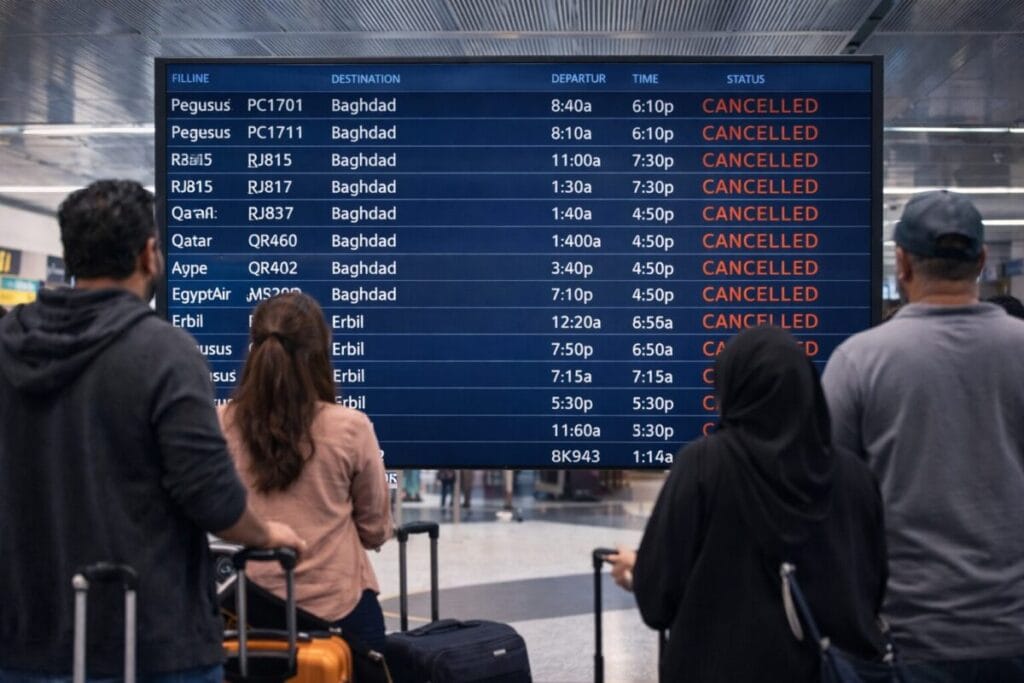
Air travel in Iraq has experienced major disruption after multiple airlines cancelled scheduled flights. Passengers traveling through Baghdad and Erbil encountered unexpected schedule changes and travel uncertainty.
Authorities confirmed that twenty eight flights across several international airlines were cancelled. The sudden cancellations affected important travel routes connecting Iraq with regional hubs.
Travelers at Baghdad International Airport and Erbil International Airport reported long waiting times and rebooking challenges. Many passengers waited at airline counters seeking updated information about their flights.
Airlines and aviation authorities continue reviewing operational conditions to stabilize schedules.
Baghdad International Airport Faces Highest Impact
Baghdad International Airport recorded the largest number of cancellations during the disruption. The airport serves as Iraq’s main international aviation gateway.
Several airlines operate daily flights connecting Baghdad with cities across the Middle East and Europe. These routes support business travel, tourism, and diplomatic travel.
Pegasus Airlines and Royal Jordanian recorded the highest number of cancelled flights in Baghdad. Each airline cancelled six scheduled services from the airport.
Qatar Airways also cancelled three flights while EgyptAir cancelled two services linked to the Iraqi capital.
Erbil Airport Also Reports Flight Cancellations
Erbil International Airport in northern Iraq also experienced operational disruptions. The airport serves as a major aviation hub for the Kurdistan Region.
Erbil connects travelers with several major Middle Eastern cities including Doha, Dubai, and Amman.
Pegasus Airlines recorded four cancelled flights at Erbil Airport. Qatar Airways and Royal Jordanian each cancelled two flights.
EgyptAir also cancelled two flights while Emirates cancelled one scheduled service from the airport.
Regional Airlines Affected by Operational Changes
Several major airlines operating in Iraq reported cancellations during the disruption. Pegasus Airlines, based in Turkey, recorded the highest number of affected services.
The airline connects Iraq with several Turkish cities and European destinations.
Royal Jordanian also reported cancellations affecting flights between Amman and Iraqi cities.
These routes remain important for regional travel between Iraq and neighboring countries.
Gulf Airlines Adjust Flight Schedules
Gulf-based airlines also experienced disruptions across Iraqi routes. Qatar Airways cancelled several flights connecting Baghdad and Erbil with Doha.
Emirates cancelled one scheduled service connecting Erbil with Dubai.
Airlines often adjust schedules when operational conditions affect flight safety or airport operations.
These adjustments can lead to sudden cancellations rather than minor delays.
Baghdad and Erbil Serve as Key Travel Gateways
Baghdad and Erbil operate as Iraq’s two primary international aviation gateways. Both airports support passenger travel and cargo operations.
Baghdad International Airport handles government travel, business flights, and international tourism.
Erbil International Airport supports commercial travel and regional economic activity within the Kurdistan Region.
Airlines operating from these airports connect Iraq with destinations across Europe, Asia, and the Middle East.
Flight Cancellations Affect Regional Connectivity
The twenty eight cancelled flights have affected passenger connectivity across the region. Travelers flying through Baghdad or Erbil often rely on connecting flights through Gulf hubs.
Cities such as Doha, Dubai, Amman, and Cairo serve as major transfer points for international travel.
When airlines cancel flights on these routes, passengers may miss onward connections.
Travel disruptions can therefore spread quickly across the aviation network.
Aviation Authorities Monitor Operational Conditions
Iraqi aviation authorities continue monitoring airport operations closely. Safety remains the primary priority for airlines and regulators.
Airlines sometimes cancel flights to adjust schedules or manage operational conditions.
Aviation authorities coordinate with airlines to minimize disruption where possible.
Officials also monitor passenger flows to manage congestion at airport terminals.
Passengers Seek Alternative Travel Arrangements
Passengers affected by the cancellations have begun exploring alternative travel plans.
Some travelers requested rebooking through airline service counters at the airports. Others checked airline mobile applications for updated schedules.
Airlines typically offer rebooking options when cancellations occur.
Passengers may also receive new flight options through partner airlines.
Travel Experts Encourage Staying Updated
Aviation experts recommend that travelers stay informed during periods of disruption.
Passengers should monitor airline websites and mobile applications for flight updates.
Airlines usually send notifications through email or text messages when schedules change.
Airport information displays also provide real time updates for passengers.
Iraq’s Aviation Sector Continues Recovering
Iraq’s aviation sector has expanded in recent years as the country rebuilds its transportation infrastructure.
Airports in Baghdad, Erbil, Basra, and Najaf have increased international connections.
Airlines continue launching new routes linking Iraq with Europe, the Gulf region, and Asia.
These developments support tourism, trade, and economic growth.
Regional Aviation Networks Remain Highly Connected
Air travel across the Middle East operates through highly interconnected airline networks.
Airports in the Gulf region serve as major transit hubs for global travel.
When disruptions occur in one location, they can quickly influence multiple routes.
Airlines therefore coordinate closely to restore schedules and maintain connectivity.
Airlines Work to Restore Normal Operations
Airlines operating flights to Iraq continue working to stabilize their schedules. Operations teams monitor aircraft availability, crew schedules, and airport conditions.
Travelers are encouraged to remain patient while airlines restore normal operations.
Passengers should review updated flight information before traveling to the airport.
The recent cancellations highlight how quickly operational changes can affect travel plans across Iraq’s key aviation gateways.
For more travel news like this, keep reading Global Travel Wire