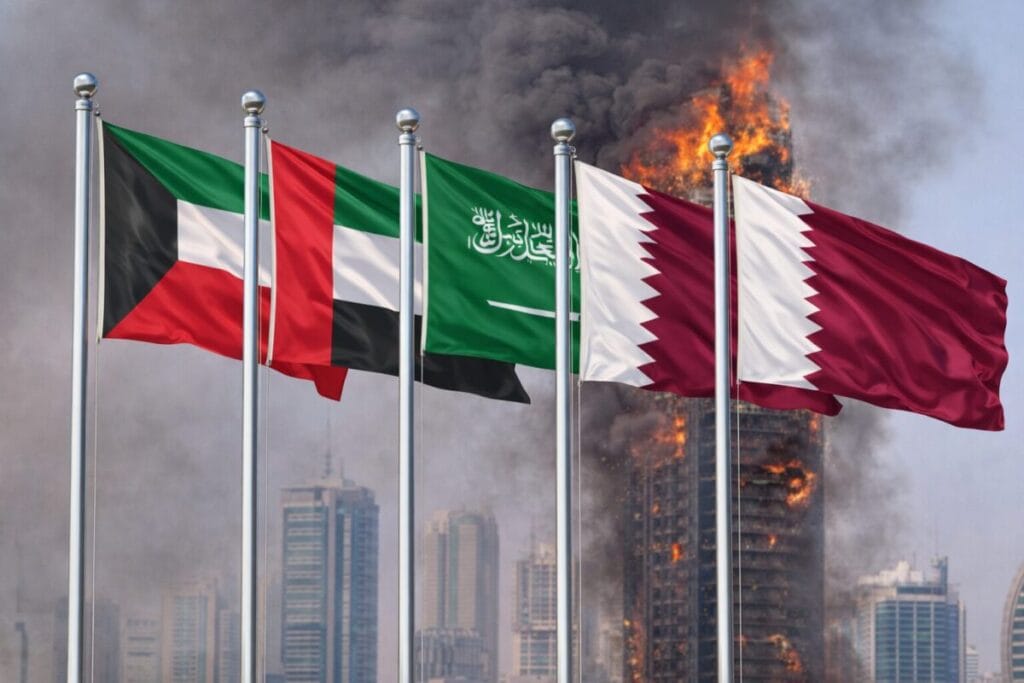
Rising geopolitical tensions in the Gulf region are beginning to affect international travel and tourism, with several countries experiencing disruptions to flights, airspace operations and visitor plans. Kuwait, the United Arab Emirates, Saudi Arabia and Qatar—key hubs for global tourism and aviation—are facing increased uncertainty as security concerns prompt travel advisories and heightened alert levels.
The evolving situation has caused widespread travel disruptions across the region, forcing airlines, airports and tourism authorities to adjust operations while governments urge travelers to remain cautious. For tourists planning visits to the Gulf states, the rapidly changing environment has created uncertainty about flight schedules, safety conditions and travel plans.
Kuwait Experiences Heightened Security Measures
Kuwait has recently been placed under heightened security monitoring as authorities respond to escalating regional tensions. Kuwait City, the country’s capital and economic center, has strengthened security procedures around key infrastructure sites including transport hubs, government buildings and energy facilities.
Kuwait International Airport, which serves as a gateway for millions of passengers annually, has experienced temporary operational disruptions as airlines review flight routes and adjust schedules in response to regional security concerns. These adjustments have led to delays and cancellations affecting both regional and international routes.
Authorities have advised residents and visitors to remain alert and follow official guidance while avoiding restricted areas where emergency services and security personnel are operating.
Several prominent tourist attractions, including the well-known Kuwait Towers and waterfront districts along the Arabian Gulf, remain open but under increased security supervision.
UAE and Saudi Arabia on High Alert
The United Arab Emirates and Saudi Arabia, two of the Middle East’s largest tourism and aviation hubs, have also implemented precautionary security measures as tensions escalate across the region.
Major cities such as Dubai, Abu Dhabi and Riyadh continue to operate normally, but authorities have increased surveillance and emergency preparedness around critical infrastructure, airports and commercial districts.
Dubai International Airport and Abu Dhabi International Airport remain among the world’s busiest aviation hubs, connecting travelers between Asia, Europe and Africa. However, airlines operating in the region are reviewing flight routes and adjusting schedules to avoid potentially sensitive airspace corridors.
Saudi Arabia has also implemented enhanced security protocols near strategic infrastructure locations, particularly around energy facilities and major transportation routes.
While tourism activities continue across the Gulf, travelers are encouraged to stay informed about the latest travel guidance issued by authorities.
Qatar Aviation Hub Faces Airspace Adjustments
Qatar has also been affected by the growing regional tensions, particularly due to its position as a major global transit hub. Doha’s Hamad International Airport is one of the busiest transfer airports in the world and a critical link for long-haul international flights.
Airspace adjustments and precautionary aviation measures have led to some delays and rerouted flights across the region. Airlines are coordinating with aviation authorities to ensure safe flight paths while maintaining global connectivity.
Despite these challenges, Qatar continues to operate essential aviation services while implementing additional safety procedures for travelers passing through its airports.
The country remains a popular tourism destination known for cultural attractions, modern architecture and large international events.
Impact on Tourism and International Travel
The Gulf region has experienced rapid tourism growth over the past decade. Cities like Dubai, Doha, Riyadh and Kuwait City have become global destinations offering luxury hotels, cultural landmarks, desert tourism experiences and large entertainment events.
However, periods of geopolitical tension can temporarily affect tourism confidence. Travelers often reconsider plans when security conditions become uncertain, particularly when governments issue travel warnings or airlines adjust flight routes.
Travel agencies and tour operators have reported increased inquiries from travelers seeking updates about conditions in the Gulf region. Some tourists are choosing to delay trips until the situation stabilizes, while others are monitoring developments before finalizing travel plans.
Business travel may also face short-term disruption, especially for industries closely connected to energy, construction and international trade.
Global Travel Advisories and Government Warnings
Several governments around the world regularly review travel advisories when regional tensions increase. These advisories typically encourage citizens to remain cautious, monitor developments and avoid non-essential travel to areas experiencing instability.
Travel advisories are issued to ensure that citizens remain informed about safety conditions abroad. They also help travelers prepare for potential disruptions such as flight cancellations, transportation delays or temporary airspace restrictions.
Tourists currently in the region are advised to follow guidance from local authorities and stay updated through embassy notifications and official government announcements.
Airlines Adjust Routes and Flight Schedules
One of the most noticeable effects of the current tensions has been disruptions to air travel across the Gulf region. Airlines frequently modify flight paths to avoid sensitive areas, which can lead to longer travel times or temporary delays.
Airports in Kuwait, the UAE, Saudi Arabia and Qatar continue to operate, but airlines are advising passengers to confirm flight schedules before traveling to the airport.
Passengers may experience:
- Flight delays due to airspace adjustments
- Route diversions increasing travel time
- Temporary cancellations on certain routes
- Increased security checks at airports
Travelers are encouraged to remain flexible with their plans and allow additional time when traveling through the region.
Guidance for Travelers in the Region
Tourism authorities and international embassies have issued practical advice for travelers currently visiting Gulf countries.
Visitors are encouraged to:
- Stay informed about local news and government announcements
- Follow airport and airline guidance regarding flights
- Avoid restricted or security-sensitive locations
- Maintain communication with their embassy if needed
- Keep travel documents and emergency contacts accessible
Travel insurance providers also recommend checking policies to ensure coverage for disruptions related to regional security events.
Outlook for Gulf Tourism
Despite the current uncertainty, the Gulf region remains one of the fastest-growing tourism markets in the world. Countries including the UAE, Saudi Arabia and Qatar have invested heavily in tourism infrastructure, luxury resorts, cultural attractions and global events.
Large development projects and international exhibitions continue to attract millions of visitors each year.
The long-term outlook for tourism in the region will depend largely on how quickly geopolitical tensions ease and travel confidence returns.
For now, travelers planning trips to the Gulf are advised to stay informed, monitor travel advisories and remain flexible as conditions continue to evolve.
For more travel news like this, keep reading Global Travel Wire