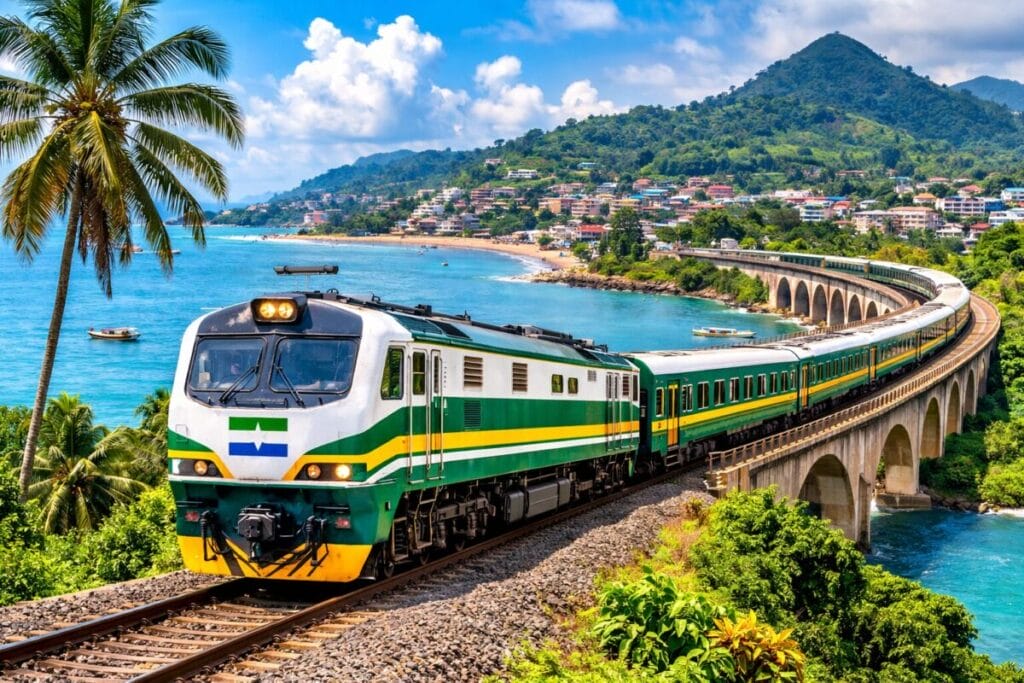
Sierra Leone is moving forward with an ambitious plan to modernize its railway infrastructure while placing safety at the center of national transport development. The initiative, spearheaded from the capital city of Freetown, aims to rebuild the country’s railway network and transform it into a reliable system capable of supporting tourism, trade and community connectivity.
Authorities responsible for railway development and regulation have outlined a strategy focused on upgrading infrastructure, strengthening safety standards and reviving historic railway routes. The long-term vision is to create a modern transport network that can support both passenger travel and economic growth while encouraging tourism across Sierra Leone’s diverse landscapes.
Railways once played an important role in the country’s transportation system, linking coastal regions with inland communities. By restoring and modernizing these lines, the government hopes to reintroduce rail travel as a key pillar of national mobility.
Freetown as the Center of Railway Transformation
Freetown, the capital and largest city of Sierra Leone, serves as the central hub for the country’s railway development strategy. Government planners envision the city as a major gateway for future rail travel that connects ports, industrial areas and tourist destinations.
The modernization program includes plans for improved safety regulations, updated rail technology and investment partnerships designed to strengthen infrastructure. Authorities believe that rebuilding a reliable rail system will help support several sectors of the national economy.
Agriculture, mining, trade and tourism are all expected to benefit from improved transportation links. By providing efficient rail connections between urban centers and rural regions, the government aims to improve mobility while creating new economic opportunities.
For tourism, better transport options mean easier access to cultural landmarks, historical sites and coastal attractions across the country.
Strengthening Railway Safety Standards
A key component of Sierra Leone’s railway initiative is the introduction of stronger safety regulations and monitoring systems. Railway safety is being prioritized through a regulatory framework designed to ensure that rail infrastructure and operations meet modern international standards.
Authorities responsible for railway oversight are working to establish clear safety protocols for train operations, maintenance and passenger services.
Mobile monitoring systems, emergency communication channels and improved inspection procedures are among the measures being considered to enhance safety across the network.
These steps aim to build public confidence in rail travel while reducing operational risks.
Improved safety measures are particularly important as the country works to attract international visitors who expect reliable and secure transportation when exploring new destinations.
Reviving Historic Railway Routes
Sierra Leone has a rich railway heritage dating back to the colonial era when railways were built to transport goods and passengers between coastal ports and inland towns.
Although many of these lines were later abandoned or dismantled, the historic railway network remains an important part of the nation’s cultural identity.
Government officials and transportation planners are now exploring opportunities to restore portions of these historic routes as part of the broader railway revival project.
One notable example includes former lines connecting Freetown to areas such as Pepel Port and other inland locations.
Restoring these routes could create unique tourism opportunities by allowing visitors to experience scenic rail journeys through Sierra Leone’s countryside.
Heritage rail tourism has proven successful in many countries where restored train routes allow travelers to explore historical landscapes while learning about local culture.
Boosting Tourism Through Rail Connectivity
Tourism has been identified as one of the sectors that could benefit significantly from improved railway infrastructure. Sierra Leone offers a wide range of natural and cultural attractions, including pristine beaches, wildlife reserves, historical landmarks and vibrant cultural traditions.
However, transportation limitations have historically made it challenging for visitors to travel easily between destinations.
By introducing safe and reliable rail services, authorities hope to encourage more travelers to explore different regions of the country.
Rail travel also provides a unique tourism experience in itself, allowing passengers to enjoy scenic views while traveling between cities and rural landscapes.
For visitors arriving in Freetown, improved railway links could make it easier to explore surrounding areas and discover attractions beyond the capital.
Integrating Rail with Other Transport Systems
The railway modernization effort is also part of a broader strategy to integrate rail transport with road and air travel across Sierra Leone.
Transportation planners are working to create a multimodal network that allows passengers and goods to move efficiently between different forms of transport.
Airports, highways and seaports are expected to connect with future railway stations, enabling smoother travel between regions.
Such integration is especially important for tourism, as international travelers often rely on multiple transport options during their trips.
By linking railways with existing transportation systems, Sierra Leone hopes to create a more efficient travel experience for both residents and visitors.
Economic Opportunities and Job Creation
Infrastructure development projects often generate economic benefits beyond transportation improvements. The railway revival initiative is expected to create employment opportunities in construction, engineering, maintenance and tourism services.
Local businesses may also benefit from increased travel activity as visitors explore communities located along railway routes.
Hotels, restaurants, tour operators and small businesses in these areas could see increased demand once passenger rail services become operational.
In addition to supporting tourism, improved railways can help transport agricultural products and industrial goods more efficiently across the country.
Future Prospects for Rail Tourism
Sierra Leone’s long-term vision includes expanding railway routes that connect urban centers, coastal areas and interior regions. The government hopes that modern rail systems will eventually support both domestic and international tourism.
Some proposals also explore innovative transport solutions such as cable car systems and scenic rail routes that highlight the country’s natural beauty.
With proper safety standards and infrastructure investment, rail tourism could become a unique feature of Sierra Leone’s travel industry.
Travelers seeking authentic cultural experiences and scenic journeys may find railway travel an appealing way to explore the country.
A New Era for Transportation in Sierra Leone
The railway safety initiative represents an important step toward modernizing Sierra Leone’s transportation infrastructure while honoring its historic rail heritage.
By prioritizing safety, reliability and connectivity, the government aims to create a rail system capable of supporting economic development and tourism growth.
If successfully implemented, the project could transform how people travel across the country while opening new opportunities for visitors to discover Sierra Leone’s landscapes, culture and history.
For both residents and tourists, the revival of rail travel signals a promising future in which transportation plays a central role in connecting communities and showcasing the nation’s unique destinations.
For more travel news like this, keep reading Global Travel Wire