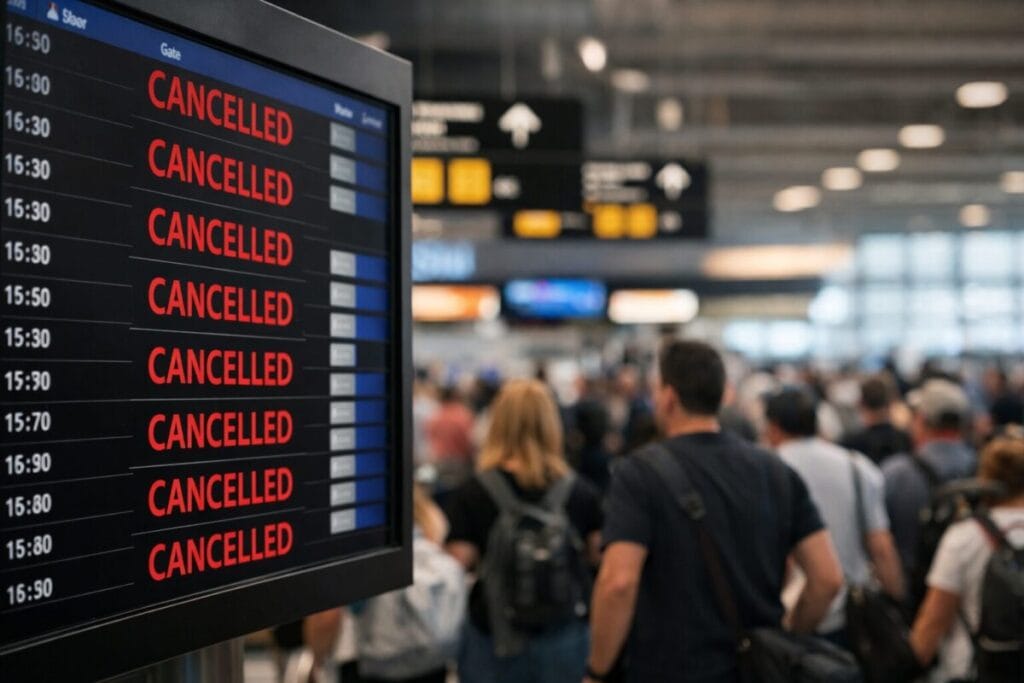
Air travel across the United States experienced significant disruptions after more than 25 scheduled flights were cancelled across several major airports. The operational changes affected both international and domestic routes, impacting travelers departing from some of the country’s busiest aviation hubs including Atlanta, Chicago, Dallas-Fort Worth, Los Angeles, Miami, New York, Charlotte, and Phoenix.
The cancelled services included long-haul international flights to destinations such as Doha, Tel Aviv, and Brussels as well as domestic routes connecting major American cities like Philadelphia, Los Angeles, Atlanta, Nashville, Pittsburgh, Oakland, and New York. The disruptions involved a mix of wide-body international aircraft and regional jets, demonstrating how operational adjustments can ripple through the entire airline network.
Atlanta Hub Experiences Multiple Flight Cancellations
Hartsfield-Jackson Atlanta International Airport, widely recognized as one of the busiest airports in the world, experienced several cancellations that affected both international and domestic travelers.
Among the disruptions were long-distance services connecting Atlanta with the Middle East. Two scheduled flights to Doha were removed from the departure schedule across two consecutive evenings. In addition, a regional jet service scheduled to depart for Queretaro in Mexico was cancelled.
A domestic connection between Atlanta and New York’s John F. Kennedy International Airport was also cancelled early in the day. Because Atlanta functions as a central hub for connecting passengers traveling throughout the United States and internationally, even a small number of cancellations can cause widespread itinerary adjustments.
Chicago O’Hare Sees Impact on International Routes
Chicago O’Hare International Airport also experienced several operational disruptions affecting both domestic and international services.
Two long-haul flights connecting Chicago with Doha were cancelled, affecting passengers traveling between the United States and the Middle East. Additionally, a wide-body aircraft scheduled to depart for Brussels in Belgium was removed from the schedule.
Another international route to Tel Aviv was cancelled as well, reflecting ongoing operational challenges that sometimes affect flights to certain regions. Domestic travel was also impacted when a flight from Chicago to Philadelphia was cancelled.
These changes highlight how long-distance routes can be particularly sensitive to operational adjustments such as aircraft availability, staffing, or scheduling constraints.
Dallas-Fort Worth Flights to Doha Suspended
Dallas-Fort Worth International Airport recorded several cancellations focused on international travel to the Middle East.
Three long-haul flights scheduled to depart for Doha were removed from the schedule. These services typically operate using large wide-body aircraft designed for ultra-long-distance travel.
When flights on major intercontinental routes are cancelled, airlines often need to rebook large numbers of passengers onto alternative flights, which can lead to delays and additional connections for travelers.
Los Angeles International Airport Experiences Route Adjustments
Los Angeles International Airport also reported changes to several international flight schedules.
Two long-distance flights between Los Angeles and Doha were cancelled, affecting passengers traveling between the US West Coast and the Middle East. In addition, a flight scheduled to depart for Tel Aviv was cancelled.
Because Los Angeles serves as a major gateway between North America and Asia, Europe, and the Middle East, disruptions there can affect travelers arriving from or connecting to many international destinations.
Miami International Airport Records Multiple Disruptions
Miami International Airport experienced several cancellations affecting both international and domestic travel routes.
Three flights scheduled to depart for Doha across two days were cancelled, impacting passengers traveling between Florida and the Gulf region. Another flight connecting Miami with Atlanta was also removed from the schedule.
Miami is a critical aviation hub linking North America with Latin America and global destinations, so schedule changes at the airport can influence travel connections throughout the region.
Regional Routes Affected in Charlotte
Charlotte Douglas International Airport experienced two cancellations that impacted short-distance domestic travel.
Both flights involved regional aircraft operating routes to Pittsburgh and Nashville. Although regional flights typically carry fewer passengers than long-haul international services, they play a crucial role in connecting smaller cities with major airline hubs.
When these routes are cancelled, travelers often need to adjust travel plans or reroute through other airports.
New York JFK Records the Most Cancellations
Among the airports affected, New York’s John F. Kennedy International Airport reported the highest number of cancelled departures.
Several long-distance flights connecting New York with Doha were removed from the schedule across two days. In addition, a domestic flight between New York and Los Angeles was cancelled.
Another international route connecting New York with Tel Aviv was also affected. Because JFK is one of the busiest international gateways in the United States, disruptions there can influence global travel networks and connecting itineraries.
Phoenix Reports Single Cancellation
Phoenix Sky Harbor International Airport experienced a smaller disruption compared with other airports.
One domestic flight scheduled to depart for Oakland in California was cancelled. Even a single cancellation can impact travelers who rely on the route for business travel or connecting flights.
Impact on Travelers and Airline Operations
The cancellation of more than 25 flights across major US airports demonstrates how airline operations can be influenced by a variety of factors, including scheduling adjustments, aircraft availability, operational constraints, and global travel conditions.
When long-haul flights are cancelled, airlines typically rebook passengers onto later departures or alternative routes. However, this can lead to longer travel times, additional connections, and temporary congestion at major hubs.
Travel experts recommend that passengers check their flight status before leaving for the airport and stay updated through airline notifications. Flexible travel plans and early communication with airlines can also help minimize disruptions when schedule changes occur.
As air travel demand continues to grow globally, maintaining efficient scheduling and operational resilience remains essential for airlines and airport authorities working to keep travelers moving smoothly across domestic and international networks.
For more travel news like this, keep reading Global Travel Wire