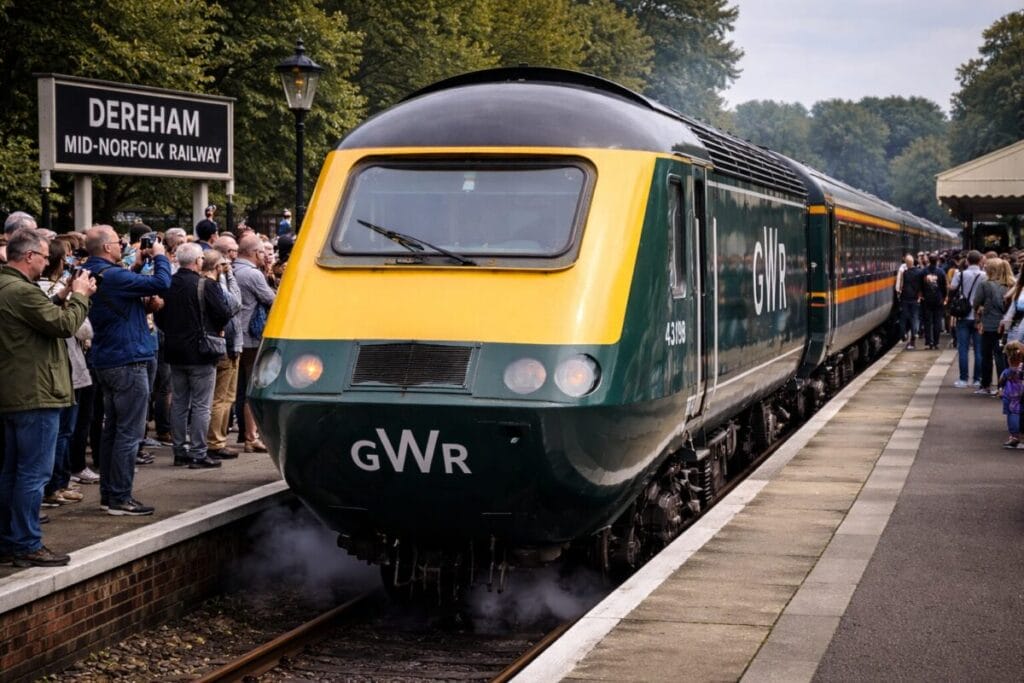
Railway enthusiasts and families across the United Kingdom will soon witness a remarkable heritage event in Norfolk. A historic Great Western Railway High Speed Train will return for a special one-day journey at the Mid Norfolk Railway. The event will give visitors a rare chance to ride one of Britain’s most iconic trains.
The special train will operate on March twenty-second between Dereham and Wymondham stations. Organizers expect strong interest from railway fans and local families. The event celebrates the legacy of the High Speed Train, a vehicle that transformed long-distance travel in Britain.
Heritage railways across the United Kingdom continue to preserve important railway technology. This event demonstrates how historic trains still inspire excitement decades after their introduction. The journey offers both nostalgia and education for visitors of all ages.
High Speed Train transformed modern rail travel
The High Speed Train became one of the most influential trains in British railway history. Engineers introduced the train during the late nineteen seventies. The design revolutionized expectations around speed, reliability, and passenger comfort.
The train quickly became famous across the national rail network. Passengers often recognized the sleek nose design and distinctive engine sound. These trains operated many of the country’s most important intercity routes.
Rail operators used the trains for decades because of their strong performance and durability. The High Speed Train regularly reached speeds that transformed long-distance travel times. Millions of passengers experienced these trains on routes linking major cities.
The design also improved onboard comfort for travelers. Spacious seating, catering services, and smooth ride quality helped establish a new standard for intercity rail journeys.
Great Western Railway HST sets later adapted for new roles
After decades of service, many High Speed Train sets received modifications for new roles. Rail operators shortened several trains and redeployed them on regional services. These adapted formations became known as Castle sets within the Great Western Railway network.
The Castle sets continued operating across southwest England after mainline upgrades introduced newer trains. These shortened trains retained the classic HST design while serving regional routes. Passengers still recognized the powerful engines and comfortable interiors.
The train now visiting Norfolk once operated from the Laira depot in Plymouth. This location served as a major base for Great Western Railway High Speed Trains. When the railway retired these trains from service in the region, the unit moved to preservation.
This relocation marked the departure of the final HST from southwest England operations. Railway enthusiasts view this transition as an important moment in British transport history.
Mid Norfolk Railway hosts special heritage experience
The Mid Norfolk Railway will host the special train running event. The heritage railway operates through the scenic countryside of Norfolk. Visitors often travel there to experience historic locomotives and vintage railway vehicles.
The railway line between Dereham and Wymondham provides a fitting setting for the High Speed Train. The preserved route allows passengers to experience the train’s performance and sound in a relaxed environment. Organizers plan multiple journeys throughout the day.
The event results from cooperation between the Mid Norfolk Railway and the ROMIC Group. The ROMIC Group made the train available for the special operating day. Their support allows the heritage railway to present this rare opportunity to the public.
Railway managers expect strong visitor interest in the event. Heritage train rides often attract enthusiasts who wish to experience historic railway technology.
Onboard services recreate classic intercity travel
Organizers plan to recreate elements of the traditional intercity travel experience. Staff will provide onboard trolley catering during the train journeys. This service reflects the classic High Speed Train experience familiar to many travelers.
Passengers once enjoyed refreshments delivered directly to their seats during long-distance journeys. The trolley service therefore adds an authentic historical detail to the event. Visitors can enjoy snacks and drinks while traveling along the heritage railway.
The train interior also reflects the original design that many passengers remember. Comfortable seating and distinctive carriage layouts remain part of the experience. These details allow guests to imagine intercity journeys from previous decades.
The combination of catering service and authentic train design helps recreate the atmosphere of historic rail travel.
Historic train continues new life in preservation
The High Speed Train appearing in Norfolk carries special significance within the preservation community. This particular unit represents the final HST to depart the Laira depot after withdrawal from regional operations. Its preservation therefore marks an important milestone.
Instead of retiring quietly, the train now continues operating in heritage events. Preservation groups aim to keep historic railway equipment functioning whenever possible. Operating trains allow visitors to experience railway history in motion.
Heritage railways across the United Kingdom play an essential role in preserving transport history. These organizations maintain historic locomotives, carriages, and railway infrastructure. Events such as this High Speed Train day demonstrate the importance of preservation efforts.
Passengers who attend the event will become part of the train’s continuing story.
Event strengthens local tourism and community engagement
Special railway events often attract visitors from across the country. The High Speed Train day will likely draw enthusiasts and families to Norfolk. Local tourism businesses often benefit from these heritage attractions.
Visitors may explore the surrounding region while attending the railway event. Norfolk offers historic towns, countryside landscapes, and cultural attractions. The train event therefore contributes to the region’s tourism activity.
Community involvement also plays an important role in heritage railways. Volunteers and staff often work together to organize special events. These collaborations strengthen local connections to railway history.
Educational opportunities also arise from such heritage experiences. Young visitors often develop interest in engineering, transport, and history after visiting heritage railways.
British railway heritage continues inspiring new generations
Britain remains the birthplace of the modern railway. Engineers introduced the first passenger railway lines during the early nineteenth century. These innovations transformed transportation worldwide.
Today, heritage railways continue sharing this history with the public. Special events like the High Speed Train running day connect past technology with modern audiences. Visitors can experience historic trains rather than simply viewing museum displays.
The Mid Norfolk Railway event highlights the importance of preserving iconic trains. The High Speed Train remains one of the most recognizable vehicles in British rail history. Its return for a single day offers a rare opportunity to experience a true engineering milestone.
Passengers who board the train will step into a living chapter of British railway heritage.
For more travel news like this, keep reading Global Travel Wire