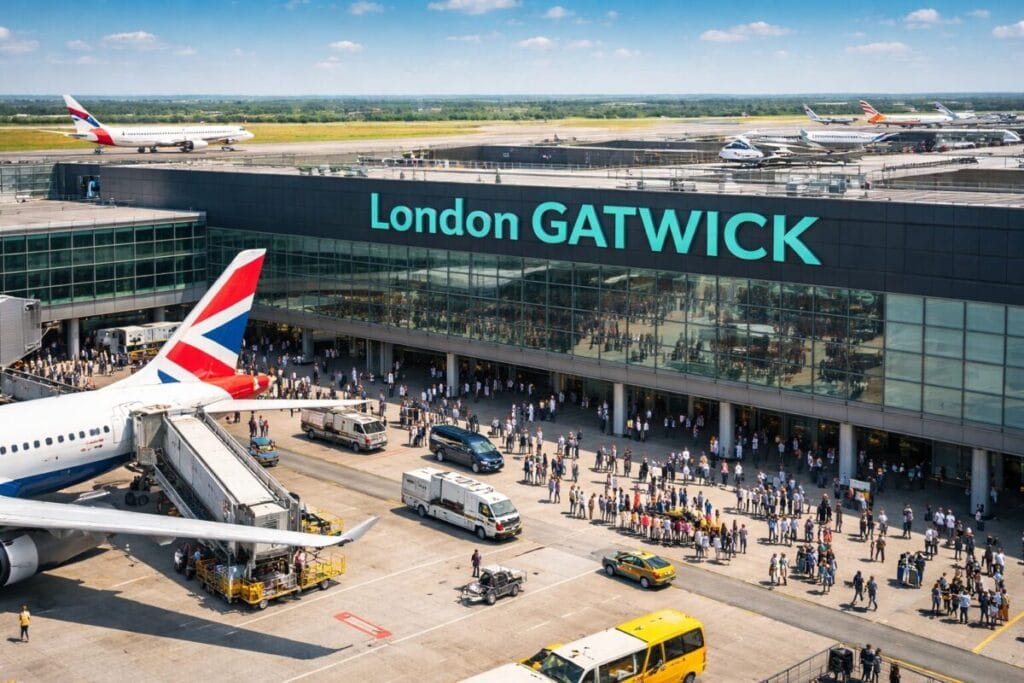
London Gatwick Airport has strengthened its position as one of Europe’s leading aviation hubs following a year of expanded connectivity, improved operations, and significant investment in infrastructure. In 2025, the airport broadened its global route network while introducing operational upgrades aimed at improving passenger experience and supporting long-term growth.
The developments come as the airport prepares for a transformative phase in 2026, with large-scale infrastructure projects, expanded airline partnerships, and improved airport services expected to reshape the travel experience for millions of passengers.
Expanding Global Connectivity and Airline Partnerships
During 2025, London Gatwick expanded its global network to reach 227 destinations, strengthening its role as a key gateway connecting the United Kingdom with cities across Europe, Asia, Africa, and the Middle East.
The airport welcomed several new airline partnerships throughout the year, including a significant collaboration with the airline Jet2. In total, 57 airlines operated from Gatwick during 2025, marking the highest number of carriers serving the airport in its history.
This expansion in airline partnerships has enabled travelers to access a wider range of direct routes, making the airport increasingly attractive for both leisure travelers and business passengers seeking convenient international connections.
Passenger Numbers and Travel Demand Trends
Passenger traffic at Gatwick reached approximately 42.8 million travelers during 2025. While this figure represented a slight decrease of around 1 percent compared to the previous year, international travel demand remained strong, particularly for long-haul destinations.
Long-haul passenger traffic increased by more than 3 percent, reflecting growing demand for international tourism and business travel. Flights connecting Gatwick with regions such as Sub-Saharan Africa, South Asia, the Middle East, and parts of Asia experienced particularly strong growth.
Routes serving Africa saw notable increases, while demand for flights to destinations in Asia and Central Asia also rose significantly. These trends highlight the increasing role of Gatwick as a bridge between the United Kingdom and emerging global travel markets.
Financial Performance and Strategic Investment
Despite fluctuations in passenger numbers, Gatwick maintained stable financial performance during 2025. Airport revenue surpassed £1.1 billion, reflecting steady income from airline operations, passenger services, and retail activities.
Annual profit stood at approximately £334 million, while operating earnings remained strong, indicating the airport’s resilience in a changing global travel environment.
At the same time, Gatwick has continued investing heavily in infrastructure improvements and long-term development projects. The airport announced a capital investment plan worth nearly £2 billion aimed at enhancing facilities, expanding passenger areas, and upgrading operational systems.
Key projects include expanding departure lounges, building additional taxiways to support aircraft movement, and implementing new environmental technologies designed to reduce carbon emissions across airport operations.
Northern Runway Project Set to Transform Capacity
One of the most significant developments shaping Gatwick’s future is the Northern Runway Project, a major infrastructure plan designed to increase the airport’s capacity and improve operational efficiency.
The project, valued at more than £2 billion, will bring the airport’s existing northern runway into regular use alongside its main runway. Once operational, the additional runway will allow Gatwick to handle a higher number of aircraft movements per hour.
The expansion is expected to deliver major economic benefits, including the creation of thousands of new jobs and increased investment across the surrounding region. Industry experts estimate that the project could contribute around £1 billion annually to the regional economy.
For travelers, the new runway is expected to improve flight availability, reduce congestion, and provide airlines with greater flexibility when scheduling services.
Operational Improvements Enhance Airport Efficiency
In addition to infrastructure expansion, Gatwick has implemented several operational improvements aimed at increasing efficiency and reducing delays.
The airport introduced advanced runway management systems and improved coordination with national air traffic services. These changes have allowed Gatwick to increase its maximum aircraft movement capacity from 55 flights per hour to approximately 57.
These improvements also contributed to the airport achieving its strongest on-time departure performance in a decade, outside of the pandemic period. Enhanced collaboration between airlines, airport authorities, and air traffic control has helped streamline flight scheduling and improve reliability.
Gatwick also became one of the first single-runway airports in the world to introduce time-based separation technology for aircraft movements, a system designed to optimize runway usage and maintain safe distances between departing flights.
Passenger Experience Upgrades
Improving the passenger journey has remained a central focus for the airport’s management. In 2025, Gatwick introduced several facility upgrades designed to enhance comfort and convenience for travelers.
A newly renovated assisted travel lounge was opened to better support passengers requiring special assistance. The South Terminal departure lounge was also modernized, offering more seating areas, improved retail spaces, and upgraded food and beverage options.
Security procedures were also improved with the introduction of next-generation scanning technology. These new systems allow passengers to move through security checkpoints more quickly while maintaining high safety standards.
Together, these improvements aim to reduce waiting times and create a smoother airport experience for the millions of travelers passing through Gatwick each year.
Sustainability and Environmental Initiatives
Sustainability continues to play a major role in Gatwick’s long-term development strategy. The airport has introduced several initiatives designed to reduce its environmental footprint while maintaining operational efficiency.
During 2025, Gatwick achieved an important certification recognizing efforts to reduce carbon emissions throughout the lifecycle of infrastructure projects. This milestone highlights the airport’s commitment to environmentally responsible development.
The airport has also launched initiatives to expand its electric vehicle fleet, improve energy efficiency across terminals, and support broader decarbonization goals within the aviation sector.
These sustainability efforts align with the UK’s wider environmental targets while helping ensure that airport growth remains compatible with climate commitments.
Looking Ahead to 2026
With expanded routes, stronger airline partnerships, and major infrastructure developments underway, London Gatwick is preparing for another year of transformation in 2026.
The continued expansion of long-haul routes, combined with operational improvements and the future introduction of the Northern Runway, is expected to significantly increase the airport’s capacity and strengthen its role in global aviation.
For travelers, these developments promise more flight options, improved airport services, and enhanced connectivity to destinations around the world. As Gatwick continues to evolve, it is positioning itself as a central gateway for international tourism and travel in the years ahead.
For more travel news like this, keep reading Global Travel Wire