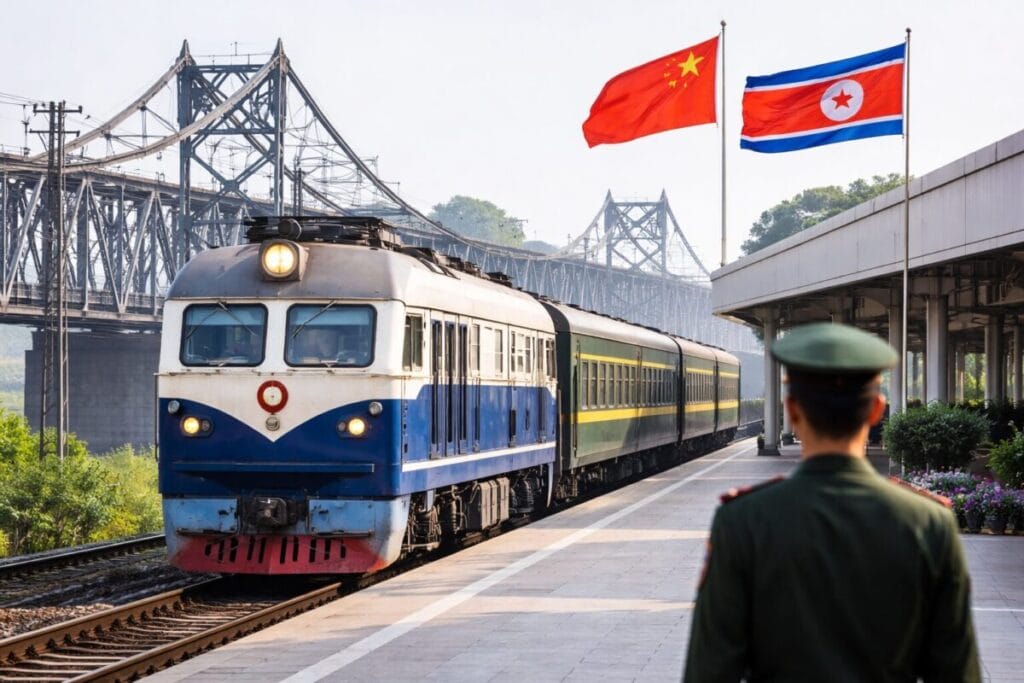
China will restart passenger train services to North Korea after a six-year suspension. The move signals a new phase for cross-border travel between Beijing and Pyongyang. The first train, K27, will depart from Beijing and head toward North Korea this week.
Authorities halted the rail service in 2020 because of the COVID-19 pandemic. Travel restrictions and border closures disrupted many international routes during that period. Now, China plans to restore regional transport links and strengthen cooperation with its neighboring country.
Officials expect the railway to support economic interaction and cultural exchange. The route also creates a rare travel connection between the two capitals.
Beijing–Pyongyang Railway Route Returns to Operation
The Beijing–Pyongyang train will travel roughly 1,400 kilometers across northern China. The route includes a stop in Dandong, a major border city near North Korea. After the stop, the train will cross into North Korea and continue toward Pyongyang.
The full journey will take about 24 hours and 41 minutes. The train will leave Beijing and arrive in Pyongyang the following evening. This schedule allows passengers to complete the journey within a single day.
Rail officials see the route as an important transportation corridor. It reconnects two capitals that share a long history of political and economic cooperation.
China’s rail network continues to expand across Asia. The reopening of this line strengthens international rail links and supports regional mobility.
Cross-Border Travel and Cultural Exchange Expected to Grow
Chinese authorities view the train service as more than a transport project. Leaders want the route to encourage direct communication between the two countries. The service will help government officials, business travelers, and specialists move more easily across the border.
In addition, rail travel can strengthen cultural understanding. Exchanges between citizens often support diplomatic ties. Travelers can share ideas, experiences, and professional knowledge through these visits.
China and North Korea maintain long-standing diplomatic relations. Both countries aim to improve cooperation in trade, infrastructure, and tourism. The restored train line creates a practical channel for these goals.
Transportation projects often influence economic growth. Efficient rail connections help businesses move goods and people quickly across borders.
Schedule and Ticket Rules for the Train Service
The Beijing–Pyongyang train will run four times each week. Scheduled departures will occur on Monday, Wednesday, Thursday, and Saturday. This timetable provides regular travel options for approved passengers.
However, authorities will restrict ticket access. Only travelers holding valid business visas can purchase seats on the train. Officials introduced this rule to control border movement and ensure organized travel.
Travel agencies reported strong interest in the service. Tickets for the first departure sold out quickly. Later departures still have available seats, according to early reports.
Another railway route will also support cross-border travel. A separate train between Dandong and Pyongyang will operate daily. This shorter route will provide frequent travel options near the border.
Tourism in North Korea Remains Highly Restricted
Despite the railway reopening, North Korea still limits international tourism. Authorities allow only controlled travel groups inside the country. Most visitors currently arrive through organized tours that follow strict schedules.
Tour agencies must coordinate closely with government authorities. Travelers cannot move freely without guides or supervision. These rules maintain tight control over the tourism industry.
However, the train service still offers a rare travel route into North Korea. Business travelers and official visitors can now reach Pyongyang directly from Beijing.
This controlled access highlights the country’s cautious approach to international tourism. The government continues to balance economic interests with strict travel regulations.
China Strengthens Regional Transport Cooperation
China plays a major role in North Korea’s economy and trade network. Many goods and supplies move across the border between the two countries. Rail transport supports these exchanges because trains move large volumes efficiently.
The reopened passenger service complements existing freight connections. Together, these routes strengthen infrastructure between the two neighbors.
China continues to invest heavily in railway development. The country promotes rail travel as a sustainable and efficient transportation option. New and restored routes help integrate regional markets across Asia.
For China, stronger rail links also support diplomatic engagement. Transportation often creates opportunities for cooperation in trade, tourism, and technology.
Travel Experience for Passengers
Passengers will experience a unique international train journey. The route combines long-distance rail travel with a border crossing between two very different countries.
Travelers will begin their trip in Beijing’s busy railway network. After several hours, the train will reach Dandong near the Yalu River. This area marks the official border between China and North Korea.
Border checks will take place before the train continues into North Korea. From there, the railway heads toward Pyongyang, the country’s capital city.
Travel experts expect interest from business professionals and diplomats. The route offers one of the few direct travel options into North Korea.
Regional and Global Implications
The restored train service carries broader regional significance. China continues to strengthen transportation corridors throughout Asia. These projects support economic stability and regional cooperation.
Meanwhile, global trade faces uncertainty because of geopolitical tensions and supply disruptions. Reliable land transport routes help countries maintain economic connections.
The Beijing–Pyongyang railway represents a symbolic step toward renewed engagement. It signals that cross-border cooperation remains possible despite global challenges.
Improved connectivity may encourage future infrastructure projects across East Asia.
Conclusion
The restart of the Beijing–Pyongyang passenger train marks an important moment for regional travel. The route reconnects two capitals and restores a key transportation link after six years.
The service will mainly support business travelers and official exchanges. However, it also demonstrates renewed cooperation between China and North Korea.
As rail networks expand across Asia, cross-border transportation will continue shaping regional relations. The reopening of this historic railway route highlights the growing role of rail travel in international connectivity.
For more travel news like this, keep reading Global Travel Wire