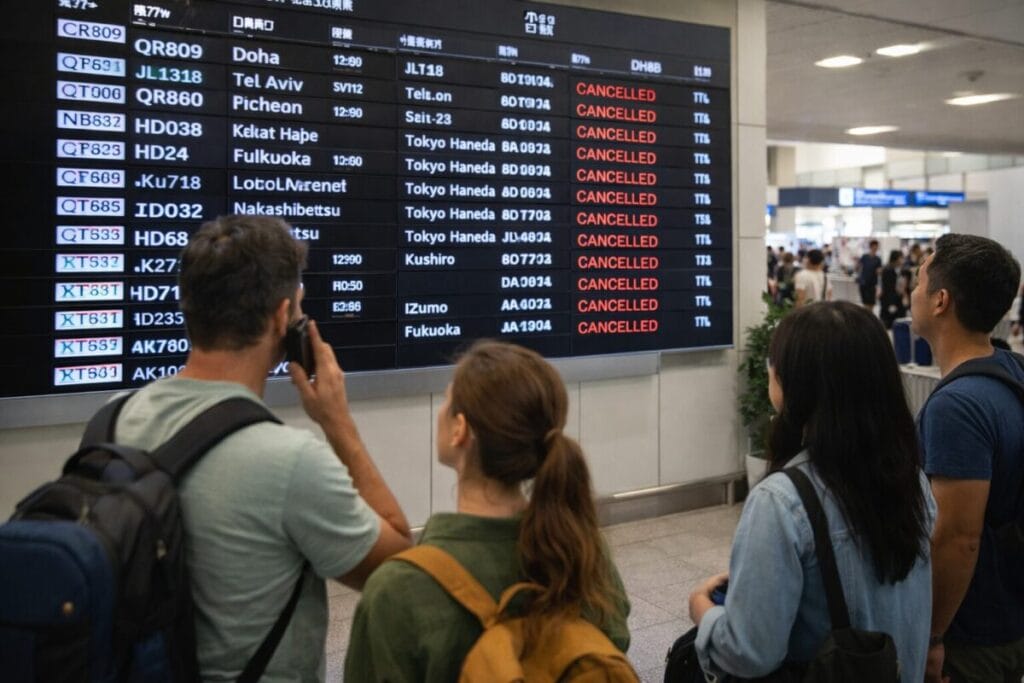
Air travel across Japan has faced serious disruptions after multiple airlines cancelled more than twenty flights. The cancellations affected major airports including Narita, Kansai, Haneda, New Chitose, Fukuoka, Naha, and Chubu Centrair.
Both international and domestic routes experienced interruptions. Travelers heading to Tokyo, Osaka, Hokkaidō, Fukuoka, and Okinawa have reported sudden schedule changes.
Airlines involved in the cancellations include Qatar Airways, Japan Airlines, Air Do, and several regional carriers. These disruptions have forced passengers to adjust travel plans quickly.
Japan operates one of the busiest aviation networks in Asia. Therefore, even small disruptions often spread quickly through connecting routes.
The recent cancellations highlight how interconnected global and domestic aviation systems have become.
Narita Airport Faces Long-Haul Flight Suspensions
Narita International Airport in Tokyo experienced several major cancellations during the disruption period. International flights connecting Japan to the Middle East and Israel faced suspension.
Several Qatar Airways flights to Hamad International Airport in Doha did not operate as scheduled. These flights normally connect Japanese travelers to Europe, Africa, and the Middle East.
An El Al flight from Tokyo to Tel Aviv also cancelled its scheduled departure. This route connects Japan with one of the busiest aviation hubs in the Middle East.
Long-haul passengers rely heavily on Narita for international transfers. When cancellations occur, travelers often miss connecting flights to other global destinations.
Airport officials have advised travelers to monitor airline updates carefully. Many passengers have already begun rebooking through alternative routes.
Osaka Kansai Airport Experiences Regional Route Disruption
Osaka’s Kansai International Airport also reported several cancelled departures. The airport serves as a key gateway for western Japan.
A Qatar Airways flight from Kansai to Doha did not depart as scheduled. This cancellation affected passengers traveling toward Europe and other long-haul destinations.
Another cancelled flight involved a regional connection to Incheon in South Korea. The route normally supports both tourism and business travel between the two countries.
Kansai Airport handles millions of passengers every year. Therefore, even a small number of cancellations can affect large travel flows.
Travelers departing Osaka have had to search for alternative routes through other Asian airports.
Hokkaidō Routes Experience Widespread Domestic Disruptions
Domestic travel across Hokkaidō also faced several interruptions. New Chitose Airport, the island’s main aviation hub, recorded multiple cancelled flights.
Several Air Do flights between New Chitose and Tokyo Haneda did not operate. These routes represent some of the busiest domestic connections in Japan.
Regional flights from New Chitose to Nakashibetsu, Kushiro, and Memanbetsu also cancelled. These smaller airports rely heavily on domestic aviation connections.
Many residents and tourists use these flights to reach rural areas. The cancellations therefore created travel challenges across Hokkaidō.
Tourism plays a major role in Hokkaidō’s economy. Visitors travel there for winter sports, national parks, and seafood cuisine.
Travel disruptions during peak tourism periods can impact local businesses and hotels.
Tokyo Haneda Sees Additional Flight Suspensions
Tokyo’s Haneda Airport also experienced several cancellations connected to the same network disruption. Haneda handles many domestic flights within Japan.
Flights from Haneda to New Chitose did not depart on schedule. Additional cancellations involved flights to Memanbetsu Airport in eastern Hokkaidō.
Haneda functions as Japan’s busiest domestic aviation hub. Passengers often connect there before traveling to other regions.
When Haneda flights cancel, delays quickly affect other airports nationwide. Airlines must rearrange aircraft schedules and crew availability.
Travelers departing Tokyo have faced longer wait times and fewer available seats.
Southern Japan Routes Also Experience Delays
Southern Japan has also experienced aviation disruptions during the same period. Fukuoka Airport in Kyushu reported cancelled domestic connections.
One flight between Fukuoka and Chubu Centrair Airport did not operate as planned. This route connects central Japan with the southern region.
Naha Airport in Okinawa also cancelled a scheduled flight to Fukuoka. The route normally supports tourism between Okinawa’s beaches and mainland Japan.
Okinawa remains one of Japan’s top leisure destinations. Flight disruptions can delay vacations for both domestic and international travelers.
Tourism authorities continue encouraging passengers to verify schedules before traveling.
Chubu Centrair Airport Records Additional Suspensions
Chubu Centrair International Airport in Aichi Prefecture also experienced flight interruptions. One cancelled flight involved a regional route to Izumo Airport.
This connection supports travel to Japan’s historic San’in region. Izumo attracts visitors because of its ancient shrine and cultural heritage.
Regional routes often rely on smaller aircraft such as regional jets. Airlines sometimes cancel these flights during operational adjustments.
Passengers traveling through Chubu Centrair have reported delays and schedule changes.
Multiple Aircraft Types Involved in the Disruptions
The cancellations involved a wide range of aircraft types. These included long-haul wide-body jets and smaller regional planes.
Aircraft models affected included the Boeing 777, Boeing 787, Airbus A350, and Airbus A321. Domestic routes also used Boeing 737 aircraft.
Regional carriers operate Bombardier CRJ and Embraer E170 aircraft on shorter routes. The involvement of many aircraft types shows the scale of disruption.
Both international long-haul services and domestic connections have felt the impact.
Possible Causes Behind the Cancellations
Airlines have not announced a single cause for the widespread disruptions. However, several operational factors may explain the cancellations.
Airline scheduling changes sometimes occur when global aviation conditions shift. Staffing shortages and aircraft rotation issues can also influence schedules.
Weather conditions at major international hubs sometimes disrupt long-haul operations. Airlines must adjust routes to maintain safety and efficiency.
Global aviation networks remain sensitive to geopolitical events and operational pressures.
Airlines often revise schedules to stabilize their networks after disruptions.
Travelers Urged to Monitor Flight Updates
Travelers flying within Japan or connecting internationally should remain alert for updates. Airlines frequently adjust schedules during periods of disruption.
Passengers should confirm departure times before heading to airports. Travel experts also recommend checking alternative routes when flights cancel.
Flexible travel plans help passengers manage unexpected changes. Airlines typically offer rebooking options or refunds during disruptions.
Japan’s aviation network usually recovers quickly after operational adjustments. However, travelers should prepare for short-term delays.
For now, passengers across Tokyo, Osaka, Hokkaidō, and Okinawa must remain patient while airlines stabilize their schedules.
For more travel news like this, keep reading Global Travel Wire