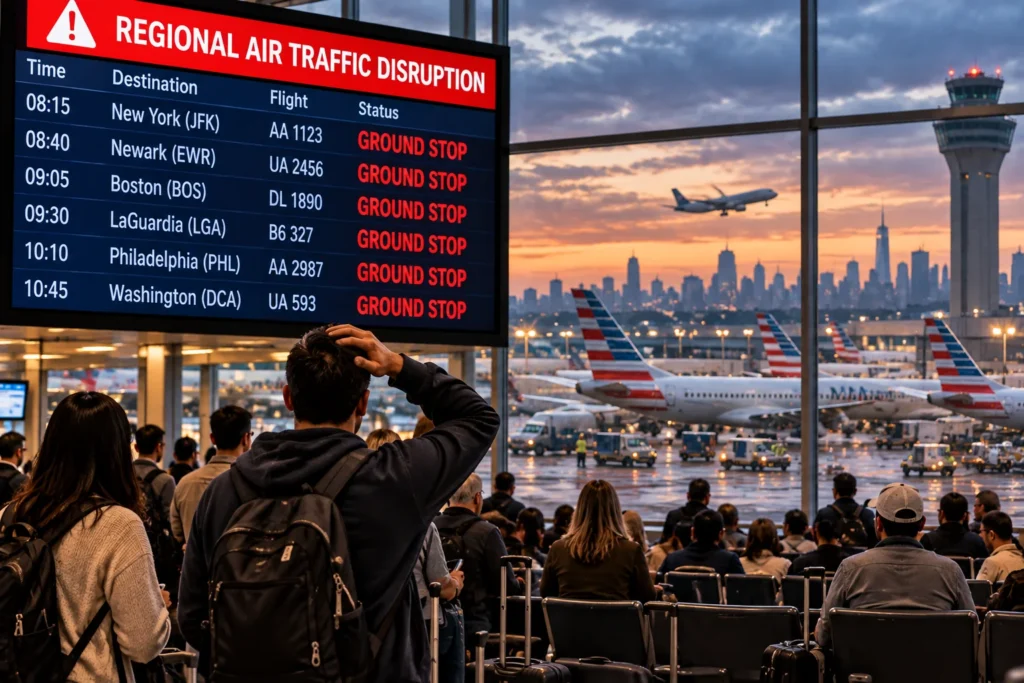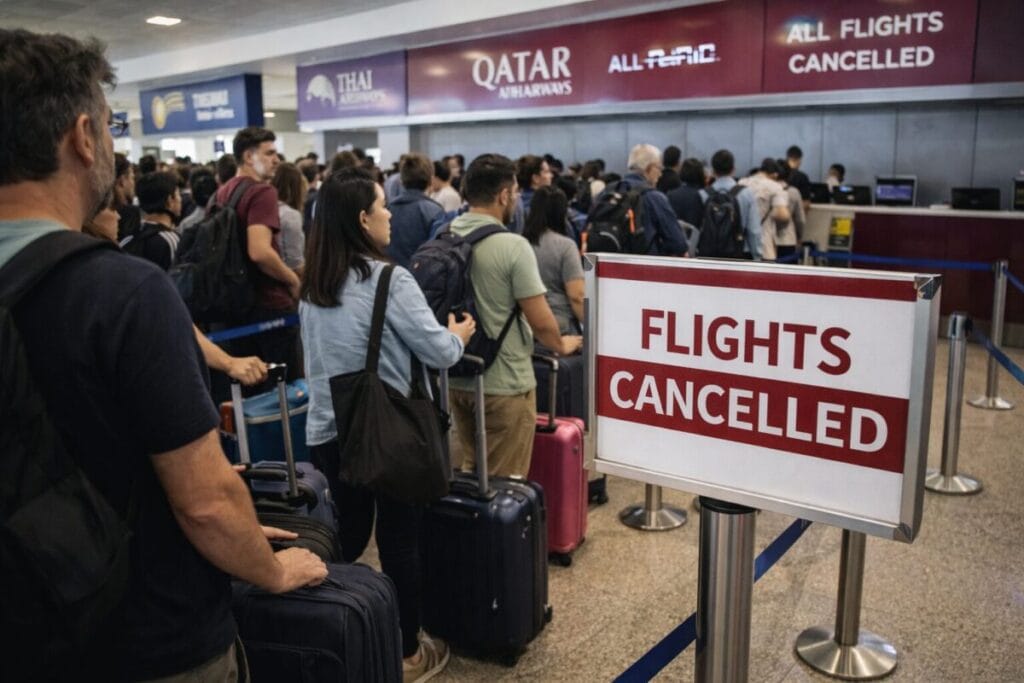
Thailand has faced significant travel disruptions after airlines cancelled more than eighty flights across the country. The cancellations have affected international and domestic routes from several major airports.
Suvarnabhumi Airport in Bangkok, Phuket International Airport, Chiang Mai International Airport, and Krabi Airport have recorded the highest number of affected flights. Passengers traveling to the Middle East, Asia, and India have experienced sudden schedule changes.
Airlines involved in the disruptions include Qatar Airways, Gulf Air, Etihad Airways, Thai Airways, Singapore Airlines, IndiGo, Cathay Pacific, and Flydubai. These carriers operate key routes connecting Thailand to major global travel hubs.
The cancellations have affected destinations such as Doha, Dubai, Abu Dhabi, Bahrain, Tel Aviv, Singapore, Penang, Hong Kong, Mumbai, Delhi, Bengaluru, and Kolkata. Domestic flights between Bangkok and Phuket have also experienced disruption.
Thailand remains one of Southeast Asia’s busiest tourism destinations. Therefore, widespread flight cancellations can create significant inconvenience for travelers.
Bangkok Suvarnabhumi Airport Sees Major Route Suspensions
Suvarnabhumi Airport in Bangkok has experienced the largest share of cancellations. The airport serves as Thailand’s main international aviation hub.
Many of the suspended flights connect Bangkok with Middle Eastern destinations. Airlines cancelled several departures to Doha, Bahrain, and Abu Dhabi over consecutive days.
Qatar Airways cancelled multiple flights scheduled to operate between Bangkok and Hamad International Airport in Doha. These routes normally provide important connections to Europe and North America.
Gulf Air also suspended a scheduled flight between Bangkok and Bahrain. This route usually supports both tourism and business travel.
Etihad Airways cancelled a flight connecting Bangkok with Abu Dhabi International Airport. This route acts as a major gateway for travelers heading toward Europe.
Flights connecting Bangkok with Tel Aviv also experienced disruption. These cancellations affected long-haul travelers traveling between Southeast Asia and Israel.
Domestic travel also faced interruptions. Thai Airways cancelled several flights between Bangkok and Phuket.
Phuket International Airport Faces Heavy Disruptions
Phuket International Airport has also experienced significant cancellations. The airport serves millions of tourists visiting Thailand’s southern beach destinations.
Several Qatar Airways flights from Phuket to Doha did not operate during the disruption period. These cancellations affected travelers connecting to Europe and the Middle East.
Flights linking Phuket with Penang in Malaysia also experienced suspension. These regional routes support tourism and business travel across Southeast Asia.
Singapore Airlines cancelled several departures between Phuket and Singapore Changi Airport. This route normally handles large volumes of passengers traveling between Thailand and Singapore.
Thai Airways also cancelled flights between Phuket and Bangkok. These domestic routes support frequent travel between the capital and Thailand’s largest island destination.
Indian airline IndiGo cancelled several flights connecting Phuket with Indian cities. Routes to Mumbai, Delhi, Bengaluru, and Kolkata faced schedule changes.
Cathay Pacific also cancelled a flight connecting Phuket with Hong Kong. This route often serves international travelers transferring through Hong Kong’s aviation hub.
Chiang Mai Airport Experiences International Route Disruption
Chiang Mai International Airport has also reported cancellations during the same period. Although fewer flights cancelled compared with Bangkok and Phuket, disruptions have still affected international travel.
A scheduled Etihad Airways flight between Chiang Mai and Abu Dhabi did not operate. This route connects northern Thailand with one of the Middle East’s largest aviation hubs.
Chiang Mai attracts millions of visitors each year because of its historic temples and mountain landscapes. Flight disruptions may affect tourism travel plans for international visitors.
Passengers traveling through Chiang Mai have had to seek alternative routes through Bangkok or other airports.
Krabi Airport Also Affected by Flight Cancellations
Krabi Airport in southern Thailand has also experienced several cancellations. The airport supports tourism in the Andaman Sea region.
Flydubai cancelled several scheduled flights connecting Krabi with Dubai International Airport. These flights normally operate several times each week.
Etihad Airways also cancelled departures between Krabi and Abu Dhabi. These routes often transport tourists traveling between Europe, the Middle East, and Thailand.
Tourism remains the main economic driver for Krabi. Flight disruptions can affect hotel reservations and tour schedules.
Travel companies in the region have begun assisting passengers with revised itineraries.
Impact on Travelers and Tourism
The cancellations have affected thousands of passengers traveling through Thailand. Tourists visiting beach destinations and business travelers connecting through Bangkok have experienced delays.
Travelers heading to the Middle East have experienced the greatest impact. Flights to Doha, Dubai, Abu Dhabi, and Bahrain represent some of the busiest routes from Thailand.
Passengers traveling to India have also faced disruptions due to cancelled routes. Cities such as Mumbai, Delhi, Bengaluru, and Kolkata serve large expatriate and business communities.
Domestic routes between Bangkok and Phuket have also faced occasional cancellations. These flights support tourism within Thailand.
Travelers arriving at airports have encountered long queues at airline service desks. Many passengers have needed to rebook flights or adjust travel plans.
Possible Causes Behind the Flight Cancellations
Airlines have not announced a single reason for the widespread cancellations. However, several operational factors may contribute to the disruptions.
Airlines sometimes adjust flight schedules due to aircraft availability or operational changes. Crew scheduling challenges may also affect certain routes.
Weather conditions at major international airports can influence flight operations. Airlines may cancel departures to maintain network stability.
International aviation networks rely on precise scheduling between airports and airlines. When disruptions occur at major hubs, airlines often revise multiple routes.
The concentration of cancellations on Middle Eastern routes suggests operational challenges within those flight corridors.
Travelers Encouraged to Monitor Airline Updates
Passengers planning travel through Thailand should remain alert for schedule changes. Airlines frequently update departure times during periods of disruption.
Travel experts recommend checking flight status before leaving for the airport. Travelers should also allow extra time for airport procedures.
Flexible travel plans can help passengers adjust to sudden cancellations. Airlines usually offer alternative flights or refunds for affected customers.
Thailand’s aviation system normally restores schedules quickly after operational adjustments.
For now, passengers traveling through Bangkok, Phuket, Chiang Mai, and Krabi should continue monitoring airline notifications closely.