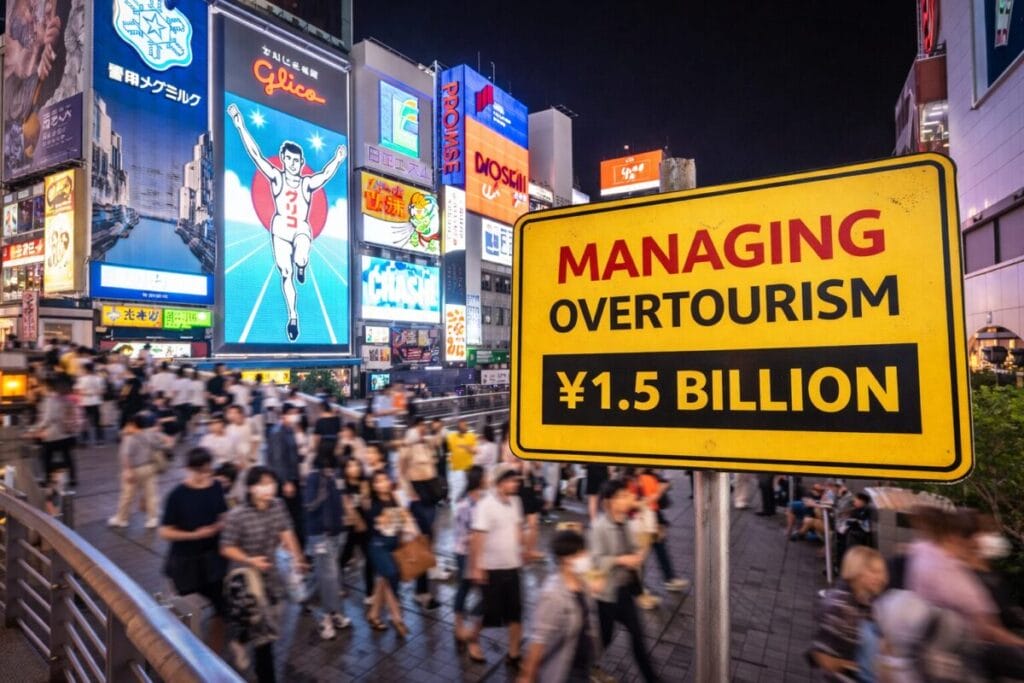
Osaka is taking major steps to address the growing challenge of overtourism in one of its most visited neighborhoods. The city has announced a large-scale initiative worth approximately $9.5 million aimed at improving environmental conditions and visitor management in the Minami district, a vibrant entertainment and shopping area located in Osaka’s Chuo Ward.
Minami has long been a central hub for tourism in Osaka, attracting millions of visitors each year with its iconic neon-lit streets, street food culture, and famous landmarks. Areas such as Dotonbori, Shinsaibashi, and Namba are widely recognized as some of Japan’s most energetic urban districts, drawing both domestic travelers and international tourists.
However, the popularity of the area has also created significant challenges, including littering, overcrowding, and violations of public etiquette rules such as smoking on the streets. With tourism expected to rise even further ahead of major global events like Expo 2025 Osaka, Kansai, city officials are introducing a series of smart urban management measures to ensure the district remains clean, safe, and welcoming.
Smart Trash Bins Aim to Reduce Littering
One of the most visible components of the new initiative is the installation of smart trash bins throughout the Minami district. These modern waste management units use advanced technology to automatically compress trash and alert maintenance teams when they are nearly full.
The system allows city cleaning services to collect waste more efficiently and prevent bins from overflowing during peak tourist periods. Several of these smart bins were first installed along busy streets in recent years, and additional units have now been added as part of the expanded program.
Local businesses have welcomed the improvement, noting that crowded tourist areas often struggle with waste disposal due to limited public bins. By introducing smart waste technology, the city hopes to reduce street litter and maintain a cleaner environment for residents and visitors.
Authorities also believe that improved waste infrastructure will encourage better public behavior, reminding tourists to dispose of trash responsibly rather than leaving it on sidewalks or public spaces.
New Designated Smoking Areas to Enforce Local Rules
Another challenge the city aims to address is street smoking. In many parts of Osaka, smoking in public areas is restricted to designated zones. However, visitors unfamiliar with local regulations sometimes violate these rules, particularly in busy nightlife districts.
To solve this issue, the Osaka municipal government plans to establish twelve new designated smoking areas across the Minami district. These controlled spaces will allow smokers to follow regulations while reducing the impact of cigarette smoke and litter on public streets.
The goal is to create a more comfortable environment for pedestrians while also making it easier for visitors to understand where smoking is permitted.
City authorities are also strengthening patrol systems to monitor compliance and provide guidance to tourists who may not be familiar with local regulations.
Expanded Cleaning Operations Across the District
Maintaining cleanliness in one of Japan’s busiest tourist areas requires constant effort, and Osaka is increasing its street cleaning operations as part of the new initiative.
Previously, cleaning activities focused primarily on specific locations such as the area surrounding Ebisu Bridge, one of the most photographed spots in Dotonbori. Under the new plan, cleaning services will be expanded to cover the entire Minami district.
Regular cleaning throughout the day will help maintain public spaces and ensure that busy shopping streets, restaurants, and entertainment areas remain appealing for visitors.
City officials believe that maintaining high standards of cleanliness is essential for preserving Osaka’s reputation as a world-class tourist destination.
Multilingual Etiquette Campaign for Visitors
In addition to infrastructure improvements, Osaka is launching a multilingual public awareness campaign aimed at educating tourists about local etiquette and responsible travel behavior.
The campaign will provide guidance on proper waste disposal, smoking rules, and general conduct in public spaces. Information will be shared through signage, digital platforms, and tourism channels so that visitors can easily understand local expectations.
Japan places strong cultural importance on public cleanliness and respect for shared spaces, and authorities hope that clear communication will help visitors adapt to these norms.
Educational campaigns have become increasingly common in major tourist destinations around the world as cities seek to balance visitor growth with community well-being.
Upgrading Public Facilities for a Growing Tourism Market
The initiative also includes improvements to public facilities such as restrooms and visitor infrastructure. As tourism continues to grow in Osaka, the demand for well-maintained public amenities has increased significantly.
Upgraded facilities will help ensure that travelers have access to clean and convenient services while exploring the district.
These upgrades are particularly important as Osaka prepares to welcome millions of international visitors during upcoming global events.
Preparing for Expo 2025 and Future Tourism Growth
Expo 2025 Osaka, Kansai is expected to attract millions of visitors from around the world, placing additional pressure on the city’s tourism infrastructure. The improvements in Minami are part of broader efforts to prepare Osaka for this major international event.
By introducing smart technologies, improving cleanliness, and strengthening visitor management, city leaders hope to create a sustainable model for tourism growth.
Officials emphasize that the goal is not to reduce tourism but to ensure that it develops in a way that benefits both visitors and local communities.
Balancing Tourism and Community Life
Overtourism has become a challenge for many popular global destinations, particularly in districts where large crowds gather for entertainment and shopping. Osaka’s strategy aims to strike a balance between welcoming tourists and maintaining quality of life for residents.
Local businesses, community groups, and city authorities are working together to ensure that Minami remains vibrant while avoiding the negative effects often associated with overcrowded tourist areas.
By combining smart technology, improved public services, and visitor education, Osaka is positioning itself as a city that can successfully manage high tourism demand while preserving its cultural identity.
As international travel continues to rebound, these measures may serve as an example for other destinations seeking innovative ways to handle the pressures of overtourism without compromising the visitor experience.
For more travel news like this, keep reading Global Travel Wire