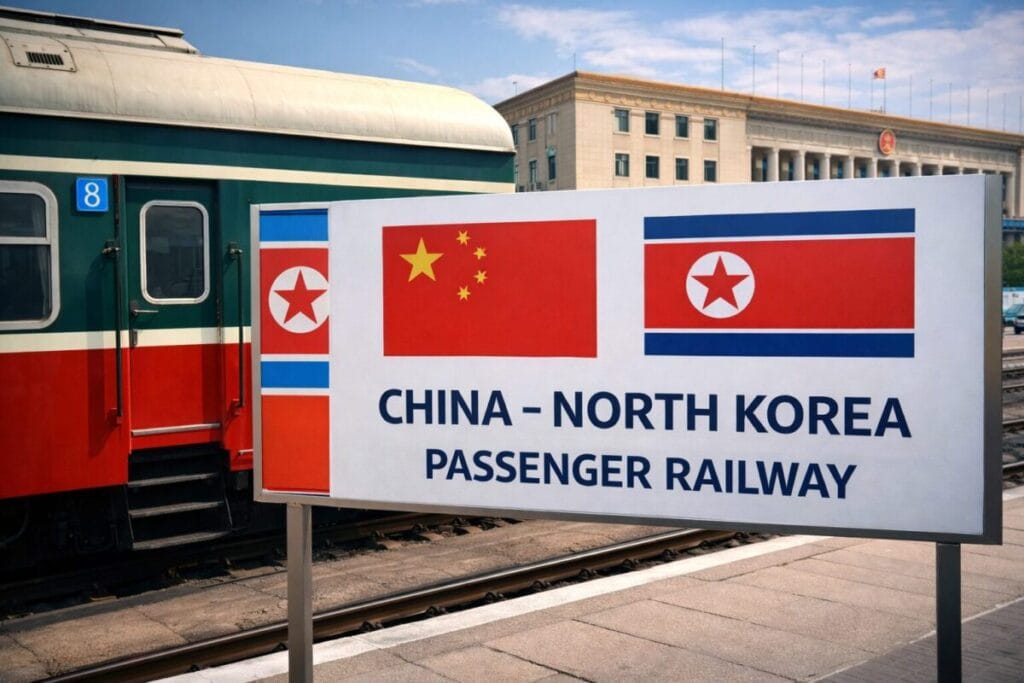
Passenger rail travel between China and North Korea has officially resumed after a six-year suspension, marking an important step in restoring cross-border transportation and tourism in Northeast Asia. The reopening of the Beijing–Pyongyang railway route signals renewed connectivity between the two countries and reflects gradual efforts to revive regional travel following years of restrictions.
The passenger service, which restarted in March 2026, had been suspended since early 2020 when pandemic-related measures halted most international transportation links. The return of the railway line restores one of the few direct travel connections between North Korea and the outside world.
Demand for the inaugural journey has been strong, with tickets for the first service selling out quickly. The high level of interest highlights the importance of the route for both tourism and business travel between the neighboring nations.
A Historic Railway Link Between Two Capitals
The railway connection between Beijing and Pyongyang has long played a significant role in facilitating travel and trade between China and North Korea. The route connects the Chinese capital with Pyongyang through northeastern China before crossing the border into North Korea.
This railway corridor is one of the most important transportation links between the two countries, offering an alternative to air travel and providing an affordable option for cross-border movement.
Historically, the train service has been used by tourists, business travelers, and government officials. The journey offers passengers a unique opportunity to travel across landscapes that include urban centers, rural regions, and historic railway corridors that have existed for decades.
With the reopening of the line, both countries are reestablishing a key transportation channel that had remained dormant during the pandemic.
Tourism Opportunities Expected to Increase
The resumption of passenger rail service is expected to stimulate tourism activity between China and North Korea. Chinese travelers have traditionally represented one of the largest groups of visitors to North Korea, and improved rail access may encourage renewed tourism interest.
For tourists interested in cultural exploration and historical travel experiences, North Korea presents a unique destination with distinctive architecture, monuments, and landscapes.
The capital city of Pyongyang features landmarks such as grand public squares, museums, and monuments that reflect the country’s modern history. Outside the capital, travelers can visit coastal resorts, mountain scenery, and heritage sites that showcase the nation’s culture and traditions.
Travel operators anticipate that the return of railway connectivity will make it easier to organize guided tours and group travel packages, which are commonly required for foreign visitors traveling to North Korea.
Economic Benefits for Both Countries
Beyond tourism, the railway route also plays a key role in strengthening economic connections between China and North Korea. Cross-border rail travel supports business exchanges, trade discussions, and official visits between the two nations.
Improved transportation links can help facilitate regional cooperation by making travel more efficient for diplomats, government representatives, and corporate delegations.
The railway also connects to broader transport networks within China, allowing travelers arriving in Beijing to continue their journeys to other major cities across the country.
For North Korea, renewed rail connectivity could contribute to broader efforts aimed at rebuilding international travel activity and encouraging economic interaction with neighboring countries.
Regional Tourism Development in Northeast Asia
The reopening of the Beijing–Pyongyang train route is also viewed as an important development for regional tourism in Northeast Asia. Transportation infrastructure plays a major role in shaping travel patterns, and restoring rail connectivity can help stimulate tourism growth across the region.
Rail travel offers a distinctive experience compared with air transportation. Passengers can observe landscapes along the journey and travel comfortably between destinations without airport transfers.
As tourism in Asia continues to recover from pandemic-related disruptions, improved cross-border rail links may encourage more travelers to explore destinations across the region.
Travel experts believe that railway tourism could become increasingly popular as travelers look for immersive travel experiences and alternative transportation options.
Gradual Reopening of International Travel Routes
The restoration of passenger rail service between China and North Korea reflects a gradual reopening of international travel routes that were suspended during the pandemic years. Many countries across Asia are slowly rebuilding tourism infrastructure and transportation networks.
While the resumption of the Beijing–Pyongyang railway represents progress, travel regulations and visa requirements remain important considerations for visitors planning trips to North Korea.
Travelers typically need organized tour arrangements and specific travel permissions before visiting the country. Tourism authorities and travel companies are expected to coordinate closely to manage visitor flows as travel resumes.
Cultural Exchange and Tourism Promotion
Tourism between China and North Korea has historically played a role in fostering cultural exchange between the two countries. Visitors can experience unique traditions, cuisine, architecture, and historical narratives that reflect the cultural identity of the region.
Group tours often include visits to cultural landmarks, museums, monuments, and educational institutions that offer insights into the country’s history and development.
By reopening the rail connection, tourism operators may have new opportunities to develop travel programs focused on cultural experiences and historical exploration.
These travel exchanges can also strengthen people-to-people interactions and promote mutual understanding between travelers and host communities.
Future Prospects for Rail Travel in the Region
The return of the Beijing–Pyongyang passenger railway is widely viewed as an important step toward rebuilding international mobility in the region. Rail infrastructure has long been a key element of Asia’s transportation networks, connecting cities and countries across vast distances.
In the future, expanded transportation cooperation and improved railway services could further enhance travel opportunities across Northeast Asia.
Tourism experts note that reliable transport routes are essential for encouraging visitors to explore new destinations. When travel becomes easier and more accessible, tourism industries often benefit from increased visitor interest.
For now, the reopening of the Beijing–Pyongyang train line represents a symbolic and practical step toward restoring regional travel connections after years of disruption.
As tourism gradually resumes, the railway is expected to serve as an important bridge linking travelers, cultures, and economic activity between China and North Korea.
For more travel news like this, keep reading Global Travel Wire