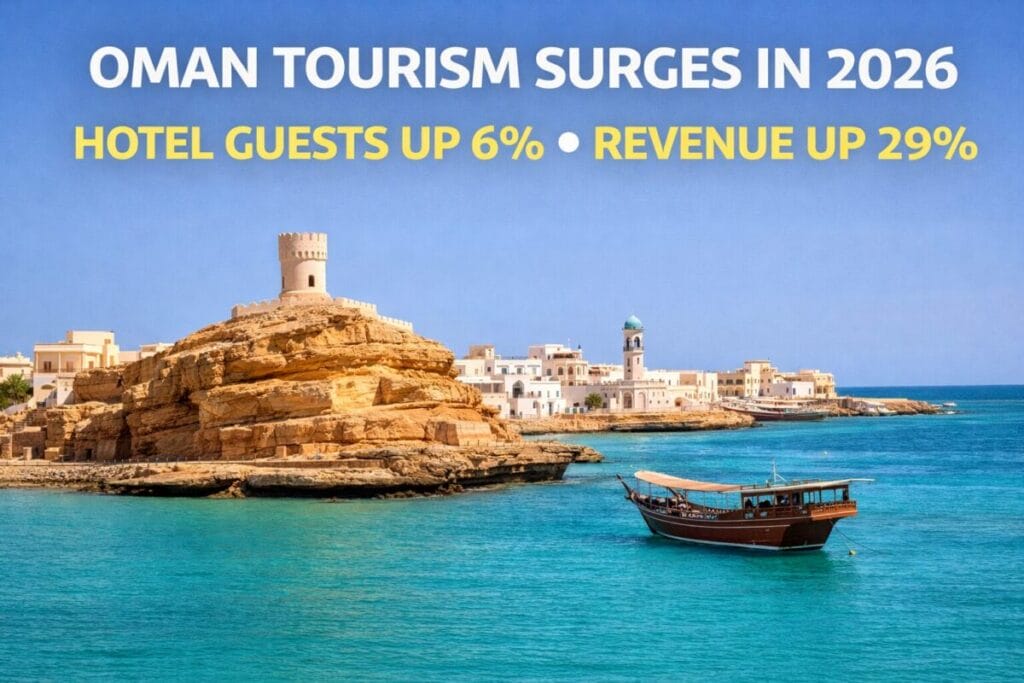
Oman’s tourism and hospitality sector has begun 2026 with impressive momentum, reporting strong increases in both visitor numbers and hotel revenues. Recent national statistics show that the country’s classified hotels—primarily three- to five-star properties—welcomed significantly more guests during the first month of the year compared with the same period in 2025.
The data reveals a steady recovery and expansion of Oman’s tourism industry as the country continues to position itself as a key travel destination in the Middle East. With increasing international interest, growing domestic tourism, and improving infrastructure, the hospitality sector is becoming one of the most dynamic contributors to Oman’s economic diversification strategy.
By the end of January 2026, the number of guests staying in classified hotels reached more than 242,000, representing a 6.1 percent increase compared with the previous year. The rise in visitor numbers reflects stronger travel demand and growing confidence among travelers exploring Oman’s cultural and natural attractions.
Rising Domestic Tourism Strengthens the Sector
One of the most notable developments in Oman’s tourism growth is the increasing participation of domestic travelers. The number of Omani nationals staying in hotels rose significantly during the first month of the year, indicating stronger interest in local tourism experiences.
Domestic tourism plays a critical role in supporting the hospitality industry throughout the year. Many residents are exploring destinations within the country, including coastal regions, desert landscapes, mountain villages, and cultural heritage sites.
Oman’s tourism authorities have been promoting domestic travel as part of broader efforts to diversify the economy and encourage residents to experience the country’s unique attractions.
From the dramatic fjords of Musandam to the historic forts of Nizwa and Bahla, Oman offers a wide range of destinations that appeal to both local and international visitors.
International Visitors Continue to Discover Oman
Alongside the rise in domestic tourism, international travelers remain an essential component of Oman’s growing tourism sector. Visitors from Asia and Europe have contributed strongly to the increase in hotel guests.
Travelers from Asian countries recorded the most significant growth among international markets. This trend is likely linked to expanding airline connectivity between Oman and major cities across Asia, as well as increased awareness of Oman as a unique cultural destination.
European tourists also continued to visit Oman in growing numbers. The country’s mild winter climate, stunning desert landscapes, and authentic Arabian heritage make it an attractive option for European travelers seeking new destinations beyond traditional holiday locations.
Historic architecture, bustling souks, and scenic coastal drives are among the experiences that attract visitors from across Europe.
Changing Travel Patterns in the Gulf Region
While many international markets showed growth, visitor numbers from some regional markets experienced slight fluctuations. Arrivals from Gulf Cooperation Council countries declined during the early part of the year.
Tourism experts suggest that regional travel patterns often shift due to seasonal preferences, economic conditions, and travel promotions offered by competing destinations.
Despite the temporary decline, Gulf travelers remain an important segment for Oman’s tourism industry due to geographic proximity and strong cultural connections.
Authorities continue to develop new tourism initiatives designed to attract visitors from across the region while maintaining the country’s appeal to global travelers.
Hotel Revenue Experiences Major Increase
In addition to the rise in guest numbers, Oman’s hospitality sector recorded remarkable financial growth. Hotel revenues increased dramatically during the first month of 2026, demonstrating the strength of demand for accommodation.
Total revenue from classified hotels rose by more than 29 percent compared with the same period the previous year. This significant increase reflects a combination of factors including higher occupancy levels, improved pricing strategies, and increased visitor spending.
The rise in revenue highlights the improving performance of the hospitality sector as tourism activity expands.
Hotels across major cities such as Muscat, Salalah, and Sohar are benefiting from growing visitor numbers and improved occupancy rates.
Higher Occupancy Rates Reflect Tourism Momentum
Hotel occupancy levels also improved significantly compared with the previous year. Occupancy rates approached seventy percent during January, representing a notable increase from the previous year’s figures.
Higher occupancy levels indicate that hotels are experiencing stronger demand from both leisure travelers and business visitors.
Business travel plays an important role in Oman’s hospitality sector, particularly in the capital city of Muscat, where international conferences, trade events, and corporate meetings frequently take place.
As Oman continues to develop its reputation as a regional hub for business and investment, hotel demand is expected to remain strong.
Tourism’s Role in Economic Diversification
Tourism has become a central pillar of Oman’s long-term economic development plans. The government has been investing heavily in tourism infrastructure, including airports, hotels, cultural attractions, and transportation networks.
These initiatives are part of broader efforts to diversify the national economy beyond traditional industries. By expanding tourism and hospitality services, Oman aims to create new employment opportunities and stimulate local businesses.
The tourism sector also supports industries such as transportation, retail, dining, and entertainment, generating economic benefits throughout the country.
Oman’s Appeal as a Unique Travel Destination
Oman’s tourism growth is closely linked to the country’s distinctive travel experiences. Unlike many destinations in the region, Oman has focused on preserving its natural landscapes and cultural heritage while developing sustainable tourism.
Visitors can explore ancient forts, traditional villages, dramatic mountain ranges, and expansive deserts. Coastal regions offer pristine beaches and opportunities for activities such as diving, dolphin watching, and sailing.
Cultural festivals, traditional markets, and historic architecture provide visitors with authentic experiences that highlight Oman’s rich history.
These unique offerings have helped the country stand out in the competitive global tourism market.
Positive Outlook for Oman’s Tourism Future
The strong start to 2026 suggests that Oman’s tourism sector is entering a period of sustained growth. Rising visitor numbers, improving hotel revenues, and increased international interest all point toward a positive future for the industry.
Tourism authorities continue to focus on expanding air connectivity, promoting new travel experiences, and encouraging investment in hospitality infrastructure.
With ongoing development projects and growing global awareness of the destination, Oman is well positioned to attract more visitors in the coming years.
As tourism continues to expand, the hospitality sector will remain a key driver of economic growth, helping Oman strengthen its position as one of the Middle East’s most distinctive and welcoming travel destinations.
For more travel news like this, keep reading Global Travel Wire