The City of Manila has announced a major digital tourism initiative. Officials plan to launch a modern tourism website that highlights the capital’s history, culture, and food scene.
City leaders want to strengthen Manila’s global tourism presence. The platform will present historic landmarks, museums, and culinary districts in one digital space. Officials expect the website to attract international travelers and encourage domestic tourism.
Manila stands as one of Southeast Asia’s most historic capitals. The city combines centuries-old architecture with modern urban life. Tourism leaders believe digital promotion will help visitors explore these experiences more easily.
The project reflects a wider shift toward digital tourism promotion. Cities around the world now rely on online platforms to attract travelers. Manila now aims to compete strongly in this digital tourism landscape.
City Leaders Support a Strong Digital Tourism Strategy
The Manila city government recently discussed the new tourism platform during a strategic planning meeting. City officials emphasized the need for a stronger online presence to promote Manila’s attractions.
Mayor Francisco “Isko Moreno” Domagoso highlighted the importance of digital access for global travelers. Modern travelers research destinations online before planning trips. Therefore, Manila needs an engaging platform that tells the city’s story.
Tourism officials and creative industry partners attended the meeting. Cristal Bagatsing, who leads the Department of Tourism, Culture, and Arts of Manila, joined the discussion. Representatives from the creative sector also participated in the project planning.
This collaboration will help develop a visually rich tourism platform. The website will feature destination guides, travel information, and cultural highlights.
City leaders believe the platform will strengthen Manila’s tourism identity. It will showcase the capital as a vibrant cultural and historical destination.
Intramuros Remains the Heart of Manila’s Heritage Tourism
The new tourism platform will highlight Intramuros as a central attraction. Intramuros stands as Manila’s historic walled district and one of the Philippines’ most important heritage sites.
Spanish colonial authorities built Intramuros during the sixteenth century. The district once served as the political and religious center of colonial Manila. Today, it remains a key symbol of Philippine history.
Visitors explore several major landmarks within Intramuros. Fort Santiago offers insight into the country’s colonial and wartime past. The Manila Cathedral remains one of the country’s most important religious sites.
San Agustin Church also stands inside the historic district. The church holds recognition as a UNESCO World Heritage Site and reflects centuries of religious architecture.
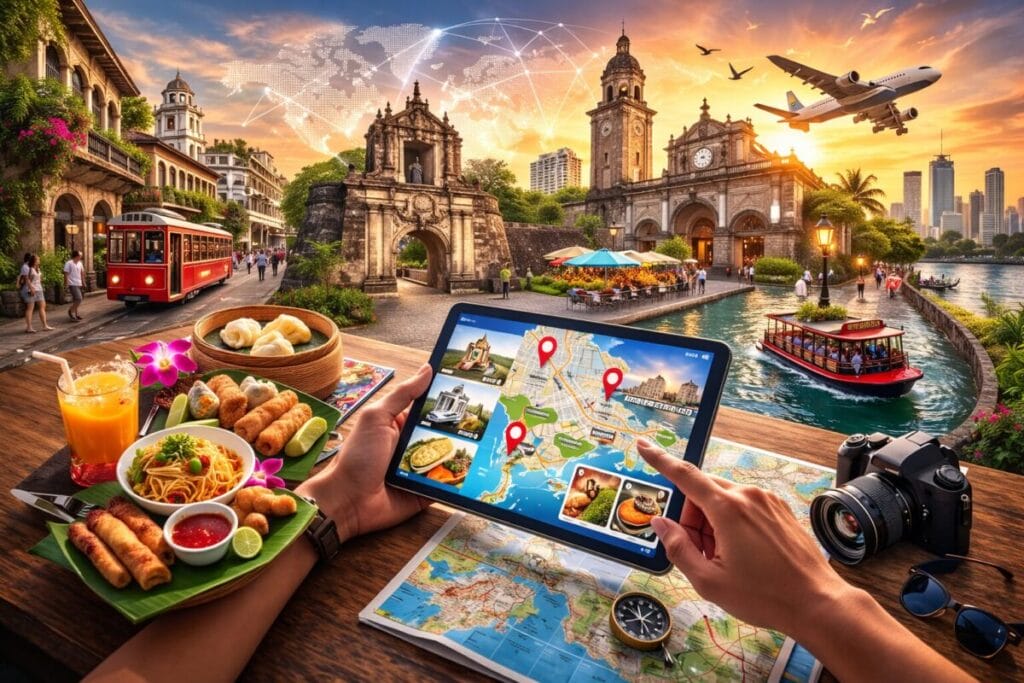
The digital tourism platform will allow visitors to explore these landmarks virtually. Interactive maps will guide travelers through historical walking routes. These features will help travelers plan meaningful heritage tours before arriving in Manila.
Digital Maps and Virtual Guides Will Transform Visitor Planning
Tourism officials plan to include advanced digital tools within the platform. Interactive maps will help travelers navigate Manila’s historic neighborhoods.
Visitors will explore museums, churches, and cultural sites through curated guides. The platform will also feature historical archives and storytelling content. These elements will help travelers understand Manila’s rich past.
Many travelers currently rely on printed brochures or scattered online resources. The new platform will simplify trip planning by offering centralized information.
Tourists will also find suggested itineraries for different interests. Some routes will focus on architecture and heritage. Others will highlight photography spots or cultural districts.
These features aim to create a smoother travel experience for visitors.
Manila’s Food Culture Will Receive Global Attention
The city government also plans to highlight Manila’s famous food scene. Culinary tourism continues to grow across Asia, and Manila offers one of the region’s most diverse dining cultures.
Binondo, the world’s oldest Chinatown, will receive special attention on the platform. The district attracts food lovers from across the Philippines. Travelers explore famous noodle houses, dumpling shops, and street food stalls.
The tourism platform will introduce food trails and restaurant guides. Visitors will learn about traditional dishes and hidden local eateries. These guides will also feature popular walking food tours in Binondo.
Neighborhoods such as Quiapo and Malate will also appear on the platform. These districts offer unique street food experiences and cultural markets.
By promoting culinary tourism, Manila hopes to support local businesses. Small restaurants and street vendors will gain greater visibility among international travelers.
Digital Tourism Will Support Local Businesses and Communities
Tourism leaders believe the platform will create new economic opportunities. Digital promotion often increases visitor interest and travel spending.
More travelers will explore Manila’s hotels, restaurants, and cultural attractions. This growth will benefit small businesses across the city.
Tourism officials also want the platform to serve Manila residents. The website will provide information about festivals, cultural events, and museum schedules.
Residents will gain easier access to local activities and exhibitions. This feature encourages community engagement with the city’s heritage.
City leaders want tourism growth to benefit every neighborhood. By promoting emerging destinations, the platform will distribute visitors more evenly across Manila.
Manila Strengthens Post-Pandemic Tourism Recovery
The digital tourism initiative also supports Manila’s long-term economic recovery. Global travel declined sharply during the pandemic. Many destinations now rely on digital promotion to rebuild visitor numbers.
Tourism plays an important role in the Philippine economy. The government continues to support initiatives that encourage travel and cultural exchange.
Manila’s digital tourism platform represents an investment in future tourism growth. The website will promote the capital as a modern city with deep historical roots.
Officials believe technology can help preserve cultural heritage while attracting global visitors.
A New Digital Gateway to the Philippines’ Historic Capital
Manila now prepares to enter a new era of tourism promotion. The upcoming digital platform will present the city’s stories to a global audience.
Visitors will explore historic streets, colonial landmarks, and vibrant food districts through one online gateway. The platform will highlight both famous attractions and lesser-known neighborhoods.
City leaders hope the project will inspire travelers to discover Manila’s culture and history.
Through digital innovation, the Philippine capital aims to strengthen its position on the international tourism map. The platform will help travelers experience the true spirit of Manila before they even arrive.
For more travel news like this, keep reading Global Travel Wire