Travelers across Europe faced major disruption as airlines reported hundreds of delayed and cancelled flights. Airlines recorded 272 delays and 32 cancellations across several busy airports.
France, the Netherlands, Germany, and the United Kingdom experienced the most severe travel disruptions. Major airlines such as Ryanair, KLM, and British Airways struggled to maintain smooth operations.
Airports in London, Paris, Amsterdam, Munich, and Frankfurt experienced significant delays throughout the day. Thousands of passengers waited for updated schedules and alternative travel arrangements.
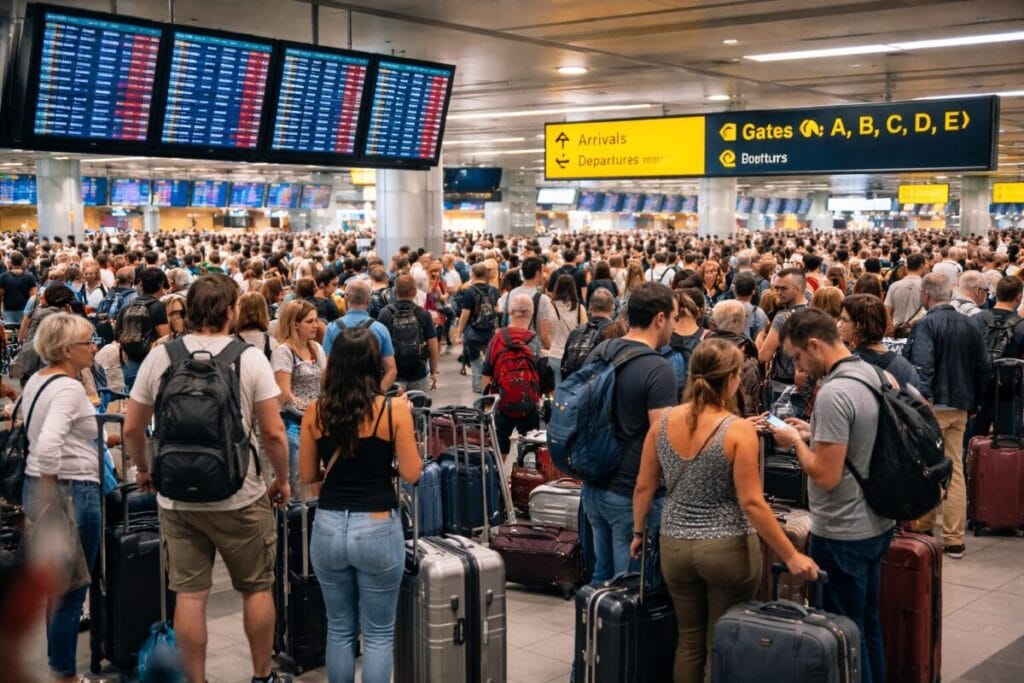
The disruption created long queues, crowded terminals, and uncertain travel plans. Many passengers rushed to rebook flights or adjust connections. Meanwhile, airport authorities advised travelers to monitor flight updates closely.
London Heathrow Faces Significant Delays and Cancellations
London Heathrow experienced heavy disruption during the travel chaos. The airport recorded eight cancellations and thirty five delayed flights.
Heathrow remains one of the busiest aviation hubs in the world. It handles millions of passengers every month and connects travelers across continents.
Delays at Heathrow quickly created ripple effects across global travel routes. Passengers traveling on long haul flights faced the most challenges.
Travelers moving through Heathrow checked flight boards frequently for updates. Many airlines advised passengers to arrive early and remain prepared for sudden schedule changes.
Paris Charles de Gaulle Experiences Major Travel Pressure
Paris Charles de Gaulle also faced serious disruption throughout the day. Airport officials reported seven cancelled flights and forty six delays.
The airport serves as France’s primary international gateway. It connects Europe with North America, Asia, and the Middle East.
Delays forced many passengers to adjust their travel plans. Travelers with connecting flights faced additional stress and uncertainty.
Busy terminals and extended waiting times increased pressure on airport services. Travelers arriving early improved their chances of handling sudden gate changes.
Amsterdam Schiphol Records the Highest Number of Delays
Amsterdam Schiphol faced the most severe disruption among European airports. The airport recorded nine cancellations and fifty one delayed flights.
Schiphol operates as a major hub for European and intercontinental travel. Flights depart daily to destinations across Asia, North America, and the Middle East.
The high number of delays affected passengers across multiple continents. Travelers waiting for connections often experienced extended layovers.
Airport authorities encouraged travelers to track real time updates through airline notifications. These updates helped passengers adjust their travel plans quickly.
Frankfurt Airport Maintains Operations Despite Disruption
Frankfurt Airport experienced fewer cancellations compared to other hubs. However, delays still affected many passengers throughout the day.
Officials reported two cancellations and thirty seven delayed flights. Even smaller disruptions can create complications at such a busy airport.
Frankfurt acts as one of Europe’s largest aviation gateways. It connects passengers to destinations across Europe, Asia, and the Americas.
Travelers relied on airline updates to manage their connections. Airlines continued to assist passengers with alternative flights and updated schedules.
Munich Airport Sees Moderate Delays
Munich Airport reported moderate disruption compared to other European hubs. Officials confirmed three cancelled flights and fourteen delays.
Although the numbers remained lower, travelers still experienced inconvenience. Passengers connecting through Munich needed extra time between flights.
Airport staff advised travelers to arrive at least two hours before departure. Early arrival allowed passengers to manage security checks and gate changes smoothly.
Rome and Madrid Experience Limited Disruption
Rome Fiumicino Airport recorded minor disruption during the day. Officials reported one cancellation and thirty three delays.
Many delays occurred on short haul European routes. Travelers with connecting flights experienced longer waiting times.
Madrid Barajas Airport faced the least disruption among major hubs. The airport reported sixteen delayed flights and no cancellations.
Passengers traveling through Madrid generally experienced smoother journeys. However, airlines still advised passengers to confirm flight schedules regularly.
Zurich and Copenhagen Also Face Delays
Zurich Airport recorded twenty three delayed flights without cancellations. Both domestic and international routes experienced schedule changes.
Passengers remained patient while airport teams worked to maintain smooth operations. Many travelers allowed extra time for check in and boarding.
Copenhagen Airport also reported disruption with two cancellations and seventeen delays. Travelers monitored airline notifications for the latest updates.
Airport authorities advised passengers to remain flexible with travel plans. Such flexibility helped travelers handle unexpected delays.
Airlines Report Mostly Limited Operational Impact
Several major airlines reported minimal disruption despite airport delays. Ryanair recorded only two delayed flights and no cancellations.
KLM reported a single delayed flight during the disruption period. The airline maintained strong operational performance throughout the day.
Austrian Airlines also experienced only one delayed flight. The airline maintained efficient scheduling across its European routes.
easyJet reported three delayed flights but avoided cancellations. Iberia recorded four delays but continued normal operations overall.
British Airways experienced only two delayed flights without cancellations. Strong operational planning helped airlines limit wider disruptions.
What Travelers Should Do During Flight Disruptions
Travel experts recommend several steps to manage flight disruptions. Travelers should check flight status regularly through airline apps or airport displays.
Passengers should also maintain communication with airlines for rebooking options. Airline support teams often provide alternative travel solutions quickly.
Arriving early at the airport helps travelers manage unexpected schedule changes. Extra time allows passengers to handle long queues and security checks.
Travelers should also remain flexible with their schedules. Flexibility often reduces stress during unpredictable travel conditions.
Europe’s Aviation Network Faces Growing Pressure
European airports continue to manage growing passenger demand. Travel volumes have increased significantly across the region.
Busy travel seasons place pressure on airlines and airport infrastructure. Even minor delays can trigger widespread disruptions across flight networks.
Airlines and airports continue to invest in technology and staffing improvements. These measures aim to reduce disruptions and improve passenger experience.
Despite current delays, Europe remains one of the world’s busiest travel regions. Millions of passengers continue to travel daily across its major aviation hubs.
For more travel news like this, keep reading Global Travel Wire