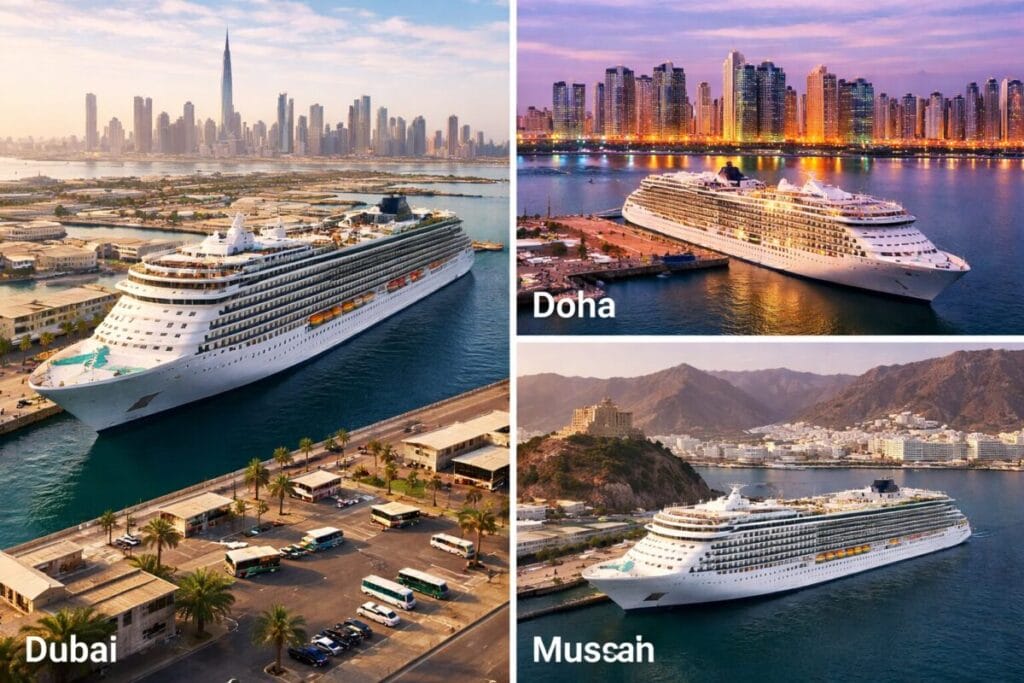
Major cruise cancellations across Dubai, Doha, and Muscat have disrupted tourism across the Arabian Gulf. Authorities issued maritime advisories that prioritize safety amid regional tensions.
These advisories forced cruise operators to suspend several scheduled sailings. As a result, ports across the region now face a sudden drop in cruise arrivals.
Dubai, Doha, and Muscat rely heavily on cruise tourism during peak travel seasons. Cruise passengers contribute significantly to local economies through excursions, retail spending, and hospitality services.
The sudden halt of cruise activity therefore creates immediate challenges for tourism businesses across the Gulf.
Cruise Tourism Previously Drove Strong Regional Growth
Cruise tourism had expanded rapidly across the Arabian Gulf in recent years. Regional governments invested heavily in port infrastructure and tourism development.
Oman recorded more than one hundred thirty seven thousand cruise passengers in 2025. Many ships arrived through Sultan Qaboos Port in Muscat and other coastal terminals.
The country also welcomed several maiden cruise calls during the season. These arrivals highlighted Oman’s growing reputation as a cruise destination.
Dubai also strengthened its position as a global cruise hub. Ports such as Port Rashid and Mina Rashid hosted many international cruise ships each year.
Meanwhile, Doha developed modern port facilities designed to handle large cruise vessels. These investments aimed to attract international cruise operators and expand tourism arrivals.
Government Advisories Trigger Cruise Suspension
Government authorities across the region have issued temporary maritime restrictions. These measures aim to protect passenger safety during ongoing geopolitical developments.
Qatar’s Ministry of Transport instructed maritime operators to suspend navigation temporarily. The directive includes cruise ships visiting Doha Port.
Authorities emphasized safety as the primary priority during the situation. However, the suspension has interrupted cruise itineraries scheduled for the region.
Oman also continues monitoring maritime operations closely. Officials evaluate port schedules and vessel visits as conditions evolve.
Cruise arrivals planned for ports such as Salalah now face uncertainty. These changes highlight the sensitivity of cruise tourism to regional developments.
Cruise Operators Cancel Remaining Gulf Sailings
Several cruise companies have already cancelled their remaining Arabian Gulf itineraries. Ships originally scheduled to visit Dubai, Doha, and Muscat will now avoid the region.
Operators made these decisions after reviewing official advisories and travel guidance. Cruise companies must ensure passenger safety before confirming sailings.
The cancellations affect both luxury cruise lines and regional cruise operators. Many itineraries included stops at multiple Gulf ports during a single voyage.
Without these visits, thousands of expected tourists will not arrive this season. Ports that once welcomed several ships weekly now remain unusually quiet.
Tourism Businesses Feel Immediate Economic Impact
Cruise passengers play an important role in the regional tourism economy. Visitors often spend money on guided tours, restaurants, shopping, and cultural attractions.
When cruise ships cancel visits, local businesses lose valuable revenue opportunities. Tour operators, transport providers, and hospitality companies face reduced demand.
Ports also lose docking fees and passenger service charges. These fees normally support port operations and tourism infrastructure.
Dubai, Doha, and Muscat developed extensive cruise facilities in recent years. These investments aimed to support growing visitor numbers.
The current pause therefore creates short-term economic challenges for tourism stakeholders.
Ports Remain Ready for Future Cruise Returns
Despite the cancellations, Gulf ports maintain modern infrastructure designed for cruise tourism. Dubai continues operating world class port facilities that welcome large cruise vessels.
Port Rashid and Mina Rashid remain key maritime gateways for the United Arab Emirates. These ports feature dedicated cruise terminals and passenger facilities.
Abu Dhabi also operates the cruise terminal at Port Zayed. The terminal supports the emirate’s strategy to expand tourism arrivals.
Muscat’s Sultan Qaboos Port continues serving as Oman’s primary cruise gateway. Other ports such as Duqm and Salalah also support maritime tourism development.
These facilities ensure that the region can quickly resume cruise operations once conditions stabilize.
Regional Governments Promote Tourism Diversification
Governments across the Gulf have already begun diversifying tourism strategies. Officials now promote land based tourism experiences alongside cruise travel.
Dubai encourages visitors to explore attractions such as museums, desert adventures, and cultural districts. The city aims to maintain tourism momentum despite cruise disruptions.
Oman continues promoting heritage tourism and eco tourism experiences. Visitors can explore mountains, historic forts, and coastal landscapes across the country.
Qatar also invests in cultural tourism development. The country promotes museums, heritage sites, and major events to attract international visitors.
These strategies reduce reliance on a single tourism sector and strengthen long term industry resilience.
Regional Regulations Shape Future Cruise Operations
Several Gulf countries have also strengthened maritime tourism regulations. Authorities now require cruise operators to follow strict licensing requirements.
Saudi Arabia has introduced new frameworks for marine tourism across the Red Sea region. These policies regulate cruise activity and tourism operators.
Stronger regulations help ensure safe maritime travel and sustainable tourism development. Gulf countries aim to protect passengers while supporting industry growth.
Tourism Industry Prepares for Future Recovery
Tourism leaders across the Arabian Gulf remain optimistic about future recovery. The region continues attracting international travelers due to its cultural and natural attractions.
Dubai, Doha, and Muscat maintain strong global tourism reputations. Once cruise operations resume, these ports expect ships to return quickly.
Air travel also offers an alternative pathway for tourism growth. Many visitors can still reach Gulf destinations through major international airports.
Tourism authorities continue promoting regional destinations through global campaigns. These efforts aim to maintain visitor interest despite temporary cruise suspensions.
Arabian Gulf Tourism Shows Long-Term Resilience
Although cruise cancellations create short-term challenges, the Arabian Gulf tourism industry remains resilient. Governments have invested heavily in tourism infrastructure and marketing strategies.
Dubai, Doha, and Muscat continue developing attractions that appeal to international travelers. Cultural landmarks, luxury hospitality, and modern infrastructure support the region’s tourism appeal.
Once regional conditions improve, cruise ships will likely return to Gulf ports. The region’s strategic location between Europe and Asia strengthens its role in global cruise itineraries.
With strong infrastructure and diverse tourism experiences, the Arabian Gulf remains well positioned for future tourism growth.
For more travel news like this, keep reading Global Travel Wire