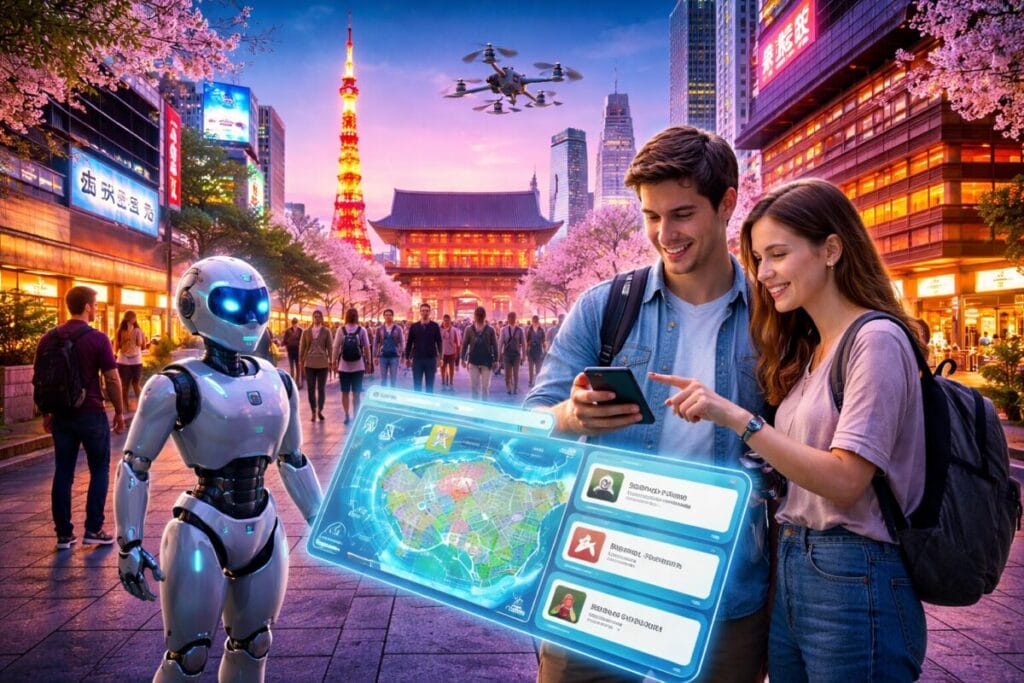
Japan plans a major transformation in tourism through artificial intelligence and digital infrastructure. The Ministry of Land, Infrastructure, Transport and Tourism leads this ambitious effort. The government wants to improve travel experiences while managing rising visitor numbers.
Japan welcomed record international arrivals before the pandemic. Authorities now expect another tourism surge in 2026. Therefore, officials invest in digital tools that simplify travel across the country.
Modern travelers rely heavily on smartphones and digital planning. Consequently, Japan plans to combine technology with its famous hospitality culture. Officials aim to create smoother journeys while preserving authentic cultural experiences.
This new strategy focuses on three main goals. These include AI travel guides, infrastructure monitoring, and sustainable regional tourism growth.
Generative AI Travel Guides Offer Personalized Experiences
The center of Japan’s tourism technology plan involves a generative AI travel assistant. This system will operate through the official Visit Japan Web platform. Travelers will receive personalized recommendations during their journeys.
Unlike traditional chatbots, the new AI guide understands complex questions. Travelers can describe interests, budgets, and schedules. The AI then creates tailored itineraries within seconds.
For example, a visitor in Osaka might request a two-hour cultural experience near their location. The AI can recommend nearby music venues, restaurants, or historical sites. It also provides directions and transport information instantly.
The system also analyzes travel patterns and local conditions. As a result, travelers receive suggestions that match their preferences and real-time situations.
Japan hopes this system will help visitors explore beyond famous tourist areas. Regional towns and smaller cultural districts will benefit from increased visibility.
Real-Time Translation Helps Visitors Understand Culture
Language barriers often create challenges for international travelers. Japan’s AI travel guide will offer advanced translation tools that go beyond simple word conversion.
The system will explain cultural customs and etiquette. Visitors will learn how to behave during traditional experiences such as tea ceremonies or temple visits. This guidance encourages respectful tourism and deeper cultural understanding.
Menus, street signs, and transit instructions will also become easier to understand. Travelers can scan information with their phones and receive instant translations.
This technology will also help small businesses communicate with global visitors. Local shop owners and restaurant staff can interact more easily with international customers.
Such improvements support smoother travel experiences across major cities and rural destinations.
AI Helps Manage Crowds in Popular Tourist Destinations
Overtourism has become a growing challenge in several Japanese cities. Kyoto and Tokyo often experience heavy visitor congestion during peak seasons. Japan’s AI tourism system will help distribute travelers more evenly.
The AI guide will monitor visitor density across major attractions. If crowds increase in a popular location, the system will recommend nearby alternatives.
For example, travelers near Kyoto’s Arashiyama district may receive suggestions for lesser-known temples or gardens. These hidden locations offer similar cultural value with fewer visitors.
This approach supports both travelers and local communities. Tourists enjoy calmer experiences, while residents face less disruption from heavy crowds.
Regional tourism offices also welcome this strategy. Smaller towns can attract more visitors without major marketing campaigns.
Drones and Artificial Intelligence Protect Transport Infrastructure
Japan’s tourism success depends on reliable transport systems. Therefore, the government now uses artificial intelligence to monitor infrastructure safety.
Drones conduct inspections on bridges, coastal roads, and railway lines. These devices capture detailed images and structural data. AI software then analyzes the information and detects early signs of damage.
This technology helps engineers respond quickly to maintenance needs. It also reduces inspection time for large transport networks.
Japan’s Shinkansen high-speed train system will benefit from these monitoring tools. The network carries millions of passengers every year. Continuous inspections ensure safe and punctual service.
Advanced maintenance systems also address workforce challenges. Japan faces an aging population and fewer infrastructure workers. Automation helps maintain high safety standards.
Smart Taxi Systems Improve Travel in Remote Areas
Japan also plans to introduce AI-powered taxi reservation systems. These platforms will analyze travel demand using historical data and real-time conditions.
The system predicts where taxis will be needed most. As a result, drivers can position vehicles more efficiently across cities and rural regions.
This technology will benefit tourists visiting remote areas. Travelers often struggle to find transportation outside major cities. AI scheduling will help ensure vehicles remain available when demand increases.
Tourists exploring mountain towns, coastal villages, or historic regions will experience smoother transportation options.
Osaka Becomes a Smart Tourism Testing Ground
Japan will test several digital tourism technologies in Osaka during the 2026 travel season. The city will host global events and large visitor numbers. Therefore, officials consider Osaka an ideal smart tourism laboratory.
One initiative includes biometric entry at major transport hubs. Facial recognition systems will allow travelers to move through stations quickly. Visitors will not need to present travel cards or tickets repeatedly.
Authorities also plan carbon-neutral mobility systems for tourist districts. Electric autonomous shuttle buses will transport visitors through busy attractions. These vehicles will reduce emissions while improving mobility.
Japan hopes these projects will support sustainable tourism development across the country.
Technology Supports Japan’s Tradition of Hospitality
Despite heavy investment in artificial intelligence, Japan continues to prioritize its cultural value of omotenashi. This concept represents sincere hospitality and thoughtful service.
Officials emphasize that technology will support, not replace, human interaction. AI will manage complex logistics such as navigation, reservations, and translation.
Meanwhile, travelers will enjoy more time for authentic experiences. Visitors can focus on cultural moments such as temple visits, traditional food, and local festivals.
Japan believes technology should enhance travel rather than dominate it.
Digital Preparation Becomes Essential for Travelers
Visitors planning trips to Japan should prepare their digital tools before arrival. Authorities recommend early registration through the Visit Japan Web portal.
Travelers can complete immigration procedures and access AI services in advance. Early registration reduces airport processing time and improves travel convenience.
Tourists should also ensure mobile connectivity during their trips. Many digital tourism services rely on constant internet access.
Finally, travelers should activate location services and personalized recommendations. These features allow AI travel guides to provide accurate suggestions.
Japan Sets a Global Example for Smart Tourism
Japan’s 2026 tourism strategy reflects a new approach to international travel. The country combines digital innovation with cultural heritage to create seamless visitor experiences.
Artificial intelligence will guide travelers, protect infrastructure, and support regional tourism growth. At the same time, Japan continues to celebrate its traditions and hospitality.
This balanced approach may influence tourism strategies worldwide. Many destinations now face similar challenges involving crowds, logistics, and digital expectations.
Japan shows that technology can strengthen travel experiences while preserving culture. Travelers will soon explore the country with both ancient traditions and modern intelligence guiding their journeys.
For more travel news like this, keep reading Global Travel Wire