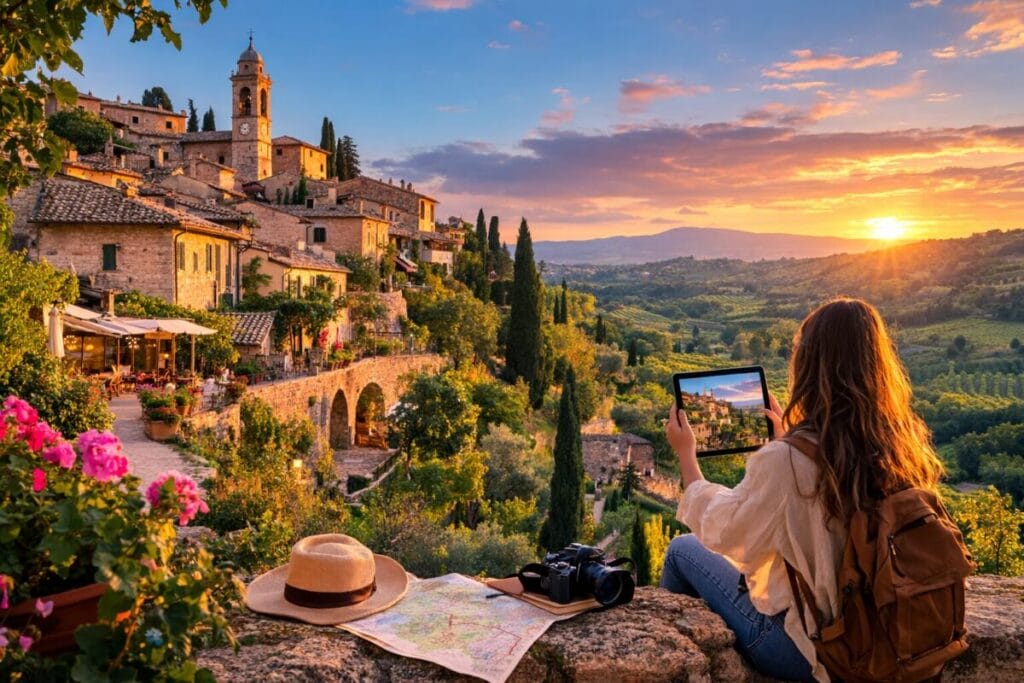
A new partnership between The American University of Rome and the town of Magliano Sabina aims to strengthen tourism in the Sabina Hills. This initiative focuses on digital storytelling and modern marketing strategies. Students now work with local officials to showcase the region’s cultural heritage to international travelers.
Magliano Sabina lies in the scenic Sabina Hills north of Rome. The town offers centuries of history, traditional food, and rural landscapes. However, global travelers often overlook the region because of Rome’s popularity. Therefore, this collaboration aims to bring international attention to the town.
The project allows university students to apply academic knowledge to real tourism challenges. They analyze local attractions and design digital campaigns that highlight authentic travel experiences. This effort creates a bridge between classroom learning and regional tourism development.
Digital Storytelling Highlights Hidden Italian Destinations
Students participating in the project focus on creating digital marketing strategies for Magliano Sabina. They study the area’s historical landmarks, local traditions, and natural scenery. Then they develop content that introduces these attractions to modern travelers.
Magliano Sabina offers many experiences for visitors seeking authentic Italian culture. Ancient churches, historic streets, and panoramic countryside views attract travelers who enjoy slow exploration. Olive groves and vineyards also shape the region’s identity.
Students translate these experiences into engaging digital narratives. They produce social media campaigns, photography projects, and tourism guides. Their work aims to attract travelers who value cultural discovery over crowded tourist attractions.
Modern travelers often plan trips online. Therefore, digital storytelling plays a key role in promoting lesser-known destinations. The student projects help Magliano Sabina compete within the global tourism market.
Academic Collaboration Supports Regional Tourism Growth
The American University of Rome encourages students to explore real-world tourism challenges through academic partnerships. This collaboration allows students from many countries to analyze regional tourism potential.
Participants examine local infrastructure, transportation access, and visitor experiences. They identify opportunities that could attract more travelers to the Sabina Hills. Their research helps the town understand how to position itself within Italy’s competitive tourism sector.
Students work in specialized teams throughout the project. Some groups focus on digital content creation. Others manage social media strategies or develop interactive travel maps.
This structure allows students to combine marketing skills with cultural research. Their findings help local officials build stronger tourism strategies.
Magliano Sabina benefits from fresh perspectives offered by international students. At the same time, students gain valuable professional experience.
Slow Tourism Forms the Core of the Development Plan
Local leaders and university faculty emphasize sustainable tourism development. They want visitors to explore the region slowly and responsibly. This approach supports the concept of slow tourism.
Slow tourism encourages travelers to stay longer in rural areas. Visitors explore landscapes, local cuisine, and cultural traditions in greater depth. This model supports local economies and protects regional heritage.
Magliano Sabina offers an ideal setting for this travel style. Visitors can walk through historic villages, visit local farms, and taste traditional Sabina olive oil. Many travelers also enjoy countryside cycling routes and scenic hiking trails.
Students highlight these experiences through their digital campaigns. They focus on authenticity and meaningful travel moments.
By promoting slow tourism, the project aims to attract visitors who respect local culture and environment.
Digital Tools Strengthen Rural Tourism Promotion
Students rely on modern digital tools to promote Magliano Sabina globally. Social media platforms allow them to share visual content that highlights the region’s landscapes and heritage.
High-quality photography captures olive groves, medieval buildings, and panoramic hilltop views. Short videos introduce local festivals, artisan workshops, and culinary traditions. These visuals create a strong emotional connection with potential travelers.
Students also design interactive maps that guide visitors through the Sabina Hills. These maps highlight walking routes, local restaurants, and cultural landmarks.
Digital marketing allows small towns to reach global audiences without large advertising budgets. This strategy plays a key role in rural tourism promotion across Europe.
Magliano Sabina now gains stronger visibility through these student-led campaigns.
Local Businesses Join the Tourism Promotion Effort
The project also supports local businesses throughout the town. Agriturismi, restaurants, and artisan workshops play an important role in the regional tourism economy.
Students collaborate with business owners to feature their services in digital campaigns. Travelers can discover farm stays, olive oil producers, and traditional craft studios through the new promotional content.
This collaboration strengthens connections between tourism promotion and local entrepreneurship. Increased visitor interest can generate new economic opportunities for small businesses.
Local producers benefit when travelers seek authentic experiences. Food tastings, farm visits, and cultural workshops attract visitors interested in rural Italian traditions.
The digital project therefore supports both tourism development and community livelihoods.
Cultural Exchange Strengthens Community Connections
The partnership also creates meaningful cultural exchange between students and local residents. Students learn about regional history and traditions through direct interaction with community members.
Residents share stories about local festivals, culinary heritage, and historical landmarks. These conversations help students understand the cultural identity of the Sabina Hills.
At the same time, residents gain insight into international tourism trends. They see how digital tools can promote their community worldwide.
This collaboration builds mutual respect and shared learning. Both students and residents contribute to the project’s success.
Community pride also grows as residents see their heritage highlighted by an international university.
A Model for Rural Tourism Development in Italy
The findings from this initiative will form a detailed tourism strategy report. Local leaders will use the report to guide future tourism development in Magliano Sabina.
The project may also serve as a model for other small towns in Italy. Many rural communities face challenges such as population decline and limited economic opportunities.
Digital tourism strategies offer a practical solution. Small destinations can attract international visitors through storytelling and online promotion.
Magliano Sabina demonstrates how universities and local governments can collaborate effectively. Students bring creativity and digital skills. Communities provide cultural heritage and authentic experiences.
Together, they create new pathways for sustainable tourism growth.
Magliano Sabina Emerges as a Cultural Destination
The Sabina Hills now gain greater recognition as a unique travel destination. Visitors can experience rural Italian life while remaining close to Rome. This balance offers travelers a peaceful escape from crowded city tourism.
Student campaigns continue to share the town’s story across digital platforms. These efforts introduce global audiences to the landscapes, traditions, and hospitality of Magliano Sabina.
Through education, technology, and community collaboration, the region now steps onto the international tourism stage. The partnership shows how innovation can protect heritage while creating new economic opportunities.
For more travel news like this, keep reading Global Travel Wire