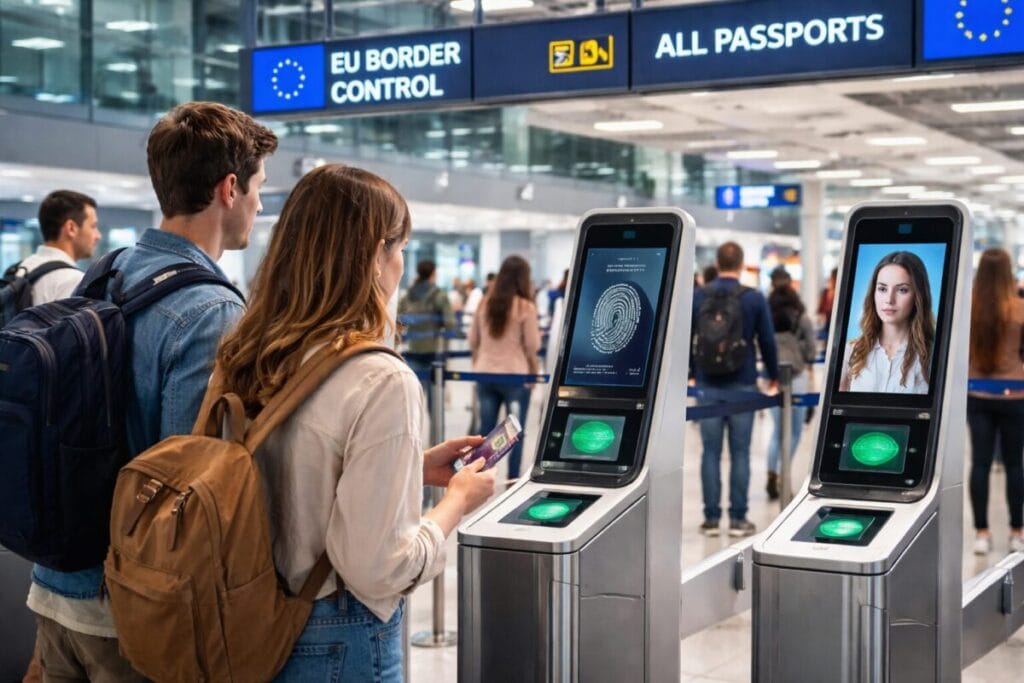
The European Union will introduce a new biometric border control system for international travelers in 2026. The Entry Exit System will begin operation on April 10 across the Schengen Area. This region includes 29 European countries that share open internal borders.
The new system replaces traditional passport stamping with biometric identification technology. Travelers entering or leaving the Schengen Area will provide fingerprints and facial images at border checkpoints. European authorities designed the system to strengthen security and modernize travel monitoring.
Many countries already use biometric border technology. Nations such as the United States, Canada, and Australia operate similar systems. Europe now aims to create a faster and more reliable border experience for international visitors.
The Entry Exit System also supports improved monitoring of short-term visitors. Authorities will track travel records more accurately through automated digital databases.
How the Entry Exit System Works at European Borders
The Entry Exit System collects biometric information from most non-EU travelers. Border officials will scan fingerprints and capture a facial photograph during the entry process. The system will then link this data to the traveler’s passport information.
European authorities will store the biometric data in a centralized European database. This database allows border agencies across the Schengen Area to access verified traveler records. The system therefore enables faster identification checks during future visits.
Travelers who visit Europe regularly will benefit from quicker border processing. Their biometric data will already exist in the system after the first visit. Border officers will only verify identity instead of collecting new information each time.
This digital process reduces manual document checks and improves accuracy. Border officials can verify traveler identity within seconds through automated systems.
Which Travellers Must Use the New Biometric System
The Entry Exit System will apply to most travelers who come from outside the European Union. Visitors from visa-exempt countries must also complete biometric checks when entering Schengen countries.
Short-term travelers will experience the biggest impact. The system focuses on visitors who stay up to 90 days within a 180-day period. This rule already governs short-term travel within the Schengen Area.
Citizens of European Union countries will not participate in the biometric entry process. Residents of European Economic Area countries and Switzerland will also remain exempt.
Travelers who carry biometric passports may experience quicker processing. These passports already store biometric information within embedded electronic chips. Border systems can quickly compare this data with the traveler’s live biometric scan.
Self-service kiosks may also appear at some international airports. These machines allow travelers to complete biometric registration independently.
What Travellers Will Experience at Border Control
Travelers arriving at Schengen borders will notice several changes during passport checks. Border officials will ask visitors to present their passport or visa documents. The officer will then collect biometric data through electronic scanners.
Visitors will place their fingers on a fingerprint scanner during the process. Cameras will also capture a facial image for identity verification. Border officials will compare the biometric data with passport information stored in the system.
The entire procedure usually takes only a few minutes. However, first-time travelers may require slightly longer processing times. Border staff must complete full biometric registration during the initial visit.
Repeat visitors will move through border control faster. Officials will simply verify the existing biometric data already stored in the system.
Stronger Security for European Borders
European authorities designed the Entry Exit System to strengthen border security. Biometric identification reduces the risk of identity fraud and document misuse. Fingerprints and facial recognition provide reliable verification methods.
Border agencies can now match travelers directly with their official records. This process reduces human error during passport inspections. It also prevents individuals from entering the region under false identities.
Security officials can quickly identify suspicious travel patterns using the digital database. The system records both entry and exit times for every traveler. Authorities can therefore monitor movements more accurately across Schengen borders.
Improved security also supports safe tourism growth in Europe. Millions of travelers visit the region every year. Reliable border technology helps manage these large visitor flows.
Faster Processing for Frequent Travellers
The biometric system also aims to reduce long waiting times at border checkpoints. Returning visitors will experience faster processing once their biometric data exists in the database.
Border officers can verify identity instantly through automated scanning. Travelers will avoid repeated manual document inspections during each visit. This process helps airports and border crossings handle large travel volumes.
Busy tourist seasons often create congestion at European entry points. The Entry Exit System will help manage these travel surges more efficiently.
Frequent business travelers will benefit from quicker border procedures. Many professionals travel repeatedly between Europe and other global regions. Biometric verification simplifies their entry process.
Better Monitoring of Short-Term Travel Limits
The Entry Exit System will also improve monitoring of short-term travel limits. Visitors can stay within the Schengen Area for up to 90 days within a 180-day period.
The digital system automatically records every entry and exit. Authorities can therefore calculate each traveler’s remaining stay period accurately.
This automated tracking helps reduce cases of overstaying. Travelers will also gain clearer awareness of their allowed travel duration.
Border officers previously relied on passport stamps for this information. The biometric database now provides more precise records.
Travellers Should Prepare for the 2026 Rollout
Travelers planning trips to Europe after April 2026 should prepare for the new procedures. Visitors must still carry valid passports and visas when required. The biometric system will enhance border control rather than replace travel documents.
Authorities will store biometric information securely within the European database. Officials will use this information strictly for border management purposes.
Travelers may experience longer waiting times during the initial rollout phase. Border officers will adapt to new procedures and equipment. However, processing speed should improve once the system becomes fully operational.
Tourism authorities expect smoother travel experiences after the transition period.
Europe Prepares for the Next Phase of Smart Border Travel
The Entry Exit System represents one step within Europe’s broader border modernization strategy. Another system called ETIAS will launch in the coming years.
ETIAS will require travelers from visa-exempt countries to complete online travel authorization before departure. The system will function similarly to electronic travel authorization programs used in other countries.
Visitors will submit basic travel information through an online application before flying to Europe. Authorities will review these details for security screening purposes.
Together, these digital systems will create a more efficient and secure travel environment.
Europe continues to modernize its border infrastructure as global travel grows. The new biometric Entry Exit System will play a central role in shaping the future of travel across the Schengen Area.
For more travel news like this, keep reading Global Travel Wire