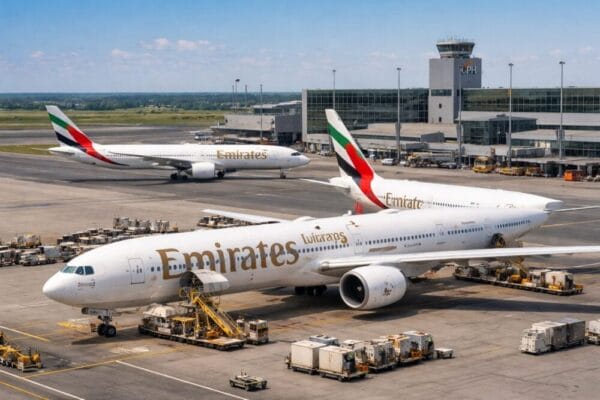
Emirates will soon close an iconic chapter in Scandinavian aviation. The airline confirmed the final Airbus A380 flight to Copenhagen Kastrup Airport on May 31, 2026. After that date, Emirates will introduce a new flight schedule with two daily services between Dubai and Denmark.
This change will replace the single daily Airbus A380 flight with a Boeing 777-300ER and an Airbus A350-900. The airline plans to start the new schedule on June 1, 2026. The strategy will increase total seat capacity while improving travel flexibility for passengers.
The shift signals a new phase for long-haul travel between Scandinavia and the Middle East. Emirates aims to strengthen its presence in Denmark through better connectivity and modern aircraft.
End of an Iconic Aircraft in Scandinavia
The Airbus A380 gained global fame as the world’s largest passenger aircraft. Emirates built one of the biggest fleets of this double-decker jet and used it on many high-demand routes. Copenhagen became one of the airline’s important European destinations for the superjumbo.
The aircraft carries more than six hundred passengers in Emirates’ two-class configuration on this route. Its massive size and distinctive design turned the A380 into a symbol of modern aviation.
However, airline networks continue evolving as travel demand changes. Airlines now focus on aircraft efficiency, flexible schedules, and better passenger connectivity. Smaller widebody aircraft often allow airlines to serve markets with greater frequency.
Emirates now plans to adopt this strategy for the Danish capital. The airline believes that additional flight choices will attract more travelers from Denmark and nearby Nordic countries.
Emirates Introduces Two Daily Flights to Dubai
The new schedule will bring two daily departures from Copenhagen instead of one. Emirates will operate the morning service using the Boeing 777-300ER. The evening service will use the new Airbus A350-900.
This change will increase total daily capacity to about 1,438 seats. The previous A380 schedule offered roughly 1,230 seats per day. The airline will therefore raise capacity by around seventeen percent.
The additional frequency will also improve connections through Dubai International Airport. Dubai serves as one of the world’s largest global transit hubs. Travelers from Denmark often connect there to reach destinations across Asia, Africa, and Australia.
Two daily departures allow passengers to choose flights that better match their travel plans. Morning flights can support connections to Africa and the Indian Ocean region. Evening departures will link passengers more efficiently with Southeast Asia and Australia.
Premium Economy Arrives in Denmark
The Airbus A350-900 will introduce Emirates’ Premium Economy cabin to Copenhagen for the first time. This cabin offers extra legroom, wider seats, and upgraded dining options compared with standard economy.
Premium Economy has grown rapidly in global aviation markets. Many travelers now seek comfort improvements without paying full business class prices. Emirates has gradually introduced this cabin on several international routes.
The A350 aircraft will also feature the airline’s newest cabin designs and technology. Passengers can expect high-resolution entertainment screens and improved cabin lighting. The aircraft also produces lower cabin noise compared with older widebody jets.
These upgrades aim to attract both business and leisure travelers flying from Denmark. Tourism officials often highlight improved airline connectivity as a driver of international travel growth.
Why Airlines Now Favor Smaller Aircraft
The aviation industry has moved toward aircraft that offer efficiency and flexibility. Large aircraft like the A380 require consistently high passenger demand to operate profitably. Smaller widebody aircraft allow airlines to adjust capacity more easily.
Aircraft such as the Boeing 777-300ER and Airbus A350 offer strong fuel efficiency and long-range capability. Airlines can operate these aircraft on many global routes while maintaining lower operating costs.
This flexibility allows airlines to add flights instead of increasing aircraft size. More frequent departures often attract business travelers who value schedule options.
Airlines also gain improved network connectivity when they operate multiple daily flights. Passengers can reach more destinations with shorter connection times.
What the Change Means for Travelers
Passengers flying from Copenhagen will experience several practical advantages after the change. Two daily flights will provide more departure choices. Travelers who miss one flight will not need to wait an entire day for the next service.
The introduction of Premium Economy also expands travel options for passengers seeking greater comfort. Many travelers now choose this cabin for long-haul flights lasting several hours.
The Airbus A350 also offers a quieter cabin and advanced climate control systems. These improvements can enhance passenger comfort during long international journeys.
However, some aviation enthusiasts will miss the Airbus A380 experience. The aircraft remains famous for its smooth flight characteristics and spacious double-deck design. Many passengers considered the A380 one of the most comfortable aircraft for long-haul travel.
Competition in the Nordic Aviation Market
Airlines across the Nordic region continue expanding long-haul connections. Copenhagen Airport serves as one of the busiest international airports in Scandinavia. The airport connects Denmark with major global destinations across Europe, Asia, and North America.
Airlines such as Qatar Airways and Turkish Airlines already operate multiple daily flights from Copenhagen. Emirates now aims to match that flexibility by offering two daily departures.
Tourism authorities often view improved airline connectivity as essential for economic growth. Increased flight frequency encourages business travel and international tourism. Denmark continues attracting visitors with its cultural attractions, modern architecture, and sustainable tourism initiatives.
Stronger aviation links with the Middle East and Asia can also support trade and investment connections.
A New Era for Emirates in Denmark
The retirement of the Airbus A380 from Copenhagen marks the end of an aviation milestone. Yet the airline’s strategy focuses on growth rather than retreat.
Emirates will increase seat capacity, introduce Premium Economy, and expand flight choices for travelers. These changes align with global airline trends that favor efficiency and flexibility.
Passengers in Denmark will soon benefit from better connectivity through Dubai’s global network. The aviation industry continues evolving as airlines adjust fleets and routes to meet changing travel demand.
For travelers, the future of air travel often depends less on aircraft size and more on connectivity and convenience. Emirates’ new Copenhagen strategy reflects that shift clearly.
For more travel news like this, keep reading Global Travel Wire