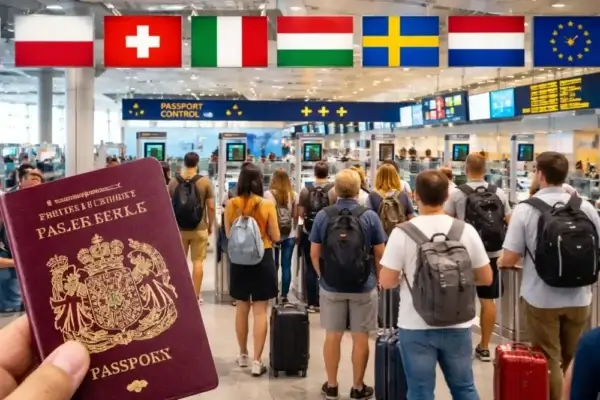
Travelers from the United Kingdom heading to Europe in 2026 are being urged to prepare for significant changes, as multiple countries across the Schengen Area introduce stricter entry requirements, biometric controls, and digital monitoring systems. Nations including Poland, Romania, Switzerland, Italy, Hungary, Sweden, and the Netherlands are now at the forefront of these changes, prompting updated travel guidance from UK authorities.
These developments are part of a broader European initiative aimed at strengthening border security, improving migration tracking, and modernizing entry systems across the continent. While travel between the UK and Europe remains accessible, the process is becoming more regulated and technologically advanced.
A New Era of Border Control in Europe
The most notable change comes with the implementation of the Entry/Exit System (EES), a digital border management system designed to replace traditional passport stamping. This system will record biometric data such as fingerprints and facial images for non-EU travelers entering and leaving the Schengen zone.
For UK citizens, who are now classified as third-country nationals following Brexit, this marks a significant shift in how travel is processed. Instead of manual checks, border crossings will increasingly rely on automated systems that track travel duration and ensure compliance with visa-free stay limits.
The goal of these measures is to enhance security, reduce illegal overstays, and streamline border procedures over time. However, during the initial rollout, travelers should expect longer processing times at airports and land borders.
Key Changes Travelers Need to Know
Across the Schengen Area, several core requirements are being reinforced:
- Passports must be issued within the last ten years
- Documents must remain valid for at least three months beyond the departure date
- Travelers can stay visa-free for up to 90 days within a 180-day period
- Biometric data collection will become mandatory at entry points
- Proof of accommodation, return tickets, and sufficient funds may be required
Failure to meet these requirements could result in delays or, in some cases, denial of entry.
Poland and Central Europe Strengthen Entry Procedures
Poland is among the countries actively preparing for stricter enforcement of Schengen regulations. As a key gateway to Central Europe, it is aligning its border processes with the new digital systems.
Travelers entering Poland will soon be required to undergo biometric registration, while authorities increase scrutiny on travel documentation. Similar measures are being adopted in neighboring countries such as Hungary and Romania, reflecting a coordinated regional approach.
These updates are expected to improve border efficiency in the long term, but travelers should remain vigilant about documentation requirements to avoid complications.
Western Europe Tightens Oversight for Tourists
Popular destinations such as Italy, Switzerland, and the Netherlands are also implementing enhanced entry controls. These countries, which attract millions of international visitors annually, are focusing on managing high tourist volumes while maintaining security standards.
Italy, known for its cultural landmarks and heritage tourism, is expected to enforce stricter entry checks at major airports and train stations. Switzerland is integrating advanced biometric systems while maintaining its reputation for efficiency.
The Netherlands, particularly busy hubs like Amsterdam, is increasing monitoring efforts to prevent overstays and improve visitor tracking. Travelers may be asked for additional documentation, especially during peak travel periods.
Northern Europe Adopts Digital Travel Monitoring
Countries like Sweden are embracing digital border management as part of a broader push toward smart travel infrastructure. Biometric verification and digital travel records will become standard practice, allowing authorities to monitor visitor movements more effectively.
While these systems are designed to enhance safety, they also represent a shift toward a more data-driven approach to tourism management. Travelers should be prepared for a more structured and monitored travel experience compared to previous years.
Impact on Tourism and Travel Experience
The introduction of these measures is expected to reshape the European travel experience. While the changes aim to improve security and efficiency, they also introduce additional steps for travelers.
Tourists may need to allocate extra time at airports, particularly during the early stages of implementation. Travel planning will require greater attention to detail, including ensuring compliance with passport rules and understanding entry requirements.
Despite these adjustments, Europe remains open to international visitors. Tourism authorities continue to emphasize that the new systems are designed to facilitate smoother travel in the long run, once initial challenges are resolved.
Safety and Awareness Remain a Priority
In addition to regulatory changes, travelers are also being advised to stay aware of local safety conditions. Petty crime, such as pickpocketing, remains a concern in major tourist destinations across Europe.
Authorities recommend keeping valuables secure, avoiding crowded areas when possible, and remaining cautious in unfamiliar environments. Awareness of local laws and customs is also essential, as regulations may vary between countries.
Preparing for Travel in 2026
For UK travelers planning trips to Europe, preparation is key. Understanding the new rules and allowing extra time for border procedures can help ensure a smoother journey.
Travelers should:
- Check passport validity well in advance
- Stay informed about destination-specific requirements
- Carry necessary documentation, including insurance and accommodation details
- Monitor official travel updates before departure
These steps can help minimize disruptions and ensure compliance with evolving regulations.
The Future of European Travel
The introduction of biometric systems and digital border controls marks a major تحول in how travel is managed across Europe. While the transition may present short-term challenges, it reflects a broader shift toward modern, technology-driven travel systems.
For tourists, this means adapting to a more structured and regulated environment. However, it also promises improved security, better tracking of travel flows, and potentially faster processing once systems are fully operational.
As 2026 unfolds, travelers can still explore Europe’s diverse destinations—but with a greater emphasis on preparation, awareness, and flexibility.
For more travel news like this, keep reading Global Travel Wire