Munich Airport has reached a historic milestone, welcoming its one-billionth passenger and reinforcing its position as one of Europe’s most influential aviation hubs. The landmark achievement reflects more than three decades of steady expansion, innovation, and strong international connectivity, positioning the airport as a key driver of tourism and economic growth in Germany.
Since opening in 1992, Munich Airport has evolved into a world-class gateway, serving millions of travelers annually and connecting Bavaria to destinations across the globe. The arrival of the one-billionth passenger marks not only a symbolic moment but also highlights the airport’s consistent performance and long-term vision.
A Milestone Moment in European Aviation
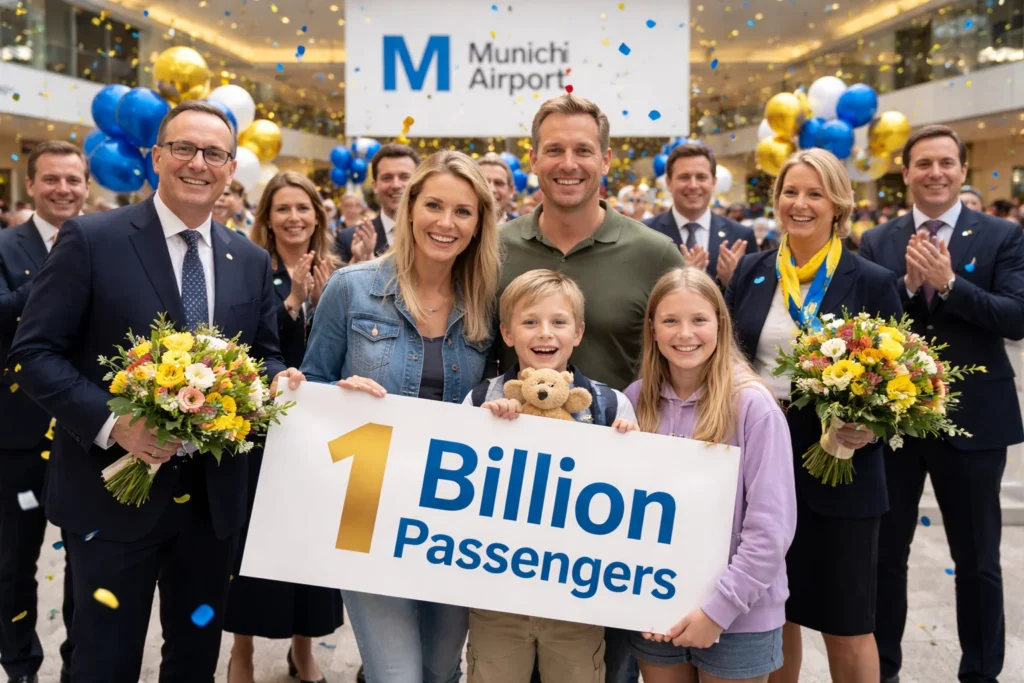
The milestone was officially recorded on March 17, 2026, when a family arriving from the United States was recognized as the one-billionth passenger group to pass through the airport. The moment was celebrated by airport authorities and airline representatives, underscoring the importance of collaboration in achieving such a remarkable feat.
This achievement places Munich Airport among a select group of global airports that have reached such high passenger volumes, demonstrating its significance within the international aviation landscape.
Growth Fueled by Strategic Partnerships
A key factor behind Munich Airport’s success has been its strong partnership with major airlines, particularly its long-standing collaboration with Lufthansa. Together, they have transformed Munich into a major European hub, offering seamless connections for both short-haul and long-haul travelers.
The airport currently serves around 100 airlines and offers access to more than 230 destinations worldwide, spanning over 70 countries. This extensive network has enabled Munich to become a preferred transit point for passengers traveling between Europe, Asia, and North America.
The synergy between airport operations and airline networks has helped create a highly efficient travel experience, attracting both business and leisure travelers.
Driving Tourism and Economic Growth
Munich Airport plays a crucial role in supporting Bavaria’s tourism industry and broader economy. As a primary entry point into southern Germany, the airport facilitates millions of international visits each year, contributing to hospitality, retail, and local business sectors.
Tourism authorities have long recognized the airport as a key asset in promoting the region’s cultural heritage, natural landscapes, and global events. From the Bavarian Alps to Munich’s renowned festivals, the airport serves as a gateway for visitors seeking diverse travel experiences.
Beyond tourism, the airport also supports employment and regional development, generating thousands of jobs directly and indirectly linked to aviation, logistics, and service industries.
Strong Performance in Passenger and Cargo Traffic
Recent performance figures highlight Munich Airport’s continued upward trajectory. In 2025 alone, the airport handled over 43 million passengers, reflecting growing demand for international travel. Aircraft movements also increased, with hundreds of thousands of take-offs and landings recorded throughout the year.
Cargo operations have seen notable expansion as well, with double-digit growth reinforcing Munich’s role as an important logistics hub. The airport’s ability to handle both passenger and freight traffic efficiently has strengthened its position in global supply chains.
High seat occupancy rates further demonstrate strong demand across routes, indicating that Munich remains a highly attractive destination for airlines and travelers alike.
Strategic Location Enhances Connectivity
Munich Airport’s central location in Europe has been instrumental in its success. Positioned at the crossroads of major travel routes, the airport provides easy access to key European cities while also serving as a bridge to intercontinental destinations.
Following Germany’s reunification, Munich’s role in European connectivity became even more significant. The airport capitalized on its geographic advantage, expanding its network and strengthening its presence in global aviation.
Today, it stands as a premium hub known for efficiency, punctuality, and high-quality passenger services.
Focus on Innovation and Sustainability
Looking ahead, Munich Airport is committed to maintaining its growth while embracing sustainability and innovation. Plans are underway to modernize infrastructure, enhance digital services, and reduce environmental impact through greener operations.
Sustainability initiatives include energy-efficient facilities, carbon reduction strategies, and investments in future-ready technologies. These efforts align with broader European goals to create a more environmentally responsible aviation sector.
At the same time, the airport continues to prioritize passenger comfort by improving terminal facilities, expanding lounge offerings, and streamlining security and boarding processes.
A Future Built on Continued Expansion
The one-billion-passenger milestone is not just a reflection of past success but also a foundation for future growth. Airport leadership has emphasized the importance of maintaining high standards while adapting to evolving travel trends.
As global travel demand continues to rise, Munich Airport is well-positioned to capture new opportunities. Its commitment to quality, efficiency, and connectivity ensures that it will remain a leading hub in Europe’s aviation network.
A Landmark Achievement for Germany
Munich Airport’s milestone represents a significant achievement for Germany’s aviation industry as a whole. It highlights the country’s ability to build and sustain world-class infrastructure that supports both tourism and economic progress.
For travelers, airlines, and industry stakeholders, the achievement serves as a reminder of the critical role airports play in connecting people, cultures, and economies.
As Munich Airport celebrates this historic moment, it also looks ahead with confidence, ready to welcome the next generation of global travelers and continue shaping the future of air travel.
For more travel news like this, keep reading Global Travel Wire