A dramatic mid-air incident involving a China Southern Airlines flight has drawn global attention to aviation safety and operational resilience after a bird strike forced an emergency return shortly after take-off from Shanghai. The event, which involved significant structural damage to the aircraft’s nose, underscores the unpredictable risks faced in modern air travel and the importance of swift crew response.
The flight, operating from Shanghai Hongqiao International Airport to Shenzhen, encountered trouble within minutes of departure. During the initial climb phase—considered one of the most critical stages of flight—the aircraft struck a flock of birds, triggering a chain of events that led to an urgent turnaround.
Mid-Air Emergency Unfolds Shortly After Take-Off
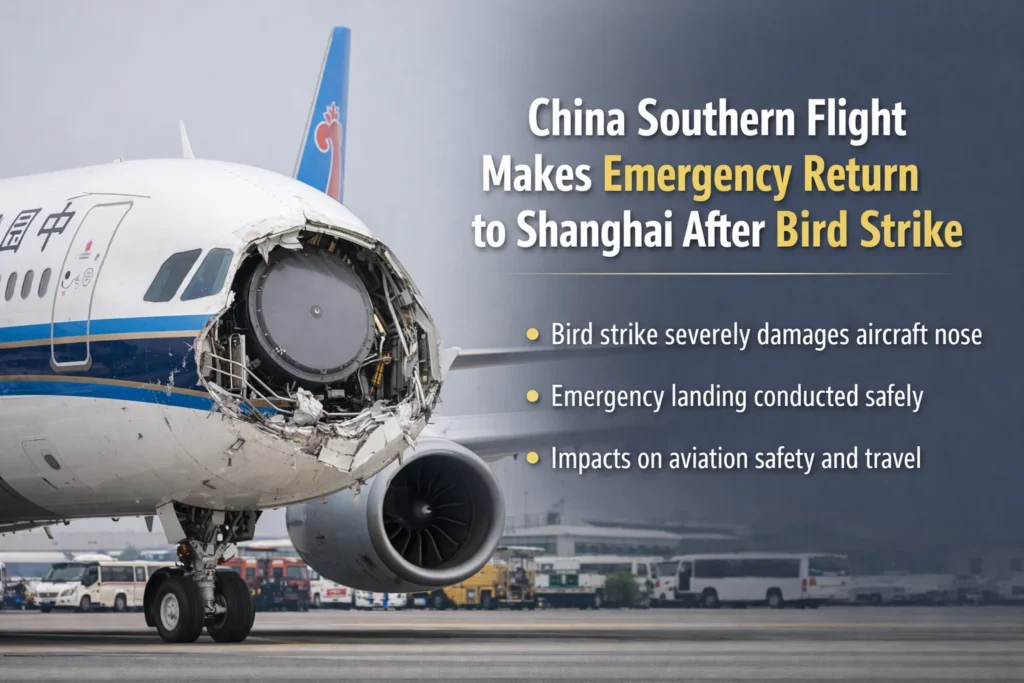
Shortly after take-off, the aircraft experienced a powerful bird strike that impacted the front section of the plane. The force of the collision caused severe damage to the radome, the protective structure located at the nose of the aircraft. This component plays a crucial role in housing the weather radar system, which pilots rely on for navigation and situational awareness.
The impact was strong enough to compromise the structure significantly, exposing internal radar equipment. While such incidents are rare, the extent of the visible damage made this case particularly notable within aviation circles.
Recognizing the seriousness of the situation, the flight crew acted immediately. An emergency was declared, and the aircraft began its return to Shanghai under controlled conditions.
Pilot Response Ensures Passenger Safety
The crew’s rapid and disciplined response was instrumental in ensuring a safe outcome. After assessing the damage, the pilots opted for an immediate air turn-back, prioritizing passenger safety over continuing the journey.
Air traffic control granted priority clearance, allowing the aircraft to return without delay. Throughout the process, the pilots carefully managed altitude, speed, and aircraft stability, ensuring that no additional stress was placed on the damaged structure.
The aircraft landed safely within a short time of departure, with emergency services on standby as a precaution. Fortunately, no injuries were reported among passengers or crew, and the situation was handled without the need for an emergency evacuation.
Passenger Experience and Airline Response
Passengers onboard experienced an unexpected and tense situation, but cabin crew maintained calm and provided clear communication throughout the flight. Their professionalism helped reduce anxiety and ensured an orderly response.
After landing, passengers disembarked normally and were assisted by ground staff. The airline arranged alternative travel plans, including replacement flights, enabling travelers to continue their journey with minimal delay.
Such swift handling of passenger logistics is essential in maintaining confidence in air travel, especially during unexpected disruptions.
Understanding the Importance of the Radome
The radome is a critical component of an aircraft’s design, serving as a protective cover for the weather radar system. This radar allows pilots to detect storms, turbulence, and other hazards ahead of the aircraft.
When the radome is damaged, it can affect the aircraft’s ability to gather accurate weather data and may also impact aerodynamics. While aircraft are designed with multiple safety redundancies, damage to this area requires immediate attention and often leads to precautionary returns, as seen in this case.
The incident highlights how even non-engine-related damage can pose serious operational challenges.
Bird Strikes: A Persistent Aviation Challenge
Bird strikes remain one of the most common hazards in aviation, particularly during take-off and landing when aircraft operate at lower altitudes. Airports often implement wildlife management programs to reduce risks, including habitat control, monitoring systems, and deterrent measures.
Despite these efforts, completely eliminating bird activity near airports is not possible. Migratory patterns, environmental factors, and urban expansion all contribute to ongoing challenges in managing wildlife around aviation zones.
While most bird strikes result in minor damage, larger or high-impact collisions can lead to more serious incidents, as demonstrated in this case.
Aircraft Inspection and Operational Impact
Following the emergency landing, the aircraft has been temporarily withdrawn from service for a detailed technical inspection. Engineers will assess the extent of structural damage and ensure that all affected components are repaired or replaced according to strict aviation safety standards.
The radome and associated systems will undergo thorough evaluation, and the aircraft will only return to service after meeting all regulatory requirements. This process ensures that safety is never compromised, even after successful emergency handling.
Operationally, such incidents can lead to short-term disruptions in airline schedules, as aircraft availability and maintenance timelines are adjusted.
Broader Impact on Travel and Aviation Safety
While the incident was contained without injury, it has broader implications for the aviation and tourism sectors. Flight disruptions, even temporary ones, can affect passenger confidence and travel planning, particularly in busy domestic and regional routes.
At the same time, the successful handling of the situation reinforces trust in aviation safety systems. From pilot training to aircraft engineering, multiple layers of protection worked together to prevent escalation.
Lessons for the Aviation Industry
This event offers valuable insights into aviation safety and crisis management. First, it highlights the importance of pilot training and decision-making under pressure. The crew’s quick response played a decisive role in ensuring a safe outcome.
Second, it demonstrates the resilience of modern aircraft design, which can withstand significant damage while remaining controllable. Third, it emphasizes the need for continuous improvement in wildlife management strategies at airports.
Finally, it underscores the importance of effective communication with passengers during emergencies, helping maintain calm and order.
A Reminder of Aviation’s Complex Environment
The China Southern flight incident serves as a reminder that air travel, while highly safe, operates within a complex and dynamic environment. Unexpected events such as bird strikes can occur despite advanced technology and preventive measures.
However, the incident also highlights the strength of global aviation systems. Through coordinated efforts between pilots, air traffic controllers, and ground teams, a potentially serious situation was managed successfully.
As investigations and inspections continue, the lessons learned from this event will contribute to further improvements in safety protocols, ensuring that the aviation industry continues to evolve and adapt to emerging challenges.
For more travel news like this, keep reading Global Travel Wire