A wave of travel disruptions has struck Detroit Metropolitan Wayne County Airport, creating widespread delays and cancellations that are impacting passengers across the United States and beyond. With multiple airlines adjusting schedules and operations under pressure, travelers are facing uncertainty, extended wait times, and unexpected itinerary changes.
The situation has affected a broad network of routes, connecting Detroit to key domestic and international destinations. From regional cities to major travel hubs, the ripple effects are being felt far beyond the airport itself, highlighting the interconnected nature of modern air travel.
Disruptions Centered at a Major Aviation Hub
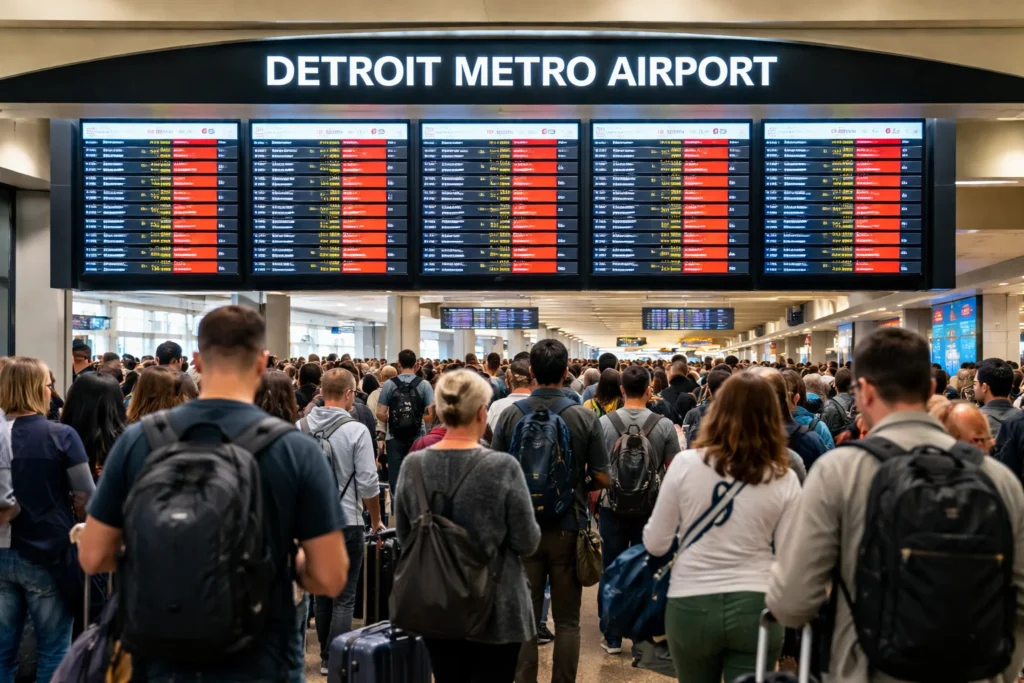
Detroit Metropolitan Wayne County Airport, one of the busiest hubs in the Midwest, has become the focal point of the current disruption. A series of cancellations and delays has strained airport operations, leading to congestion in terminals and increased pressure on airline staff.
While the number of cancellations remains relatively limited compared to total daily operations, the concentration of delays has created significant challenges. Dozens of flights have been delayed, affecting both departures and arrivals, and causing a cascading effect across airline networks.
Passengers traveling through Detroit have encountered crowded waiting areas, longer queues at service desks, and limited availability for rebooking options during peak travel periods.
Airlines Respond to Operational Pressure
Several major carriers operating at Detroit have been impacted, including regional and mainline airlines responsible for both domestic and connecting flights. These airlines have been working to stabilize schedules, but the scale of the disruption has made it difficult to fully restore normal operations.
Delays have affected a wide range of flights, from short regional routes to long-haul international services. In some cases, aircraft availability, crew scheduling, and turnaround times have contributed to further delays, creating a cycle that is challenging to break.
Airlines are actively rebooking passengers, adjusting flight schedules, and deploying additional resources where possible. However, the high volume of affected travelers has placed significant strain on customer service operations.
Wide Network of Affected Destinations
The disruption has extended to numerous cities across North America and beyond. Domestic routes connecting Detroit to cities such as Omaha, Burlington, Marquette, Albany, and Rochester have experienced cancellations and delays, impacting regional travel.
At the same time, major metropolitan destinations including New York, Chicago, Atlanta, and Los Angeles have also been affected, illustrating how disruptions at a central hub can influence broader travel networks.
International routes have not been immune, with some flights connecting to destinations in Europe, Canada, and other regions experiencing delays or adjustments. This widespread impact underscores the role of Detroit as a key connecting point in global aviation.
Causes Behind the Disruptions
A combination of operational challenges has contributed to the current situation. Airline scheduling adjustments, staffing constraints, and logistical bottlenecks have all played a role in creating delays.
In addition, factors such as aircraft rotation issues and tight turnaround schedules have made it difficult for airlines to recover quickly once disruptions began. Even minor delays can escalate rapidly in a high-traffic environment, leading to larger operational challenges.
Weather conditions in other parts of the country may also have contributed to the situation, as delays at major hubs can create ripple effects that spread across the network.
Passenger Experience and Challenges
For travelers, the disruptions have resulted in significant inconvenience. Many passengers have faced last-minute cancellations, forcing them to seek alternative travel arrangements or wait for the next available flight.
Those with connecting flights have been particularly affected, as delays at Detroit have led to missed connections and extended travel times. Business travelers, families, and international passengers have all experienced varying degrees of disruption.
Communication has been a key concern, with some passengers reporting difficulty obtaining timely updates about their flights. While airlines have provided digital notifications and support through mobile apps, the high volume of affected travelers has made it challenging to address every situation promptly.
Managing Travel During Disruptions
Travelers navigating the situation are being advised to stay informed and flexible. Checking flight status regularly, using airline apps, and arriving at the airport early can help minimize stress during periods of disruption.
Airlines are offering rebooking options and, in some cases, alternative routes to help passengers reach their destinations. However, availability may be limited, particularly during busy travel periods.
Passengers are also encouraged to explore alternative travel options when necessary, including flights from nearby airports or different airlines.
Broader Implications for the Aviation Industry
The disruptions at Detroit highlight ongoing challenges within the aviation industry as it continues to adapt to increasing travel demand. Airports and airlines are working to balance capacity with operational efficiency, but periods of high demand can expose vulnerabilities in the system.
The interconnected nature of air travel means that disruptions at a single hub can quickly spread across multiple routes and regions. This underscores the importance of coordination between airlines, airports, and air traffic control to manage operations effectively.
Efforts to Improve Operations
Airport authorities and airlines are focusing on long-term improvements to reduce the likelihood of similar disruptions in the future. Investments in infrastructure, staffing, and technology are aimed at enhancing efficiency and resilience.
Efforts to improve communication systems and real-time data sharing are also expected to play a key role in helping passengers stay informed and allowing airlines to respond more quickly to operational challenges.
Looking Ahead
While the current situation has created significant challenges for travelers, it also serves as a reminder of the complexity of modern air travel. As demand continues to grow, maintaining reliable operations will remain a priority for the aviation industry.
For now, passengers traveling through Detroit and other affected airports should remain vigilant, monitor updates closely, and allow extra time for their journeys. Flexibility and preparedness will be essential as airlines work to restore normal operations.
A Test of System Resilience
The disruptions at Detroit Metropolitan Wayne County Airport demonstrate how quickly travel plans can be affected by operational pressures. However, they also highlight the resilience of the aviation system, as airlines and airport authorities work together to manage challenges and support passengers.
As recovery efforts continue, the focus remains on restoring confidence in air travel and ensuring smoother journeys in the future.
For more travel news like this, keep reading Global Travel Wire