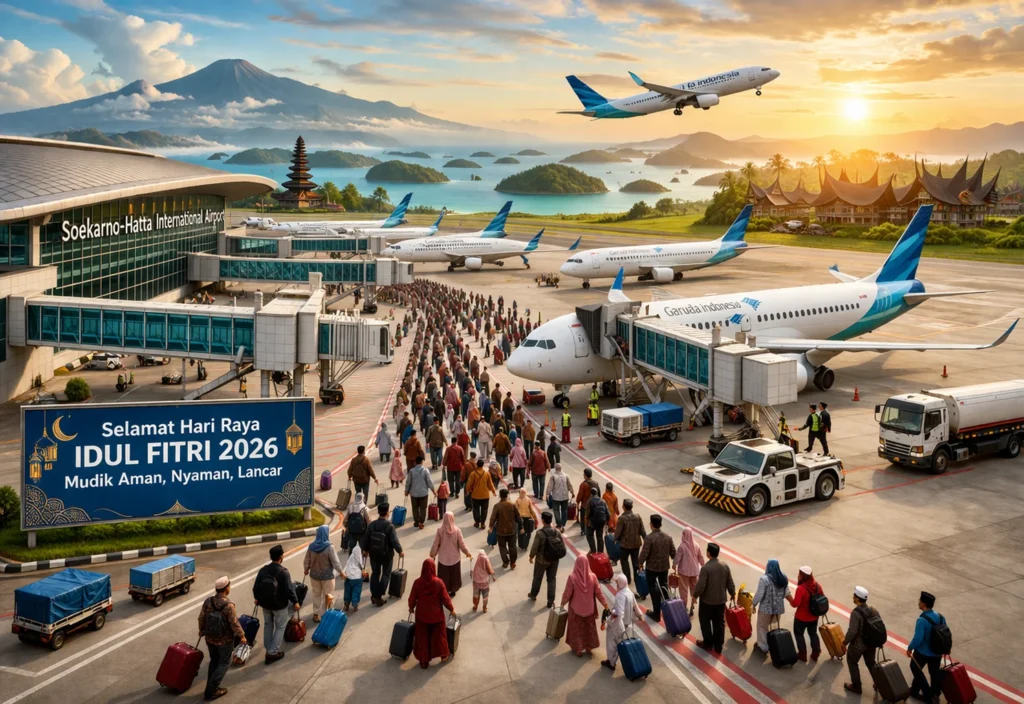
Indonesia has once again demonstrated the scale and significance of its annual Eid homecoming tradition, known as Mudik, as millions of travelers took to the skies during the 2026 festive period. Managed by the national airport operator, InJourney Airports, the country’s aviation network handled an impressive surge in passenger traffic, reflecting both cultural importance and the continued recovery of the travel sector.
During the critical travel window leading up to Eid al-Fitr, Indonesia recorded more than 4.4 million passenger movements across dozens of airports. This massive flow of travelers highlights the deep-rooted tradition of returning home to celebrate with family, while also showcasing the nation’s growing mobility and improved aviation infrastructure.
A Surge Driven by Tradition and Modern Mobility
Mudik is one of the largest seasonal travel movements in the world, with millions of Indonesians traveling from major cities to their hometowns. The 2026 surge reflects a steady increase in demand for air travel, as more people choose faster and more convenient options to complete their journeys.
The rise in passenger numbers also signals renewed confidence in the aviation sector. As infrastructure improves and airlines expand their services, air travel has become a preferred mode of transportation during peak holiday periods.
Record Passenger Volumes Across the Network
Over a nine-day period leading up to Eid, airports managed by InJourney Airports processed more than 4.4 million passengers. This represents a noticeable increase compared to the previous year, indicating sustained growth in domestic travel demand.
The busiest day occurred just before the holiday, when hundreds of thousands of passengers passed through airport terminals in a single day. Even on the day of Eid itself, traffic remained high, demonstrating the extended nature of the travel period.
These figures highlight the logistical complexity of managing such a large-scale movement of people, requiring precise coordination and efficient operations across the entire aviation network.
Increased Flight Operations to Meet Demand
To accommodate the surge in passengers, airlines significantly increased the number of flights during the peak period. More than 33,000 flights were operated, reflecting a substantial rise in activity compared to the previous year.
Additional flights were introduced on high-demand routes, particularly those connecting major cities with regional destinations. These extra services played a crucial role in ensuring that travelers could reach their destinations on time.
The ability to scale operations quickly and effectively demonstrates the resilience and adaptability of Indonesia’s aviation sector.
Strategic Planning Ensures Smooth Operations
One of the key factors behind the successful management of the travel surge was strategic planning. Airport authorities implemented advanced scheduling systems to optimize takeoff and landing slots, maximizing runway capacity while maintaining safety standards.
Efficient slot management allowed airports to handle increased traffic without causing significant delays. This approach ensured that flights operated smoothly, even during the busiest periods.
In addition, coordination between airlines, air traffic controllers, and ground staff was essential in maintaining operational efficiency. The collaborative efforts of all stakeholders helped create a seamless travel experience for passengers.
Extra Flights Play a Critical Role
Airlines submitted thousands of requests for additional flight slots to meet the heightened demand. A large proportion of these requests were approved and implemented, enabling carriers to expand their capacity during the peak travel period.
The high realization rate of extra flights reflects strong cooperation between airport authorities and airlines. This flexibility is crucial in managing seasonal surges and ensuring that passenger needs are met.
By providing more travel options, airlines were able to reduce congestion and improve overall accessibility during the holiday season.
Key Airports Handle the Bulk of Traffic
Indonesia’s major airports played a central role in managing the surge. The country’s primary gateway near the capital recorded the highest number of passengers, serving as a hub for both domestic and international travel.
Other key airports in popular destinations and regional hubs also experienced significant increases in traffic. These locations act as important نقاط اتصال, connecting travelers across the vast Indonesian archipelago.
The distribution of passenger movements highlights the importance of a well-developed airport network in supporting national connectivity.
Enhancing Passenger Experience During Peak Travel
Despite the high volume of travelers, efforts were made to ensure a comfortable and orderly experience for passengers. Improved queue management, digital check-in systems, and enhanced security procedures helped streamline the process.
Airports also focused on maintaining cleanliness, providing clear information, and offering assistance to travelers. These measures contributed to a positive experience, even during periods of heavy congestion.
The emphasis on passenger satisfaction reflects a broader commitment to improving service quality across the aviation sector.
Economic and Tourism Impact
The Eid travel surge has a significant impact on Indonesia’s economy and tourism industry. Increased travel activity boosts demand for services such as transportation, hospitality, and retail, supporting local businesses.
The movement of millions of people also highlights the importance of domestic tourism, as travelers explore destinations within the country. This contributes to the growth of regional economies and promotes cultural exchange.
As Indonesia continues to develop its tourism infrastructure, events like Mudik play a vital role in driving economic activity and strengthening national connectivity.
Looking Ahead: Preparing for Future Growth
The successful management of the 2026 Eid travel surge provides valuable insights for future operations. Lessons learned from this period will help authorities refine their strategies and improve efficiency in handling large-scale travel movements.
Investments in technology, infrastructure, and workforce training will be essential in supporting continued growth. As passenger numbers increase, the ability to adapt and innovate will determine the success of the aviation sector.
A Milestone for Indonesia’s Aviation Industry
The handling of more than four million passengers during one of the busiest travel periods of the year marks a significant achievement for Indonesia’s aviation industry. It demonstrates the country’s capability to manage complex operations while maintaining high standards of safety and service.
For travelers, the experience underscores the importance of planning and coordination in ensuring a smooth journey. For the industry, it highlights the potential for continued growth and development.
Strengthening a Cultural Tradition Through Modern Travel
At its core, the Mudik tradition remains a powerful symbol of unity and family connection. The ability to support this tradition on such a large scale reflects the progress made in Indonesia’s transportation and infrastructure systems.
As the nation continues to evolve, the integration of modern aviation with cultural practices will remain a defining feature of its travel landscape. The 2026 Eid travel surge stands as a testament to this balance, combining tradition with innovation to create a seamless and meaningful travel experience.
For more travel news like this, keep reading Global Travel Wire