Air travel across the United Arab Emirates is facing significant disruption as multiple airlines cancel dozens of flights, impacting key global routes and leaving thousands of passengers scrambling for alternatives. The widespread cancellations, affecting major aviation hubs including Dubai International Airport, Abu Dhabi International Airport, Sharjah International Airport, and Al Maktoum International Airport, highlight ongoing operational challenges in one of the world’s busiest aviation regions.
Leading carriers such as Emirates, Qatar Airways, flydubai, and Gulf Air have all been affected, with more than 60 flights canceled over recent days. These disruptions have impacted routes connecting the UAE to destinations across Europe, the Middle East, and Asia, creating ripple effects across international travel networks.
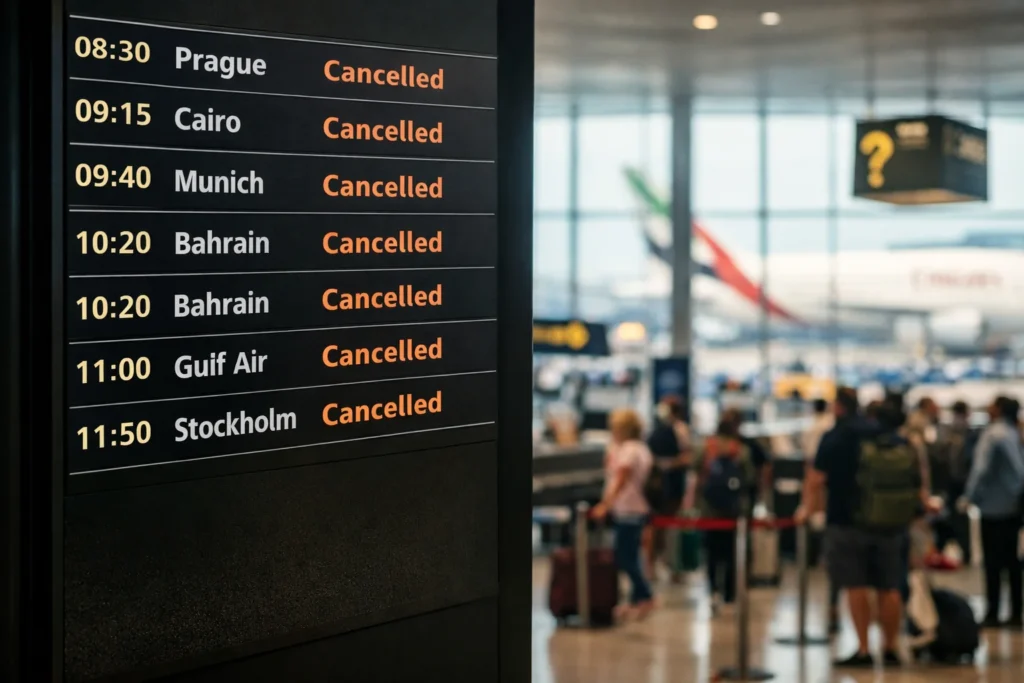
At Dubai International Airport, one of the busiest global transit hubs, the impact has been particularly noticeable. Several flights to key destinations including Bahrain, Cairo, and island destinations in the Indian Ocean were suspended. Early morning and late-night departures have been among the most affected, leading to cascading delays throughout the day. As passengers miss connections or face last-minute changes, congestion within terminals has increased, placing additional pressure on airport operations.
The disruptions extend beyond regional routes, with cancellations also affecting popular European destinations such as Prague, Budapest, Munich, Oslo, and Stockholm. These cities are key tourism and business hubs, making the cancellations particularly disruptive for both leisure travelers and corporate passengers.
Abu Dhabi International Airport has also experienced consistent interruptions, especially on routes linking the UAE to Bahrain and Egypt. Multiple flights to Cairo were canceled, affecting both daytime and overnight schedules. The repeated suspension of these services has disrupted travel plans for passengers relying on frequent connections between the Gulf region and North Africa.
Similarly, Sharjah International Airport has reported several cancellations involving flights to Doha, Cairo, and South Asia. Services operated by international and regional airlines have been impacted, particularly during off-peak hours. These disruptions have created uncertainty for passengers traveling on connecting routes, as missed flights and rescheduling challenges continue to rise.
At Al Maktoum International Airport, cancellations have affected both regional and long-haul routes. Flights to European cities and key Middle Eastern destinations, including Riyadh, have been suspended, further highlighting the widespread nature of the disruptions. The pattern of cancellations suggests that operational challenges are not limited to a single airport but are affecting the broader UAE aviation network.
Analysis of the situation reveals several key trends. Routes to Bahrain, Cairo, and Doha appear to be among the most heavily impacted, indicating potential operational bottlenecks on high-frequency regional connections. In addition, flights operated by narrow-body aircraft have been disproportionately affected, suggesting capacity adjustments or scheduling constraints within airline operations.
Timing has also played a significant role, with early morning and late-night departures experiencing the highest number of cancellations. These time slots are critical for maintaining global connectivity, and disruptions during these periods can lead to widespread delays throughout the day.
For passengers, the impact has been considerable. Many travelers have been forced to rebook flights, adjust itineraries, or seek alternative routes at short notice. Hotels, tour operators, and other tourism-related businesses are also feeling the effects, as cancellations disrupt planned travel experiences and reduce visitor flows.
Airlines have been working to manage the situation by offering rebooking options and providing updates to affected passengers. However, the scale of the disruptions has made it challenging to maintain smooth communication and minimize inconvenience. Travelers are being advised to check flight statuses regularly, arrive at airports with additional time, and remain flexible with travel plans.
The current wave of cancellations also highlights the complexity of operating within a highly interconnected aviation system. Factors such as air traffic congestion, operational constraints, and external conditions can quickly escalate, leading to widespread disruptions. In a region like the UAE, which serves as a major global transit hub, even minor disruptions can have far-reaching consequences.
From a broader perspective, the situation underscores the importance of resilience and adaptability in the aviation industry. Airports and airlines are increasingly investing in advanced technologies and operational strategies to improve reliability and manage disruptions more effectively. These efforts include enhanced scheduling systems, real-time data analysis, and improved passenger communication channels.
Despite the challenges, the UAE remains a key player in global aviation, with its airports continuing to handle high volumes of international traffic. The current disruptions are expected to be temporary, with airlines working to restore normal operations and stabilize schedules in the coming weeks.
For now, travelers planning journeys through the UAE are encouraged to stay informed and prepare for possible changes. While the situation remains fluid, proactive planning and flexibility can help minimize the impact of disruptions and ensure a smoother travel experience.
As the aviation sector continues to navigate these challenges, the focus remains on restoring reliability and maintaining the high standards of service that the UAE’s airports and airlines are known for worldwide.
For more travel news like this, keep reading Global Travel Wire