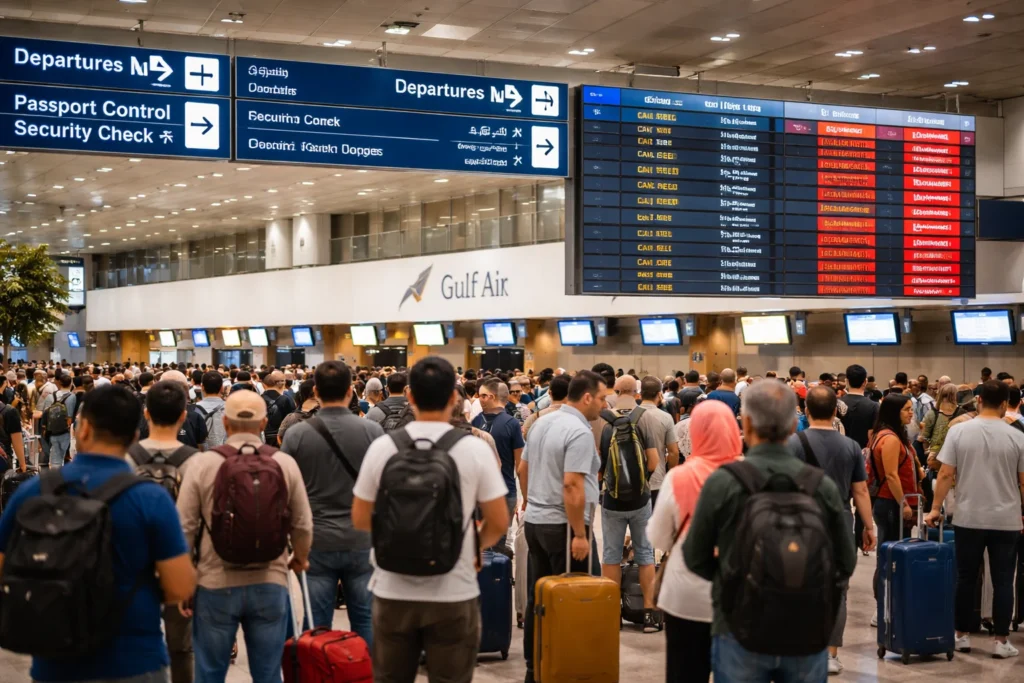
Air travel disruptions have intensified in Bahrain as widespread flight cancellations continue to impact passengers across regional and international routes. The ongoing operational challenges at Bahrain International Airport have resulted in more than 150 canceled departures, creating significant inconvenience for travelers and placing pressure on airline operations.
The majority of the cancellations have been linked to Gulf Air, the country’s flagship carrier and primary operator at the airport. The disruptions have affected a wide network of destinations spanning the Middle East, Europe, and Asia, highlighting the scale of the issue and its impact on global connectivity.
Among the most affected routes are key regional hubs such as Dubai, Doha, Jeddah, Riyadh, and Kuwait City. These destinations are critical for business and transit travel within the Gulf region, and repeated cancellations have disrupted schedules for thousands of passengers relying on frequent connections.
International routes have also been heavily impacted, with cancellations reported on long-haul flights to major global cities including London, Singapore, Bangkok, Shanghai, Athens, and Istanbul. These routes play a vital role in connecting Bahrain to global tourism and business markets, making the disruptions particularly significant.
India-bound flights have been among the most affected, with multiple cancellations on routes to Delhi, Mumbai, Bengaluru, Chennai, Kochi, and Goa. These routes are essential for both expatriate travel and tourism, and the cancellations have caused widespread disruption for passengers traveling between Bahrain and the Indian subcontinent.
An analysis of the flight schedules reveals clear patterns in the cancellations. Evening departures, particularly between 6:00 PM and 11:00 PM, have been most affected, with repeated suspensions on high-demand routes such as Dubai, Doha, and Jeddah. Morning flights have also experienced disruptions, especially on routes to Saudi Arabia and other regional destinations. The recurrence of cancellations over multiple days suggests that the issue is not isolated but part of broader operational challenges.
Industry observers point to several potential factors contributing to the situation, including aircraft rotation constraints, crew availability, and maintenance requirements. Managing a complex flight network requires precise coordination, and any disruption in one area can quickly cascade across multiple routes. In a hub like Bahrain, where transit traffic is significant, such disruptions can have far-reaching consequences.
For passengers, the impact has been substantial. Business travelers have faced last-minute changes to their schedules, leading to missed meetings and delayed commitments. Leisure travelers, particularly those heading to long-haul destinations, have encountered unexpected itinerary changes, often requiring rebooking or extended waiting times at the airport. Connecting passengers have been especially affected, as missed flights disrupt onward travel plans.
Airlines have been working to manage the situation by offering rebooking options and providing updates to affected passengers. However, the scale of the cancellations has made it difficult to minimize inconvenience entirely. Travelers are being advised to check their flight status regularly, remain flexible with their plans, and allow extra time when traveling through Bahrain.
The disruptions have also had broader implications for the region’s aviation network. Bahrain serves as an important transit hub in the Gulf, and cancellations at its main airport can affect neighboring hubs and connecting routes. Flights to and from major cities in the Middle East have experienced delays and schedule adjustments as airlines attempt to maintain network stability.
From an economic perspective, the situation highlights the challenges faced by airlines in maintaining operational efficiency while meeting growing travel demand. The aviation industry continues to recover and expand, but disruptions such as these underscore the importance of resilience and adaptability in managing complex global networks.
Tourism and hospitality sectors in Bahrain are also feeling the impact, as reduced flight availability affects visitor arrivals. Hotels, tour operators, and local businesses rely on consistent air connectivity, and prolonged disruptions could influence travel patterns in the region.
Looking ahead, restoring normal operations will require coordinated efforts between airlines, airport authorities, and aviation regulators. Addressing the underlying causes of the disruptions, whether related to staffing, scheduling, or technical factors, will be essential to preventing similar issues in the future.
For now, passengers planning to travel through Bahrain are encouraged to stay informed and consider alternative routes where possible. Flexibility and proactive planning remain key to navigating the current situation, as airlines continue to work toward stabilizing their schedules.
The recent wave of cancellations serves as a reminder of how interconnected global aviation systems are, and how quickly disruptions can spread across regions. As Bahrain works to restore operational stability, the focus remains on ensuring passenger safety, improving communication, and rebuilding confidence in the travel experience.
For more travel news like this, keep reading Global Travel Wire