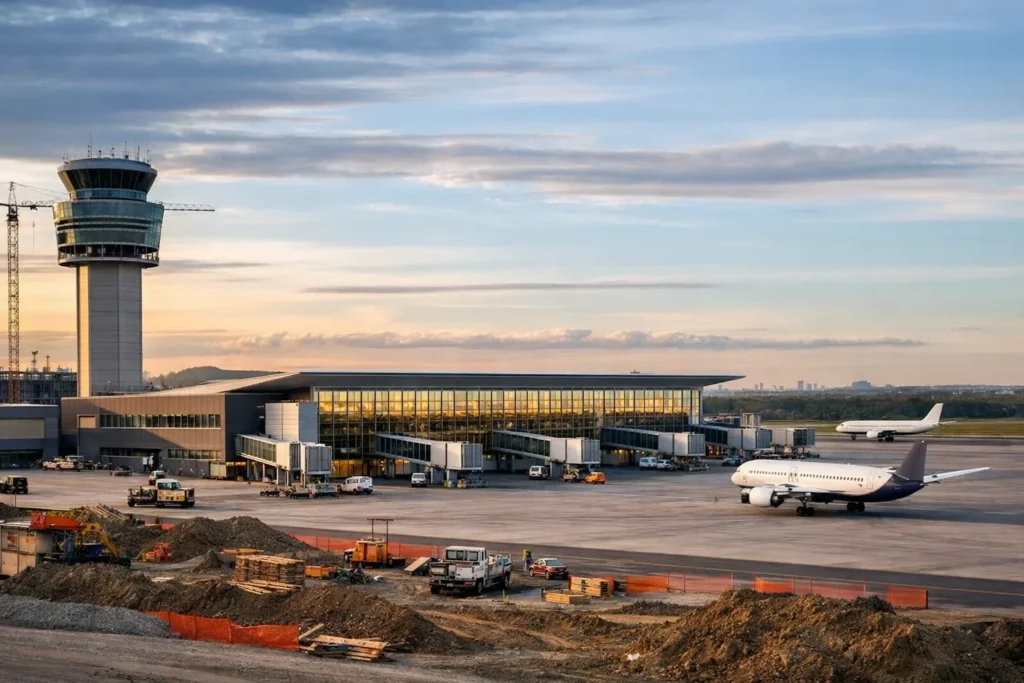
Greater Montreal is preparing for a major boost in its aviation infrastructure with the upcoming launch of a new passenger terminal at Montreal Metropolitan Airport, scheduled to open on June 15, 2026. The development marks a significant milestone for the region’s transportation network, aiming to enhance passenger capacity, improve efficiency, and offer more convenient travel options for both residents and visitors.
The new facility is expected to play a key role in supporting the growing demand for domestic air travel across Canada. With confirmed operations from Porter Airlines and Pascan Aviation, the airport is set to expand its connectivity to several cities nationwide. This expansion will provide travelers with increased flexibility and more direct routes, reducing reliance on larger, busier airports in the region.
Designed with modern travel needs in mind, the terminal spans approximately 21,000 square meters and incorporates features aimed at enhancing passenger comfort and efficiency. Nine boarding bridges will allow for faster and more organized boarding processes, while spacious waiting areas with hundreds of seats are designed to accommodate growing passenger volumes. The layout emphasizes ease of movement, enabling travelers to navigate the terminal quickly from check-in to departure gates.
One of the defining characteristics of the new terminal is its focus on simplicity and speed. Unlike larger international hubs where long queues and extended waiting times are common, this facility has been designed to offer a streamlined experience. Passengers are expected to benefit from shorter processing times, allowing them to arrive closer to departure without the stress typically associated with air travel.
The project is being managed by YHU Infrastructure Partners, which aims to deliver a coordinated operational model under a unified terminal system. This approach is intended to ensure smooth passenger flow and efficient management of airport services. By integrating technology and operational planning, the terminal seeks to reduce congestion and improve overall reliability.
The introduction of new flight services by Porter Airlines is expected to strengthen connections between Montreal and major Canadian cities. Known for its focus on regional and short-haul travel, the airline is likely to attract both business and leisure travelers seeking convenient and efficient options. Meanwhile, Pascan Aviation will enhance connectivity to smaller and less-served destinations, supporting regional development and improving access to remote communities.
The expansion is also aligned with broader efforts to promote sustainable aviation practices. The airport plans to accommodate quieter and more fuel-efficient aircraft, particularly single-aisle models commonly used for domestic routes. This initiative is expected to reduce noise levels for nearby communities and contribute to lower carbon emissions, reflecting a growing emphasis on environmental responsibility within the aviation sector.
In addition to aircraft efficiency, the terminal itself incorporates environmentally conscious design elements. Energy-efficient systems, optimized building materials, and sustainable operational practices are expected to play a role in minimizing the facility’s environmental footprint. These measures align with national and international goals to reduce the impact of air travel on the environment while maintaining high service standards.
Location is another key advantage of Montreal Metropolitan Airport. Situated close to the city center, the airport offers easy access to major highways and urban transport networks. This proximity makes it an attractive option for travelers looking to avoid the congestion often associated with larger international airports. For visitors, the convenience of reaching central Montreal quickly adds to the overall appeal of the airport.
The airport’s location also provides convenient access to some of Montreal’s most popular attractions. Travelers arriving through the new terminal will find themselves within easy reach of cultural and historical landmarks, including Old Montreal, the city’s renowned museums, and the scenic waterfront along the St. Lawrence River. This accessibility enhances the airport’s role as a gateway for tourism in the region.
Industry experts see the new terminal as part of a broader trend toward decentralizing air travel infrastructure. By developing smaller, efficient airports with strong regional connections, cities can reduce pressure on major hubs while improving the overall travel experience. Montreal’s investment in this project reflects a forward-looking approach to managing future growth in passenger traffic.
Looking ahead, Montreal Metropolitan Airport is expected to continue expanding its services and partnerships. Additional airlines may be introduced in the coming years, further increasing connectivity and offering more travel options. This growth could position the airport as a key player in Canada’s domestic aviation network, complementing existing infrastructure in the region.
For travelers, the benefits of this development are clear. The new terminal promises a faster, more comfortable, and more convenient travel experience, with improved access to destinations across Canada. Whether traveling for business or leisure, passengers will have the opportunity to enjoy a modern facility designed to meet the demands of contemporary air travel.
As the opening date approaches, anticipation is building for what is set to become a significant addition to Montreal’s transportation landscape. With its focus on efficiency, sustainability, and passenger comfort, the new terminal at Montreal Metropolitan Airport represents a major step forward in the evolution of regional air travel.
The launch of this facility not only strengthens Montreal’s position as a key travel hub but also highlights the importance of innovation and investment in shaping the future of aviation.
For more travel news like this, keep reading Global Travel Wire