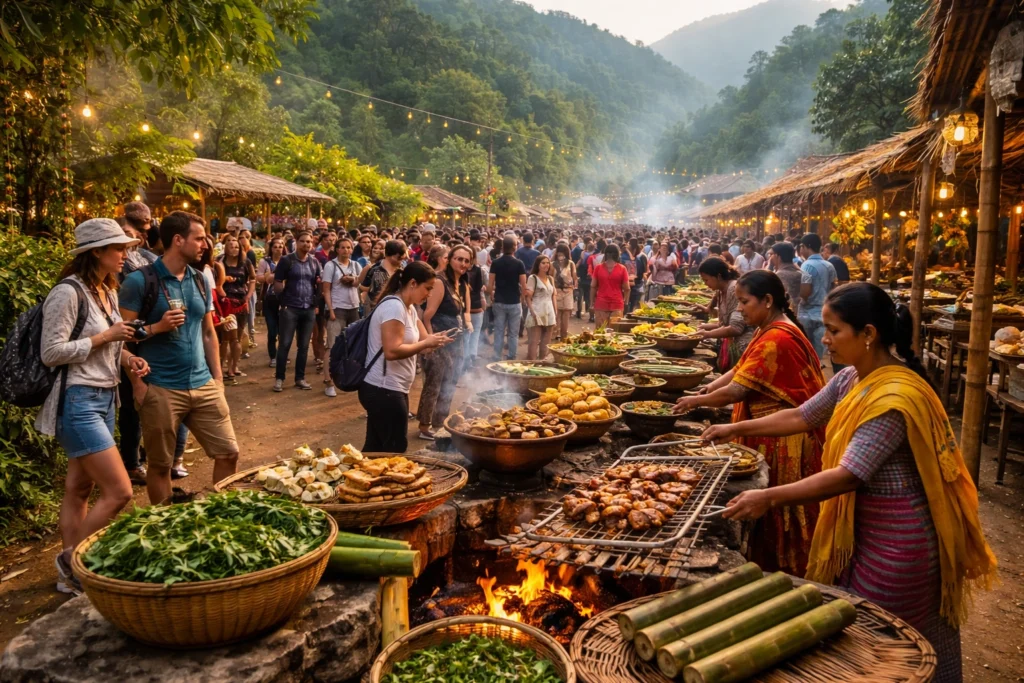
Seeti 2.0 has sparked a powerful tourism wave across Meghalaya. The festival attracts global travelers eager to explore indigenous food traditions. Visitors now view Shillong as a rising culinary destination.
Tourists from the United States, United Kingdom, and Bangladesh continue to arrive in large numbers. They seek authentic cultural experiences and traditional flavors. As a result, Meghalaya gains strong global attention.
Moreover, the festival runs from March 26 to March 31, 2026. During this time, Shillong transforms into a vibrant hub of food and culture. Travelers immerse themselves in local traditions and community stories.
Airlines Witness Sharp Rise in Ticket Demand
Airlines report a major increase in bookings to Shillong. IndiGo, Vistara, and Air India continue to expand services to meet demand.
Travelers now choose direct and connecting flights from major cities like Delhi, Mumbai, and Kolkata. These routes improve accessibility and reduce travel time. As a result, more international tourists visit Meghalaya.
In addition, airlines introduce promotional fares and increased flight frequency. These strategies help attract both domestic and global travelers. Consequently, aviation growth supports regional tourism expansion.
Shillong Emerges as a Global Food Tourism Hub
Shillong now stands out as a top food tourism destination in India. Seeti 2.0 highlights local ingredients and traditional cooking methods.
Visitors enjoy dishes made from bamboo shoots, fermented foods, and wild herbs. These flavors reflect generations of indigenous knowledge. Therefore, tourists gain a deeper cultural connection through food.
At the same time, travelers explore Meghalaya’s natural beauty. They visit waterfalls, caves, and living root bridges. This combination of food and nature enhances the overall experience.
Hospitality Sector Prepares for Visitor Surge
Hotels and resorts across Shillong report rising bookings. The hospitality sector expects strong occupancy during the festival period.
Popular stays prepare for international guests by improving services and facilities. Meanwhile, local guesthouses also benefit from increased demand. This growth supports small businesses across the region.
Restaurants and street vendors also see more customers. Traditional dishes such as Jadoh and Tungrymbai attract food lovers. As a result, local food culture gains wider recognition.
Community Participation Strengthens Cultural Tourism
Seeti 2.0 focuses on community-driven tourism. Local farmers, chefs, and artisans actively shape the festival experience.
Visitors interact directly with indigenous communities. They learn about farming practices, cooking techniques, and food stories. This interaction creates meaningful cultural exchange.
Furthermore, chefs combine modern styles with traditional recipes. This approach keeps heritage alive while appealing to global tastes. Therefore, the festival balances innovation with authenticity.
Government and Tourism Bodies Support Growth
The Meghalaya government actively promotes cultural tourism through events like Seeti 2.0. Authorities improve infrastructure and travel connectivity. These efforts strengthen the state’s tourism appeal.
Tourism boards also market Meghalaya as a sustainable travel destination. They highlight eco-friendly practices and local experiences. As a result, responsible tourism continues to grow.
Travel Experience Expands Beyond Food
Travelers visit Meghalaya not only for food but also for adventure and culture. Scenic routes between Guwahati and Shillong offer stunning landscapes. These journeys enhance the travel experience.
Tourists also explore nearby attractions during their visit. They enjoy trekking, sightseeing, and cultural tours. Therefore, Seeti 2.0 acts as a gateway to broader tourism opportunities.
Meghalaya Positions Itself for Long-Term Tourism Growth
Seeti 2.0 creates long-term benefits for Meghalaya’s tourism industry. Increased flight connectivity improves accessibility for global visitors.
Local businesses gain new opportunities through rising tourist spending. This growth supports employment and economic development. At the same time, cultural preservation remains a priority.
Moreover, the success of Seeti 2.0 sets a strong example for future events. It shows how food tourism can drive regional growth. Consequently, Meghalaya strengthens its position on the global tourism map.
Conclusion: A New Era for Meghalaya Tourism
Seeti 2.0 has transformed Meghalaya into a global culinary hotspot. Airlines, hotels, and local communities all benefit from rising tourism.
The festival brings together culture, food, and travel in a powerful way. It attracts global attention while preserving indigenous heritage.
As tourism continues to grow, Meghalaya stands ready for a new era. Travelers now see the region as a must-visit destination for authentic experiences.
For more travel news like this, keep reading Global Travel Wire