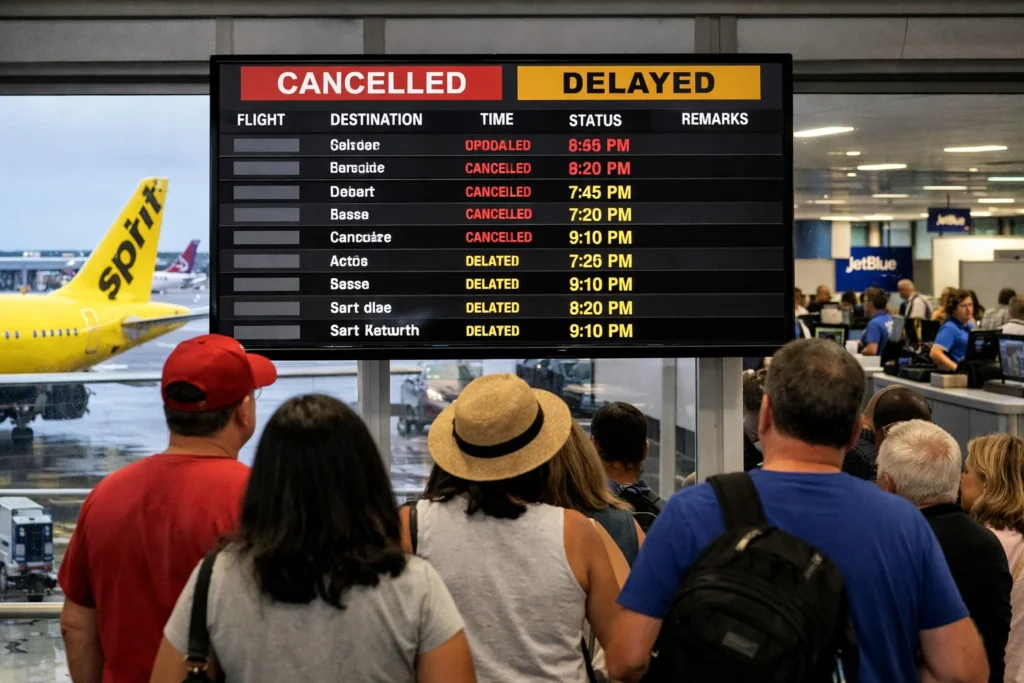
Travel disruptions have intensified at Fort Lauderdale–Hollywood International Airport as multiple airlines grapple with operational challenges, leading to flight suspensions and widespread delays. Spirit Airlines, Delta Air Lines, and JetBlue Airways have collectively cancelled 17 flights and reported more than 100 delays, creating significant inconvenience for travellers across domestic and international routes.
The situation has placed one of Florida’s busiest travel hubs under pressure, particularly as passenger volumes remain high across leisure and business travel corridors. Travellers departing from or arriving at Fort Lauderdale are experiencing long wait times, frequent gate changes, and uncertainty around connections.
Major Routes and Cities Affected
The disruption has impacted a wide network of destinations, stretching across the United States, the Caribbean, and parts of Latin America. Key cities affected include New York, Kansas City, Columbus, Detroit, and several Caribbean destinations such as Sint Maarten, Nassau, and Punta Cana.
Airports across cities like Atlanta, Boston, Chicago, Orlando, and Dallas are also feeling the ripple effects, as delayed aircraft and crew rotations disrupt tightly coordinated schedules. International routes to destinations such as Toronto, Bogotá, and Kingston have experienced delays as well, highlighting the far-reaching impact of the situation.
Fort Lauderdale’s role as a major gateway to Caribbean and Latin American destinations means that disruptions here can quickly spread across multiple regions. The airport’s high frequency of short-haul and leisure routes further amplifies the effects, as even minor schedule changes can cascade into broader delays.
Airlines Respond to Operational Pressure
Spirit Airlines has recorded the highest number of delays, accounting for the majority of disrupted flights, followed by JetBlue Airways and Delta Air Lines. While cancellations remain relatively limited compared to delays, their impact has been significant.
Airlines appear to be selectively cancelling flights to stabilize operations rather than implementing widespread shutdowns. This approach allows carriers to maintain overall network continuity but places additional strain on remaining flights, which often operate at full capacity.
Operational challenges such as crew availability, aircraft rotation, and air traffic congestion are contributing to the current situation. Airlines are working to reassign resources, adjust schedules, and minimize further disruption, but recovery efforts are ongoing.
Airport Congestion and Passenger Experience
Inside Fort Lauderdale Airport, the impact is clearly visible. Departure halls are crowded with passengers waiting for updates, while service desks are handling increased volumes of rebooking requests. The combination of delays and cancellations has created a bottleneck effect, with travellers competing for limited alternative flights.
Passengers with connecting flights are among the most affected, as delays in one segment can lead to missed onward journeys. This has resulted in extended travel times and additional expenses for many travellers.
Digital tools such as airline apps and real-time notifications have become essential for navigating the situation. However, high demand for customer service has made it challenging for airlines to respond quickly to every passenger inquiry.
Delay-Driven Disruption Rather Than Mass Cancellations
Despite the scale of the disruption, the situation is primarily driven by delays rather than widespread cancellations. Out of the total affected flights, delays significantly outnumber cancellations, indicating that airlines are attempting to keep as many services running as possible.
This strategy helps maintain connectivity but can lead to prolonged travel times and increased uncertainty. Each delay has the potential to affect multiple subsequent flights, especially in a high-density airport like Fort Lauderdale.
Cancellations, though fewer in number, have a disproportionate impact. Each cancelled flight removes an entire group of passengers from the system, forcing airlines to rebook them on already crowded flights. This adds to congestion and places additional pressure on airline staff and airport infrastructure.
Broader Implications for US Air Travel
The disruption at Fort Lauderdale highlights the fragile balance within the aviation system, particularly during periods of high demand. Airports with dense schedules and high passenger volumes are especially vulnerable to operational challenges.
Air traffic control constraints, weather conditions, and staffing limitations can all contribute to delays, and when combined, they can create widespread disruption. The current situation underscores the importance of coordination between airlines, airports, and aviation authorities to maintain smooth operations.
For the tourism sector, such disruptions can have economic implications, particularly in regions that rely heavily on air travel. Fort Lauderdale serves as a key entry point for international visitors, and delays can affect travel plans, hotel bookings, and local tourism activities.
Tips for Travellers Facing Disruptions
Travellers are advised to stay proactive when dealing with flight disruptions. Monitoring flight status regularly is essential, as schedules can change quickly. Airline apps and notifications provide the most up-to-date information and can help passengers respond promptly.
Contacting the airline early can improve the chances of securing alternative arrangements. While airport counters may be crowded, online customer service channels often provide faster assistance.
Flexibility is also important. Considering alternative routes, travel times, or even nearby airports can help reduce delays. Understanding airline policies regarding rebooking and compensation can further assist passengers in managing unexpected changes.
Looking Ahead
As airlines continue to work through the disruption, efforts are focused on restoring normal operations and minimizing further delays. Additional staffing, improved coordination, and efficient communication will be key to stabilizing the situation.
The events at Fort Lauderdale–Hollywood International Airport serve as a reminder of how quickly travel plans can be affected by operational challenges. While the aviation system remains resilient, addressing these vulnerabilities will be essential to ensuring smoother travel experiences in the future.
For now, travellers passing through Fort Lauderdale should prepare for potential delays and remain flexible as airlines work to bring schedules back on track.
For more travel news like this, keep reading Global Travel Wire