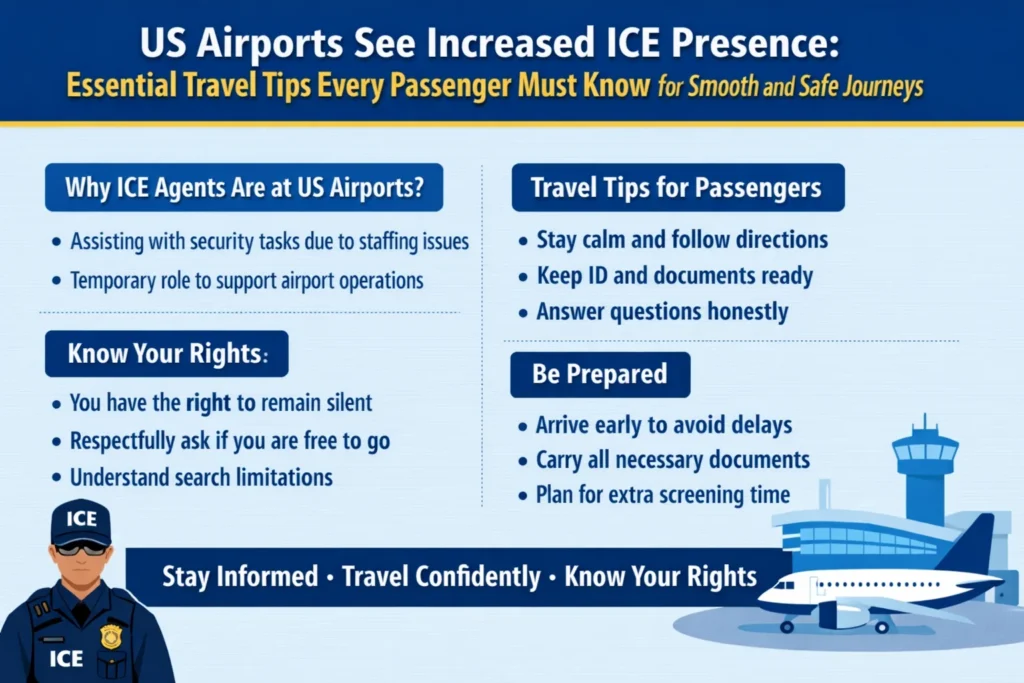
Travellers passing through major United States airports are encountering a noticeable shift in airport security dynamics, with Immigration and Customs Enforcement (ICE) agents becoming more visible at key checkpoints. This development comes amid ongoing operational challenges, including staffing shortages affecting airport security systems. As a result, passengers moving through busy hubs such as Atlanta, Houston, and New Orleans are advised to stay informed and prepared for potential interactions with federal officers.
While the increased presence of ICE agents has raised questions among travellers, authorities have clarified that this is a temporary operational adjustment rather than a change in travel laws or entry requirements. Understanding the purpose of this deployment and knowing how to respond can help travellers navigate their journeys with greater confidence.
Why ICE Agents Are Present at Airports
The heightened visibility of ICE personnel at airports is largely linked to staffing constraints within the broader security system. During periods of workforce shortages, particularly affecting airport screening operations, federal agencies have coordinated to ensure that essential functions continue without interruption.
ICE agents are being positioned in supportive roles, such as monitoring movement within terminals and assisting with identity verification tasks. These duties differ from the core responsibilities typically handled by airport security officers. Officials have emphasized that ICE agents are not replacing standard screening procedures but are helping maintain order and efficiency in crowded environments.
For travellers, this means that encountering ICE personnel near security checkpoints is not unusual under current conditions. However, it does not alter the documentation required for travel or the procedures for entering or exiting the country.
Understanding the Scope of Authority
ICE operates under the Department of Homeland Security and is primarily responsible for enforcing immigration laws and conducting investigations. While their authority allows them to question individuals and, in certain cases, detain those suspected of violations, airport interactions are generally limited in scope.
At airports, immigration-related processes are typically managed by border authorities at designated entry points. The presence of ICE in public areas of terminals is part of a broader effort to support operations rather than to conduct routine immigration checks on all passengers.
Travellers should be aware that while federal officers may ask questions, they are still required to follow established legal procedures. Understanding this distinction can help reduce anxiety during encounters.
Practical Tips for Travellers
Navigating airport environments can be stressful, especially when unfamiliar personnel are present. However, adopting a calm and informed approach can significantly improve the experience.
Maintaining composure is essential. Travellers should respond politely to any questions and follow instructions provided by airport officials. Clear communication and respectful behaviour often help ensure that interactions remain brief and straightforward.
Having all necessary documents readily accessible is equally important. Passports, identification cards, boarding passes, and any relevant travel documents should be kept within easy reach. For international travellers, additional documentation such as visas, return tickets, or proof of accommodation may also be helpful.
Providing accurate and consistent information about travel plans can prevent misunderstandings. When asked about the purpose of travel, passengers should give clear and honest answers, avoiding unnecessary details while ensuring that responses are complete.
Knowing Your Rights as a Traveller
Travellers in the United States are protected by certain legal rights, regardless of their citizenship status. These include the right to remain silent in specific situations and the ability to ask whether they are free to leave during an interaction with law enforcement.
It is important to note that while travellers can assert their rights, they should do so calmly and respectfully. Confrontation or resistance can escalate situations unnecessarily. Instead, passengers are advised to comply with basic instructions while politely clarifying any uncertainties.
In general, federal officers require proper authorization to conduct extensive searches or access personal devices. Being aware of these boundaries can help travellers make informed decisions during interactions.
Preparing for International and Domestic Travel
For those travelling internationally or connecting through U.S. airports, preparation is key. Ensuring that all documents are valid and up to date can prevent delays and complications. Non-citizens may benefit from carrying supporting materials such as employment letters or travel itineraries to clarify the purpose of their visit.
Domestic travellers should also carry valid identification that meets current security standards. Even within the country, documentation checks are a routine part of airport procedures.
Travellers are encouraged to arrive at airports earlier than usual, particularly during periods of heightened security presence. This allows extra time to navigate potential delays and complete all necessary procedures without added stress.
Impact on Passenger Experience
The increased presence of ICE agents has contributed to a more complex airport environment, particularly during peak travel periods. Longer lines, additional checks, and heightened awareness among passengers can create a sense of uncertainty.
However, aviation authorities are working to maintain smooth operations and minimize disruption. The goal is to ensure that passengers can travel safely while addressing staffing challenges within the system.
For the tourism industry, maintaining traveller confidence is essential. Clear communication from authorities and airlines plays a crucial role in helping passengers understand what to expect and how to prepare.
Looking Ahead
As the aviation sector continues to adapt to operational pressures, the presence of ICE agents at airports is expected to remain a temporary measure. Efforts are underway to stabilize staffing levels and restore standard procedures across major travel hubs.
For travellers, staying informed and prepared remains the best strategy. Understanding the role of different agencies, carrying proper documentation, and approaching interactions with confidence can help ensure a smoother journey.
While the current situation may feel unfamiliar, it underscores the importance of adaptability in modern travel. With the right knowledge and preparation, passengers can navigate even complex airport environments with ease.