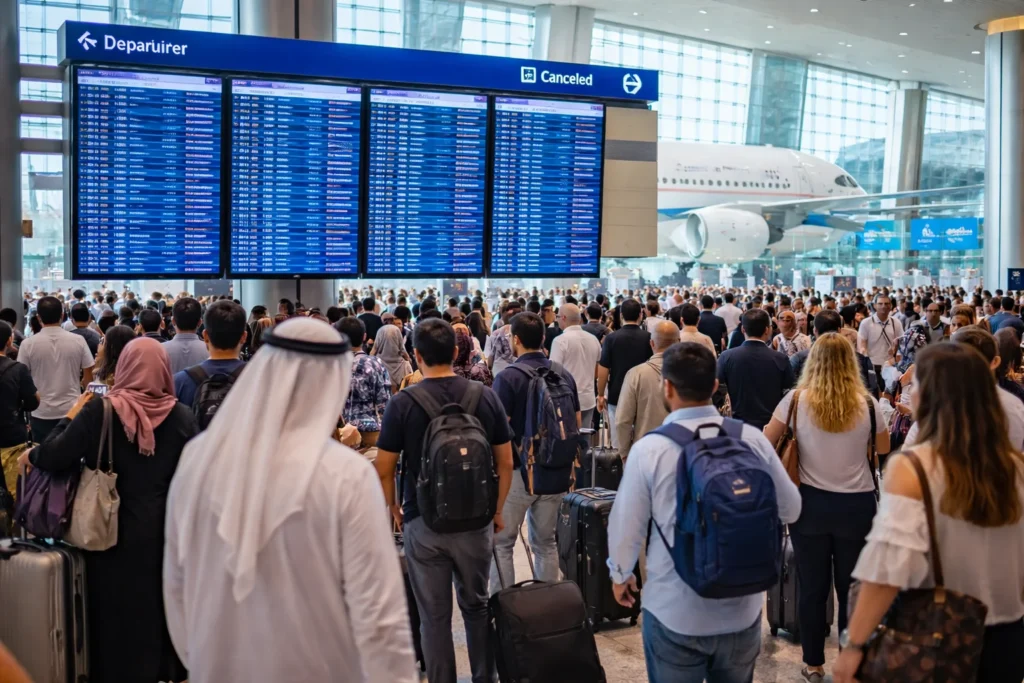
Air travel across the United Arab Emirates is facing a fresh wave of disruption as more than 40 flights have been cancelled across major airports, impacting both regional and international routes. The cancellations, recorded over multiple days, have affected a wide network of destinations spanning the Middle East, South Asia, Europe, and Africa, creating uncertainty for travellers and placing pressure on airline operations.
Major aviation hubs including Dubai, Abu Dhabi, Sharjah, Al Maktoum, and Fujairah have reported service interruptions, with airlines such as Gulf Air, Flydubai, EgyptAir, Qatar Airways, and Air Arabia among those affected. The widespread nature of these disruptions points to broader operational challenges within the region’s aviation system.
Dubai Airport Faces the Highest Impact
Dubai International Airport, one of the world’s busiest travel hubs, has recorded the largest share of cancellations. Flights across a diverse range of destinations have been suspended, affecting both short-haul regional routes and long-haul international connections.
Services to Bahrain have been repeatedly cancelled, highlighting strain on high-frequency Gulf routes. In addition, Flydubai has suspended multiple routes to destinations including Eastern Europe, Central Asia, and parts of Africa. Cities such as Prague, Warsaw, Belgrade, and Djibouti have experienced interruptions, alongside routes to Kabul, Colombo, and Alexandria.
The disruptions have occurred throughout the day, from early morning departures to late evening flights, indicating that the issue is not limited to specific time slots. This has made it more difficult for airlines to recover schedules quickly and for passengers to find alternative options.
Abu Dhabi Sees Concentrated Route Disruptions
Abu Dhabi International Airport has experienced a more focused pattern of cancellations, particularly on routes connecting to Bahrain and Egypt. Multiple services to Bahrain have been suspended repeatedly, while flights to Cairo have also faced interruptions.
These routes are among the busiest in the region, serving both business and leisure travellers. Their disruption has had a noticeable impact on passenger flow, particularly for those relying on frequent connections between the UAE and neighbouring countries.
The repeated nature of cancellations on these routes suggests ongoing operational instability rather than isolated incidents, raising concerns about short-term schedule reliability.
Sharjah and Secondary Airports Also Affected
Sharjah International Airport has reported fewer cancellations in comparison to Dubai and Abu Dhabi, but the impact remains significant due to the importance of the affected routes. Flights to Lahore, Cairo, and Doha have been disrupted, affecting key travel corridors linking the UAE with South Asia and the Gulf region.
Al Maktoum International Airport has also seen cancellations on select long-haul routes, including services to European destinations such as Munich and Oslo, as well as connections to Doha. These disruptions indicate that both passenger and cargo operations may be experiencing strain.
Meanwhile, Fujairah International Airport has recorded cancellations primarily on India-bound routes, particularly to Mumbai and Delhi. These routes are heavily used by both residents and tourists, making the impact especially noticeable.
Broad Impact on Regional and Global Connectivity
The cancellations have affected a wide range of destinations, including Bahrain, Cairo, Doha, Mumbai, Delhi, Prague, Warsaw, Muscat, Colombo, and more. This broad geographic spread highlights the interconnected nature of UAE aviation, where disruptions in one hub can quickly affect multiple regions.
Passengers travelling through the UAE as a transit point have been particularly impacted. Missed connections, delayed departures, and limited rebooking options have added to the complexity of travel plans. With the UAE serving as a major global transit hub, even minor disruptions can have far-reaching consequences.
Key Trends Behind the Disruptions
Several patterns have emerged from the recent wave of cancellations. High-frequency routes, especially those linking the UAE with Bahrain and Cairo, have been among the most affected. These routes are critical for regional mobility, making their disruption particularly significant.
Cancellations have also been spread across different times of day, indicating a sustained operational challenge rather than a short-term issue. Both narrow-body and wide-body aircraft have been affected, suggesting that the disruption is not limited to a specific fleet type.
Industry experts suggest that such widespread cancellations may be linked to factors such as aircraft availability, crew scheduling constraints, and broader logistical pressures. While official explanations remain limited, the consistency of the disruptions points to systemic challenges within airline operations.
Passenger Experience and Challenges
At airports across the UAE, travellers are facing crowded terminals, long queues, and increased waiting times. Airline counters are managing a surge in rebooking requests, while passengers compete for limited seats on alternative flights.
Those with connecting itineraries are among the most affected, as delays in one segment often lead to missed onward flights. This has resulted in extended travel times and additional costs for many passengers.
For tourists, the disruptions have created uncertainty around travel plans, including hotel bookings and scheduled activities. Business travellers are also facing challenges, as delays impact meetings and time-sensitive commitments.
What Travellers Should Expect
With disruptions continuing across multiple airports, travellers should prepare for potential delays and changes to their itineraries. Monitoring flight status regularly and staying in contact with airlines is essential for navigating the situation.
Flexibility in travel plans can help reduce inconvenience. Considering alternative routes or travel times may increase the chances of reaching a destination without significant delays.
Arriving at the airport earlier than usual is also advisable, as additional time may be needed to handle rebooking or security procedures.
Looking Ahead
Airlines and airport authorities in the UAE are working to stabilize operations and restore normal schedules. Efforts include adjusting flight rotations, reallocating resources, and improving coordination across networks.
The current situation highlights the importance of resilience in modern aviation systems, particularly in regions with high passenger volumes and complex route networks. While disruptions are challenging, they also provide an opportunity for the industry to strengthen operational efficiency and contingency planning.
As the situation evolves, travellers are encouraged to remain informed and adaptable. With coordinated efforts from airlines and authorities, normal operations are expected to gradually resume, ensuring the UAE continues to serve as a key global travel hub.