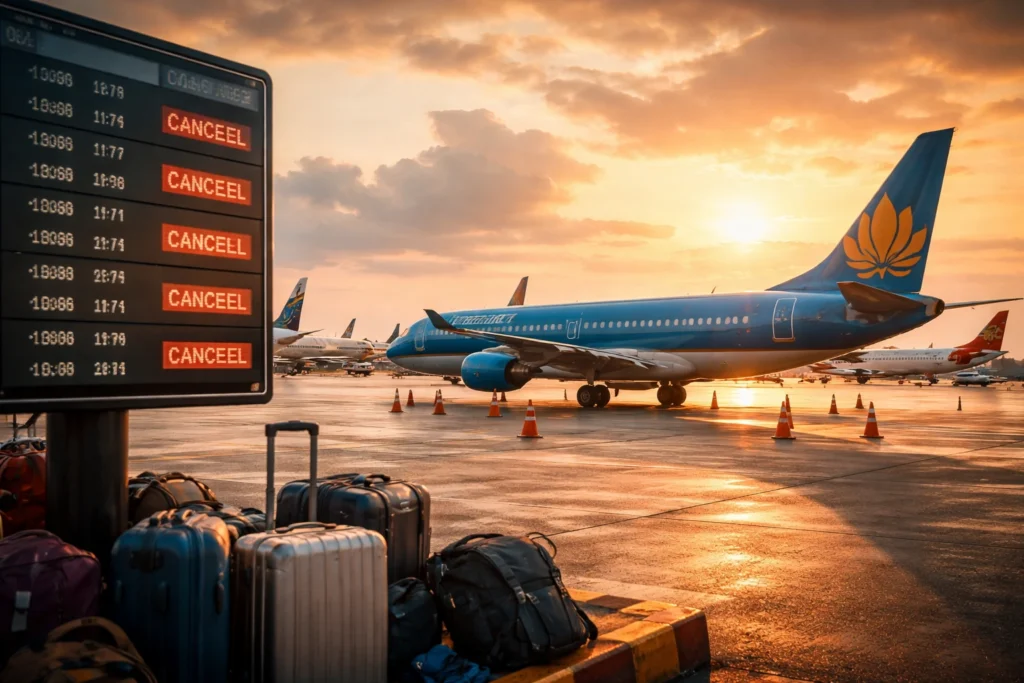
Vietnam’s aviation sector faces major disruption as airlines cut flights due to rising fuel costs.
Authorities confirm that limited fuel supplies force airlines to adjust schedules. Jet fuel prices continue to rise, creating financial pressure across the industry.
Airlines now focus on maintaining essential operations while reducing non-critical routes. These actions aim to balance costs and ensure service continuity.
Travelers should prepare for changes as airlines continue adjusting operations in response to the crisis.
Domestic Routes Face the Sharpest Reductions
Domestic flights across Vietnam see the most significant cuts. Airlines prioritize major routes while suspending less busy connections.
Vietnam Airlines plans to suspend routes linking Ho Chi Minh City with Van Don, Rach Gia, and Dien Bien. The airline also cuts several routes from Cat Bi to popular destinations.
These changes begin in April and may continue through the second quarter. Airlines may cancel up to 1,700 round trips each month.
Domestic capacity could drop by as much as 26 percent. These reductions aim to conserve fuel and stabilize operations.
Passengers traveling within Vietnam should check schedules carefully before booking.
Low-Cost Carriers Adjust Capacity to Manage Costs
Budget airlines also respond quickly to the fuel crisis. They adjust capacity to protect profitability and maintain operations.
Vietjet plans to reduce overall capacity by 18 percent in April. Domestic flights will see deeper cuts compared to international routes.
The airline reduces frequencies on key routes such as Hanoi to Cam Ranh and Ho Chi Minh City to Cat Bi. These changes help control fuel consumption while keeping essential routes active.
Other airlines also follow similar strategies. Bamboo Airways reduces daily flights and focuses on core destinations. Vietravel Airlines maintains limited operations but plans future expansion if conditions improve.
These adjustments show how airlines adapt quickly to changing market conditions.
Global Fuel Supply Issues Drive Aviation Challenges
The aviation fuel crisis in Vietnam reflects broader global issues. International tensions disrupt energy supply chains and increase fuel costs.
The Strait of Hormuz plays a critical role in global fuel transport. Any disruption in this region affects fuel availability worldwide.
Vietnam relies heavily on imported jet fuel. The country produces only a small portion of its needs domestically.
Suppliers now explore alternative sources to stabilize supply. However, agreements remain uncertain, which adds pressure on airlines.
These global challenges continue to shape airline decisions and operational strategies.
Government Steps In to Guide Airline Operations
Vietnamese authorities play a key role in managing the crisis. The Civil Aviation Authority provides clear guidelines for airlines.
Officials require airlines to maintain essential routes for passengers and cargo. At the same time, they encourage cuts on less critical routes.
The government also monitors pricing and scheduling to ensure transparency. This approach helps maintain stability across the aviation sector.
Strategic planning remains essential as the situation evolves. Authorities aim to protect connectivity while managing limited resources.
Travelers Face Delays and Limited Flight Options
Passengers across Vietnam now experience fewer flight choices. Airlines reduce frequencies on both domestic and international routes.
Travelers should expect schedule changes, delays, and possible cancellations. Airlines must provide rebooking or refunds when disruptions occur.
Major hubs and key routes remain operational. However, smaller destinations may see reduced access during this period.
Travelers should monitor airline updates closely and plan trips with flexibility. Early booking and regular checks help avoid last-minute issues.
Airlines Focus on Long-Term Stability and Recovery
Airlines continue to develop strategies to manage the crisis. They rely on data analysis and government guidance to adjust capacity.
Carriers aim to reduce costs while maintaining safe operations. Efficient fuel use and route optimization remain top priorities.
Meanwhile, authorities work with suppliers to secure stable fuel sources. These efforts aim to reduce future disruptions and support industry recovery.
The aviation sector expects gradual improvement once fuel supply stabilizes. However, short-term challenges will likely continue.
Conclusion: Travel Plans Require Flexibility in 2026
Vietnam’s airline industry faces a difficult period due to fuel shortages and rising costs. Airlines respond with strategic flight cuts and operational changes.
Travelers must stay informed and flexible while planning trips. Careful preparation can reduce inconvenience during this uncertain period.
Despite challenges, airlines continue to operate essential routes and maintain safety standards. With coordinated efforts, the sector aims to navigate this crisis successfully.
For more travel news like this, keep reading Global Travel Wire