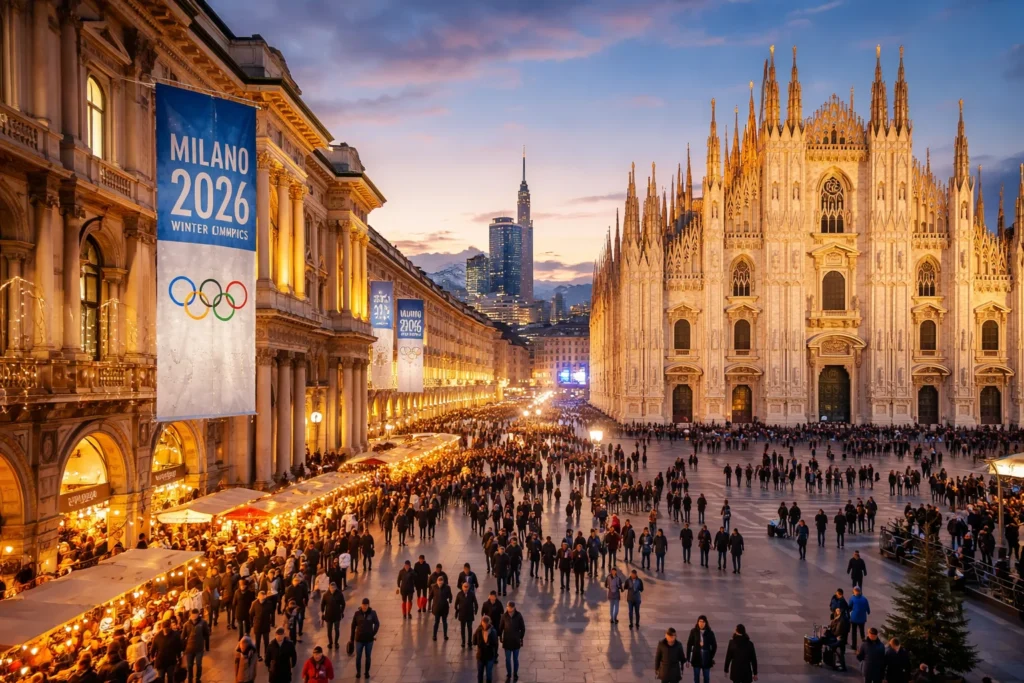
Milan has emerged as one of Europe’s busiest tourism hotspots during the 2026 Winter Olympics, with hotel occupancy reaching record-breaking levels. The global sporting event has driven extraordinary demand for accommodation, transforming the city into a central hub for international visitors attending competitions across northern Italy.
As a co-host city for the games, Milan has seen a dramatic surge in tourist arrivals, fueled by its strategic role as both an event venue and a key gateway to alpine locations. The influx of visitors has placed significant pressure on the city’s hospitality sector, resulting in near-capacity hotel bookings and rising room rates.
Record Occupancy Reflects Global Interest
During the Olympic period in February 2026, hotel occupancy levels in Milan exceeded 85 percent, with several central properties reporting full bookings around major events such as the opening ceremony.
This level of demand marks a significant shift for the city, which typically sees steady but moderate tourism during the winter season. The Olympics have redefined this pattern, attracting a diverse mix of sports enthusiasts, corporate groups, and international travelers.
The strong performance places Milan among the top-performing host cities in recent Winter Games history, highlighting the growing global appeal of the event and the city’s ability to accommodate large-scale tourism demand.
Rising Prices Reflect Limited Supply
The surge in visitors has led to a sharp increase in hotel room rates across the city. Average nightly prices have risen significantly compared to previous years, reflecting the imbalance between high demand and limited accommodation supply.
Luxury hotels and centrally located properties have seen the most dramatic price increases, with premium rates becoming the norm during peak Olympic days. Even mid-range and budget accommodations have experienced notable price hikes, indicating the widespread impact of the event on the hospitality market.
This trend underscores the economic benefits of hosting major international events, as hotels capitalize on increased demand while contributing to the local economy.
Spillover Tourism Boosts Neighboring Cities
With Milan’s hotels operating at near full capacity, many visitors have turned to nearby destinations for accommodation. Cities such as Bergamo, Como, and Monza have experienced a surge in bookings, benefiting from their proximity to Milan and convenient transport links.
This spillover effect has extended the economic impact of the Olympics beyond the host city, supporting tourism growth across the wider Lombardy region.
Short-term rental platforms have also seen increased demand, with prices rising sharply as travelers seek alternative accommodation options. This diversification of lodging choices has helped accommodate the influx of visitors while highlighting the need for expanded capacity during major events.
Milan’s Role as a Key Transport Hub
Milan’s well-developed transport infrastructure has played a crucial role in sustaining high occupancy levels. The city’s international airports and rail networks provide seamless connectivity to Olympic venues, including alpine destinations such as Cortina d’Ampezzo.
Increased flight capacity and improved rail services have made it easier for international travelers to access Milan and travel onward to competition sites. This convenience has encouraged many visitors to base themselves in the city, even if their primary destination lies outside the urban area.
The efficiency of Milan’s transport system has been a key factor in its success as a host city, ensuring smooth movement for both tourists and event participants.
Economic Impact on the Hospitality Sector
The Winter Olympics have created one of the most profitable periods for Milan’s hotel industry in recent years. High occupancy rates combined with increased room prices have significantly boosted revenue for hotels across all segments.
Restaurants, retail outlets, and local businesses have also benefited from the influx of visitors, contributing to a broader economic uplift. The event has demonstrated the potential of large-scale international gatherings to drive economic growth and enhance a city’s global profile.
For the hospitality sector, the Olympics have provided an opportunity to showcase service quality, attract new customers, and strengthen relationships with international markets.
Long-Term Benefits for Tourism
Beyond the immediate economic gains, the 2026 Winter Olympics are expected to have a lasting impact on Milan’s tourism industry. The global exposure generated by the event has positioned the city as a premier destination for future travel.
Improved infrastructure, enhanced transport links, and increased international awareness are likely to support sustained growth in visitor numbers. Milan’s reputation as a hub for business, fashion, and cultural events will be further strengthened by its successful hosting of the Olympics.
Industry experts anticipate that the city will continue to attract major events and conferences, building on the momentum created by the games.
Challenges and Opportunities for Future Growth
While the surge in tourism has brought significant benefits, it has also highlighted challenges related to capacity and infrastructure. The limited availability of hotel rooms during peak periods underscores the need for strategic planning and investment in the hospitality sector.
Expanding accommodation options, improving urban planning, and enhancing visitor services will be essential for managing future demand. At the same time, the experience gained during the Olympics provides valuable insights for hosting similar events in the future.
By addressing these challenges, Milan can ensure that it remains competitive and capable of accommodating large-scale tourism growth.
Conclusion
The 2026 Winter Olympics have transformed Milan into a global tourism hotspot, with record hotel occupancy and rising demand reflecting the city’s growing appeal. As visitors from around the world gather to experience the games, Milan has demonstrated its क्षमता to host major international events while delivering economic and cultural benefits.
With continued investment and strategic planning, the city is well positioned to build on this success, ensuring that the legacy of the Olympics extends far beyond the event itself.